Norway of the Nordics: a Cannes celebration
Could Norway possibly already have matched its Oscar from earlier this spring at this year’s Cannes? And is Trier these days Joachim, rather than Lars? Expectations seem anything but low.
Seemingly a modest Cannes edition for Nordic cinema, 2026 still proved a rich year, not least through the many co-productions, again with Norway being the prominent territory.
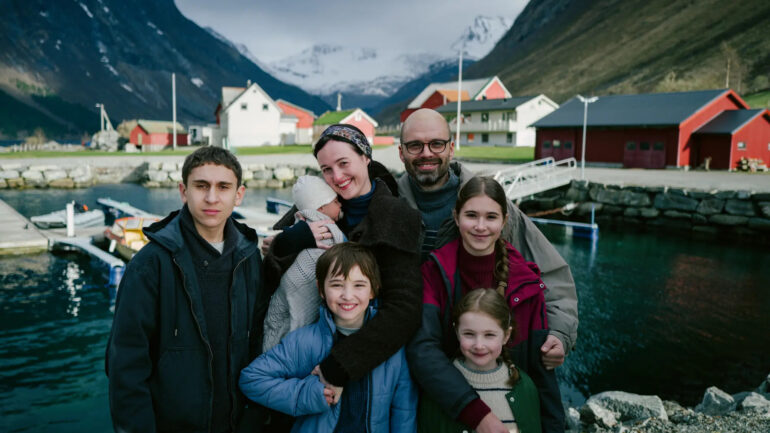
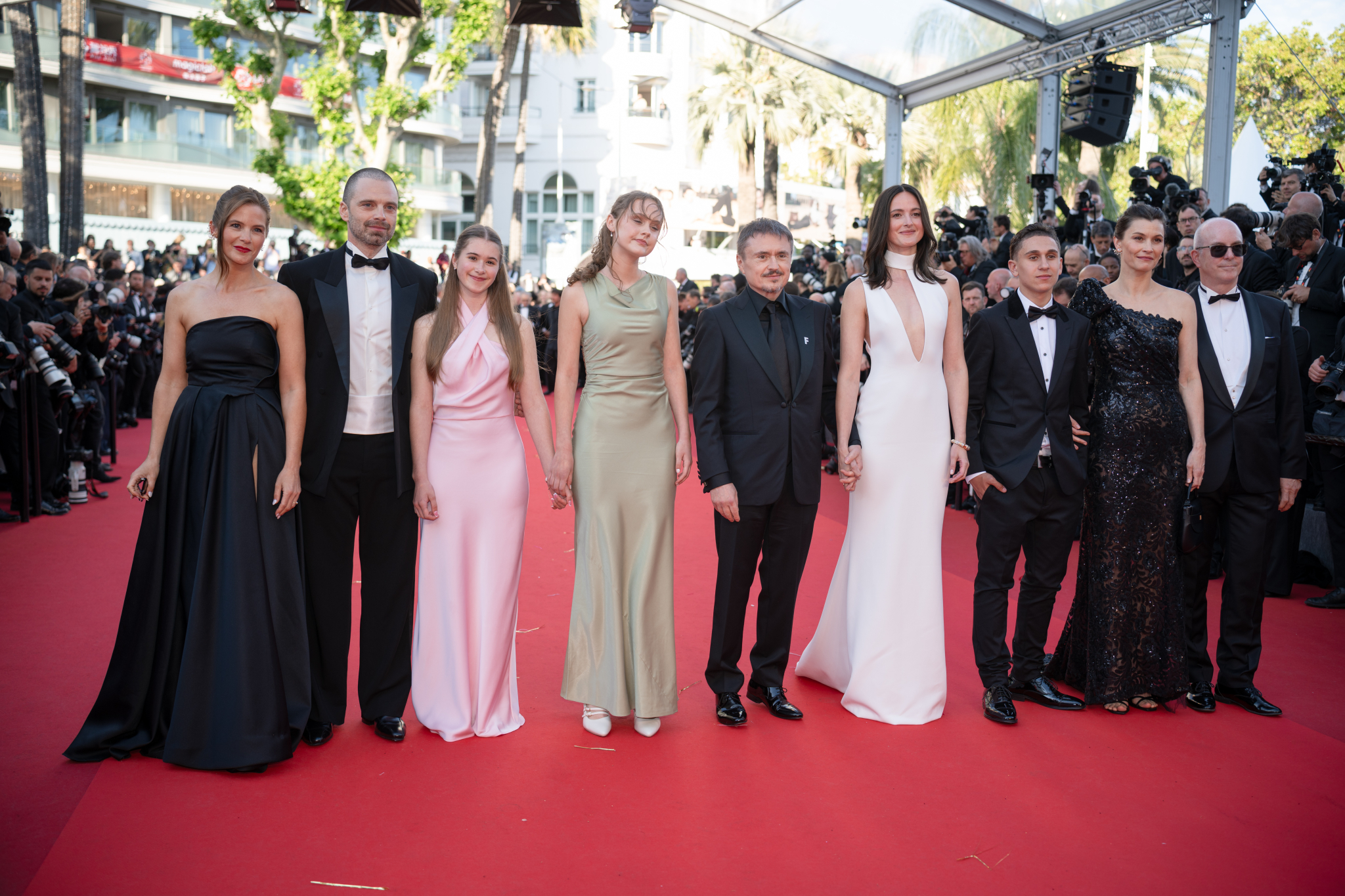
At first glance, the 2026 Cannes edition could indeed rank among the more modest ones for the Nordics, with no Finnish, Icelandic or Swedish features (especially not by Ruben Östlund). In hindsight, that same 2026 could have proved one of the more interesting and richer years – indeed from a Nordic angle. The Palme d’Or winner Fjord, by Romania’s Christian Mungiu, shot in Norway with a mainly local cast and co-produced with Norway, Sweden, Denmark and Finland, should present a golden case in point.
The frequency of Nordic co-productions is another reason to highlight the 2026 edition, involving a number of international collaborations, covering faraway territories in seemingly unlikely constellations that ultimately reveals deliberate methods and missions from the players involved.
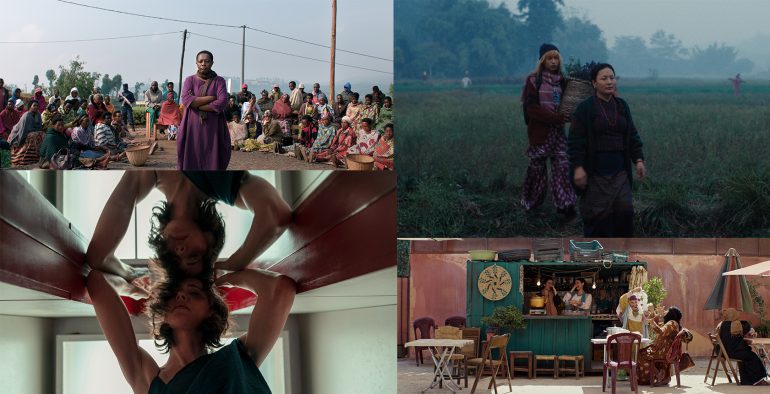
Ben’Imana from Rwanda, The Station (Al Mahattah) from Yemen, Elephants in the Fog (Tiniharu) from Nepal, and 9 Temples to Heaven from Thailand are all co-produced with Norwegian companies. Denmark is co-producer on the Mexican Six Months in a Pink and Blue Building (Seis meses en el edificio rosa con azul). On European soil, Sweden is part of the production on the primarily Austrian-German Gentle Monster, as is Norway on the British-Spanish The End of It. As for co-Nordic collaborations apart from Fjord, Denmark is co-producer on the Norwegian Low Expectations (Lave forventninger).
Low Expectations and Six Months in a Pink and Blue Building are both co-produced by Denmark’s close to ubiquitous Snowglobe, which is also part of the Fjord production. Although producer Katrin Pors actually counted five Cannes entries in 2021 – “are we going downhill?” she smiles – she’s pleased with both outcome and mixture:
“I think it represents our ambition very well: to continue collaborating and growing with established directors, while also helping to nurture and foster the voices of tomorrow.”
With Snowglobe devoting a significant portion of their operation in Latin America, with notable collaborations with directors like Lucrecia Martel and Carlos Reygadas, Pors was invited into a festival jury together with among others Bruno Santamaría Razo, at the time in early development of what he hoped would be his first feature.
“That film would become Six Months in a Pink and Blue Building. I instantly fell in love with it.”
Low Expectations sees Snowglobe and Norway’s Maipo Film finally collaborating, a mutual goal for both through the years. And just to get “one of Europe’s finest auteurs” into the mix, Snowglobe contributed a Danish team and cast members to Fjord. Things should go anything but downhill, with future projects including Chilean director Felipe Gálvez Haberle’s new feature, starring Sebastian Stan, as well as further collaborations with Maipo.
The two Swedish co-productions, both contributing to post-production, are both enabled through Film i Väst, in Cannes competition for the tenth year in a row this year. Garagefilm and Filmgate Films worked on the post-production of Fjord, as did Kjellson & Wik of Gentle Monster. Marie Kjellson came on board via recommendation, and she on her part was well familiar with director Marie Kreutzer and a fan of her debut feature Corsage (2022).
“I read the script and quickly felt like joining in. International co-productions are an important part of our business and strategy, and have both a financial and a value-based importance. We actively seek these collaborations alongside our larger projects, as we want to strengthen international exchange and make film a bridge between countries - both in front of and behind the camera.”
Also Garagefilm’s Mimmi Spång and Sean Wheelan from Filmgate Films joined the Fjord operation through recommendation, via Garagefilm’s regular Norwegian production partner Eye Eye Pictures and Filmgate’s long liaison with Mungiu’s Mobra Films in Romania. Both ideally aim for four co-productions per year.
“It’s inspiring and rewarding,” says Spång, “as well as being economically beneficial. We cannot finance a feature film without help from our neighbouring countries. Much of the model works smoothly, but just like in all systems there are things to simplify. But overall it works well!”
Eye Eye Pictures in Norway, a frequent Garagefilm collaborator, co-produces The End of It, written and directed by Spain’s Maria Martínez Bayona, and with British majority production by Elation Pictures, co-run by a London-based Norwegian, Kamilla Hodøl.
”Kamilla and I know each other well,” says Eye Eye producer Andrea Berentsen Ottmar, who, together with producing colleague Dyveke Bjørkly Graver, found a lot to like in the project, got Norwegian funding, did sound design, graphics, VFX, and also brought actors Kristine Kujath Thorp and Pål Sverre Hagen up on the screen.
”International co-productions constitute a central part of our work, partly business-wise, but also continuously educational and inspiring, and they broaden our horizons. The European model, with co-production at its core, is more important than ever to uphold. Cooperation across borders builds trust and understanding, and is absolutely fundamental in healthy democracies. So on a completely ideological level, I am a big advocate for international cooperation.”
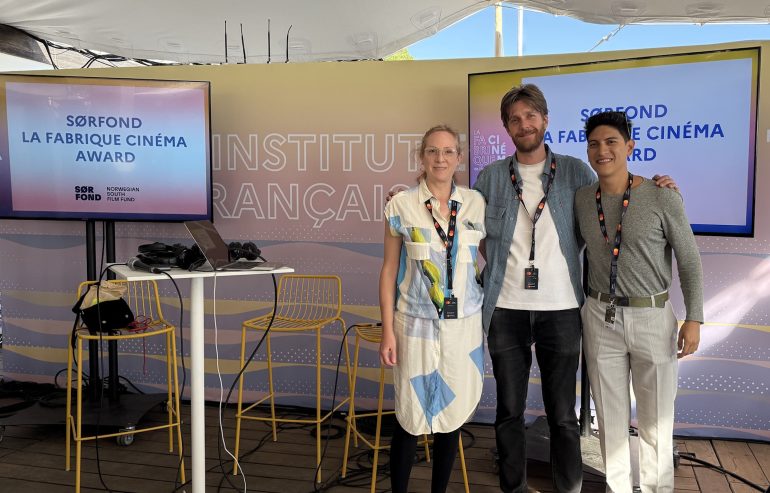
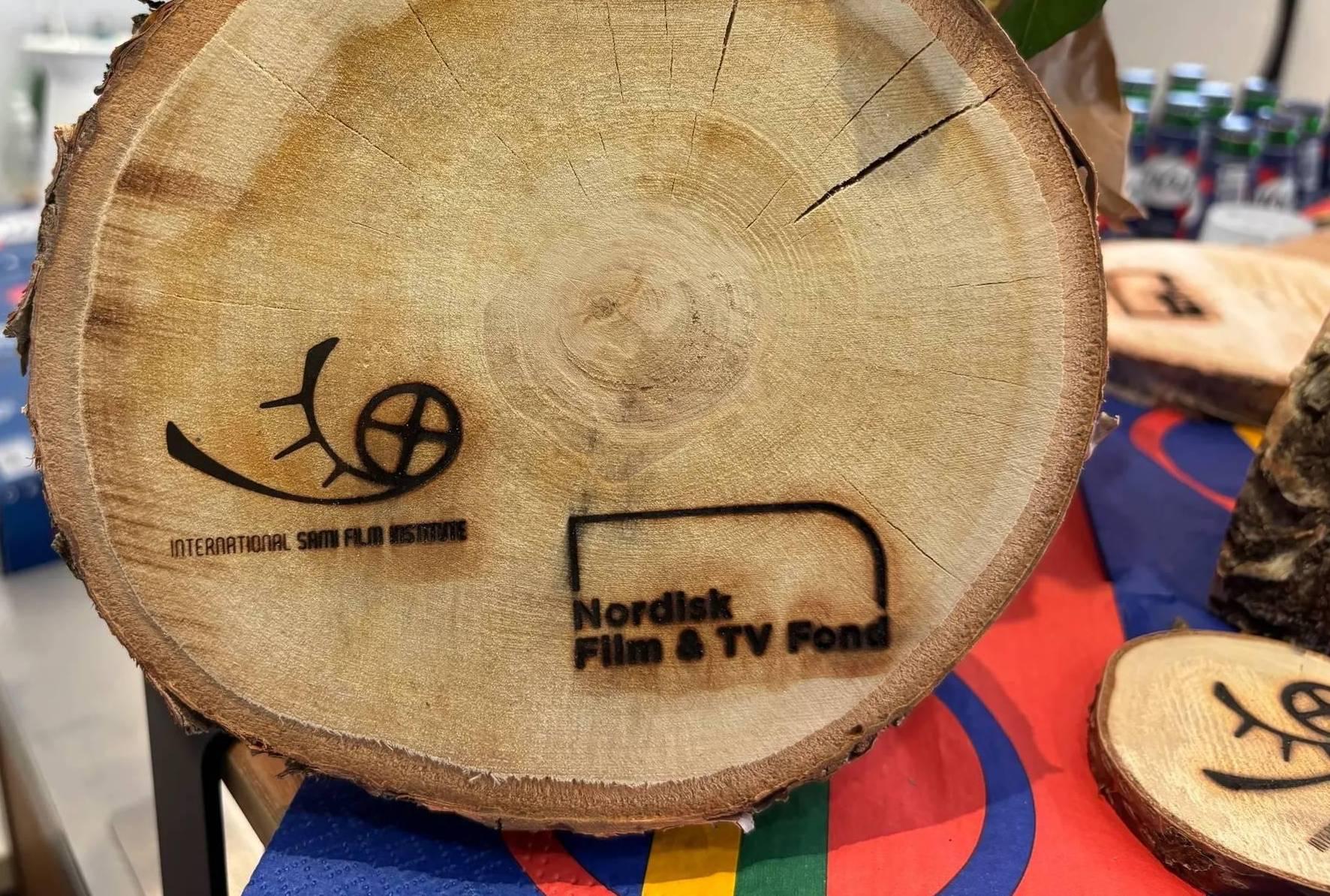
An instrumental denonimator within Norway’s forefront position in this year’s co-production line-up at Cannes is the involvement of Sørfond (Norwegian South Film Fund) in four of the entries. Mads Wølner Voss, Project Manager at this fairly small-scale but ambitious financing fund, founded in 2011, providing support for main productions located in a DAC country, and funded by the Norwegian Ministry of Foreign Affairs, believes this year is their record Cannes.
“And just two years ago, we had 14 premieres spread over the biggest A-list festivals. I can only extend warm credit to the Norwegian producers who seem to know how to pick the best projects.”
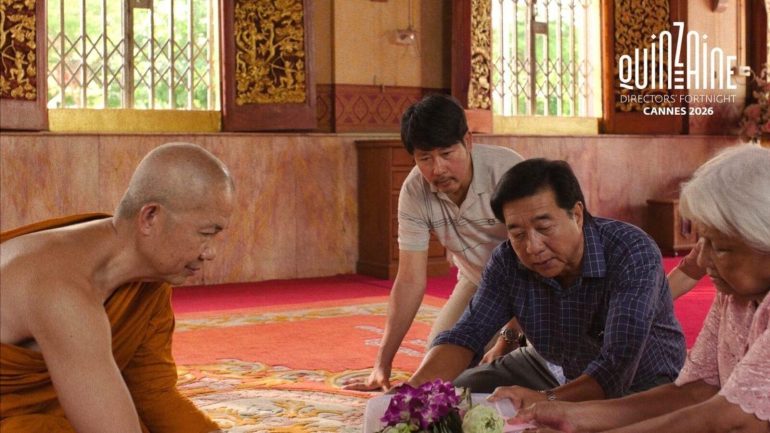
One of them is Renée Hansen Mlodyszewski and the company Needle in the Haystack, who fell for a script introduced to her by French producer Thomas Hakim at Petit Chaos, called 9 Temples to Heaven, by the young Thai Sompot Chidgasornpongse.
“It was the most beautiful thing I’ve read in ages. It may take place in Thailand, but feels fully and utter universal. To me, these international collaborations bring an extra dimension to my work, bringing in new territories, new cultures, new methods, and new perspectives. They address community and understanding, and what it is to be human. I’m drawn to artistically ambitious filmmakers, and I’m aiming for a varied and durable portfolio to show for it.”
Verona Meier at Storm Films has an eye for the strange and unknown, attributes going well together with Elephants in the Fog, playing out and shot on the edge of the foggy jungle of the Nepalese lowlands.
“I was approached by Abinash Bikram Shah, the director, after a collaboration on another project, so this is a natural continuation. I find collaborating across borders incredibly inspiring. I’ve been fortunate to be part of several films from Asia, Caucasus, the Middle East and Africa thanks to the Sørfond,” says Meier, who also takes time to work with directors like Sweden’s Maria Eriksson-Hecht and Norway’s Morten Traavik on the home front.
A doyenne among the Nordic “shooting on the edge” producers is Ingrid Lill Høgtun, who through two companies, DUOFilm and Barentsfilm, figures in 20 titles, covering over a dozen nations in Africa and Asia – in the Sørfond catalogue alone. She spends part of her working year visiting co-production pitch forums, including La Fabrique Cinéma in Cannes, Red Sea Souk Project Market in Jeddah, The Durban FilmMart, Qumra Co-production Forum in Doha, Quatar and not least, the Sørfond pitch forum at the Films from the South festival in Oslo, where the Sørfond embryo was originally conceived. Films from the South also administers the fund, in collabration with the Norwegian Film Institute.
“I’ve gradually gotten quite a good reputation on these platforms, and get to follow a process from an early stage. I go on instinct and conviction, and I am very prone to first feature filmmakers.”
A couple of intriguing shorts by Rwandan Marie Clémentine Dusabejambo caught Høgtun’s interest and started her journey with Ben’Imana, which went on to win this year’s Cannes Camera d’Or for best first feature. To stay true to her reputation, Høgtun also co-produced another Cannes 2026 first feature, The Station, directed by Sara Ishaq. In the pipeline is a project directed by an Iranian (again, female), with a Chinese producer. Høgtun’s arena is clearly the world, but setting out from Norwegian soil – a starting point often warmly greeted by the prospective collaborators.
“We’re well-received for several reasons. They know we make good films; more or less everybody has seen the latest Joachim Trier. We also have the reputation of being a democratic country with a history of international aid – and quite simply, just nice people.”
The importance of Sørfond cannot be underestimated, a brand name even greater than Joachim Trier in this milieu. Even the international name, Norwegian South Film Fund, has never really taken off. Everyone, be they Thai or Nepalese, says ”Sørfond” (in wildly varying accents).
“Mads Wølner Voss confirms that the fund’s 100th project will be among the ones announced on the next selection presentation later this year. The roster – covering close to 50 countries – contains name after name of world cinema greats. Some, like Apichatpong Weerasethakul, were already well-established when coming on board, others, like Kaouther Ben Hania, quite fresh on arrival, but quickly joining the higher ranks. The overarching principles concern freedom of speech and human rights, but otherwise the selection is done on instinct.
No equivalent to Sørfond is really found in the other Nordic countries, at least as of yet – something Sean Wheelan from Filmgate finds somewhat puzzling.
“In my opinion, it’s a really good idea, and frankly, as an Englishman living in Sweden, it seems to me a very Swedish idea, given your traditions in both film and development work. It’s probably about the right timing. Sørfond works so well, as far as I understand, because Norway finances the fund through the aid budget rather than the film budget, and that’s what makes it small, cheap and politically delimited. In Sweden, that budget is being cut rather than expanded, so an independent aid-financed film fund would be difficult to get through at the moment.”
“I’d rather see us achieve the same goal in the pragmatic way: as a Nordic collaboration, by joining or collaborating with Sørfond itself, or as a modest pilot project within the Film Institute's existing support for international co-productions. The instinct’s right. It is the path to get there which is the crucial thing.”
Thus, for the time being, Sørfond remains as distinctly a Norwegian operation as – without further comparison – the Nobel Peace Prize.
Mads Wølner Voss smiles, possibly slightly flattered, but not only.
“In a way, it’s pretty unique, yes.”