Subscribe to newsletter

Get the latest film & TV news from the Nordics, interviews and industry reports. You will also receive information about our events, funded projects and new initiatives.

Norway of the Nordics: a Cannes celebration

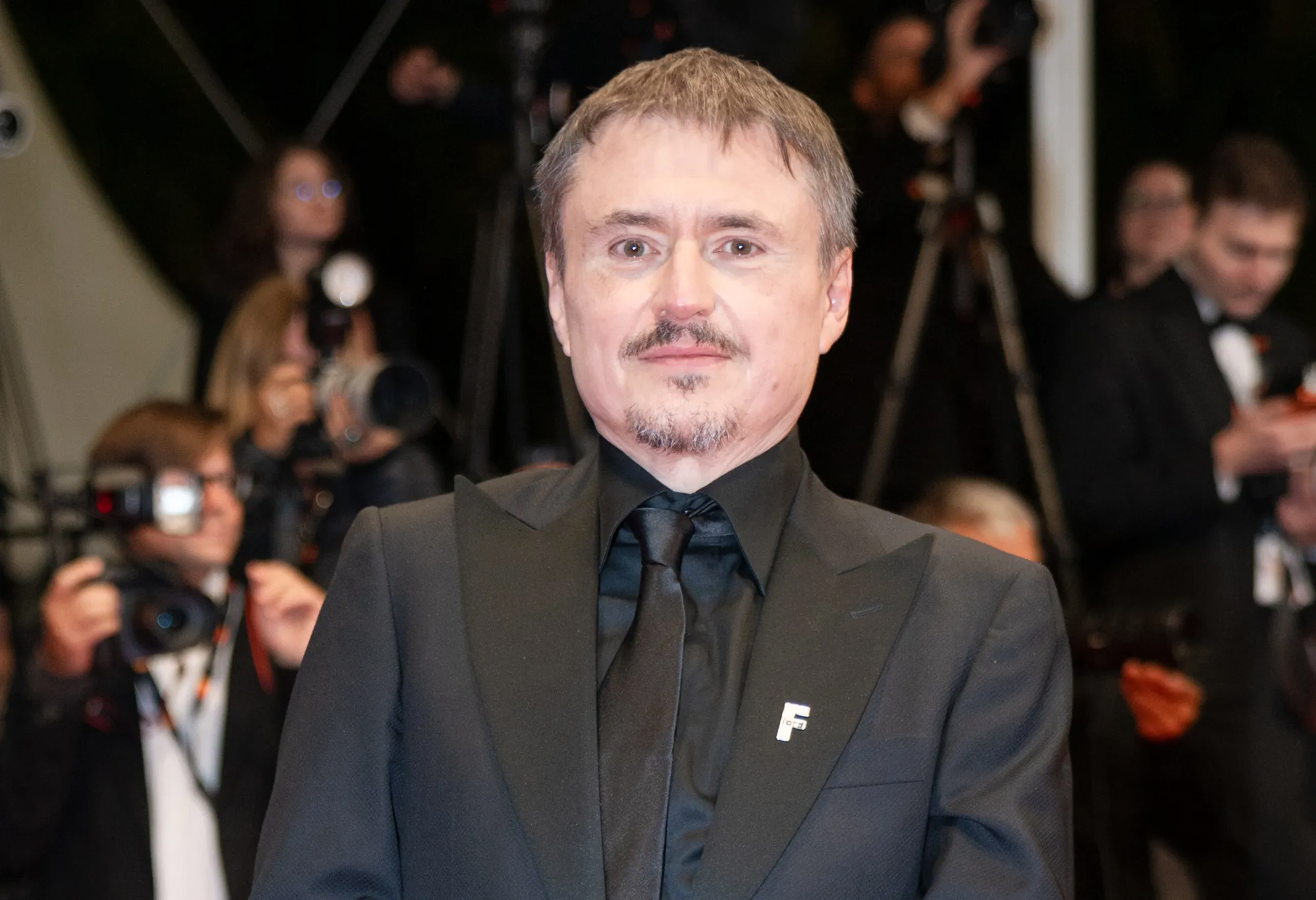
Cannes 2026: Fjord / Photo: Laurent Hou, Festival de Cannes
×
NEWS

Norway of the Nordics: a Cannes celebration

Cannes 2026: Fjord / Photo: Laurent Hou, Festival de Cannes

Could Norway possibly already have matched its Oscar from earlier this spring at this year’s Cannes? And is Trier these days Joachim, rather than Lars? Expectations seem anything but low.

Cannes has been good to the Nordics and vice versa. Sweden and Denmark competed at the first festival in 1946 and shared the first prize (with nine other films; Cannes awards are taken less lightly these days). Finland and Norway joined in the early 1950s, and Iceland quickly made up for lost time from around 1990.

Extra fruitful periods have likewise been enjoyed by the different nations over time. With many overlaps to consider, the 1960s were good for the Swedes, the Danes did well in the 1990s-early 2000s, as did the Finns every time Aki Kaurismäki was in town, and Iceland has provided a string of gems over the last couple of decades.

Then there’s Norway, which first came to town in 1952. Since then – over a 74-year span – all in all 53 Norwegian titles have been entered at the festival up until 2026, excluding many co-production involvements.

The list should be trustworthy, as it’s put together by Stine Oppegaard, Head of the International Department at the Norwegian Film Institute, NFI. She’s been present at the festival for close to 40 years (an unbeatable seniority among her European peers, it’s been recognised) and remembers them well. Like in 1997, with invitations sent by fax, and a selection of NFI employees having to check into the office from time to time in order to see if there was any news.

×
NEWS

Norway of the Nordics: a Cannes celebration

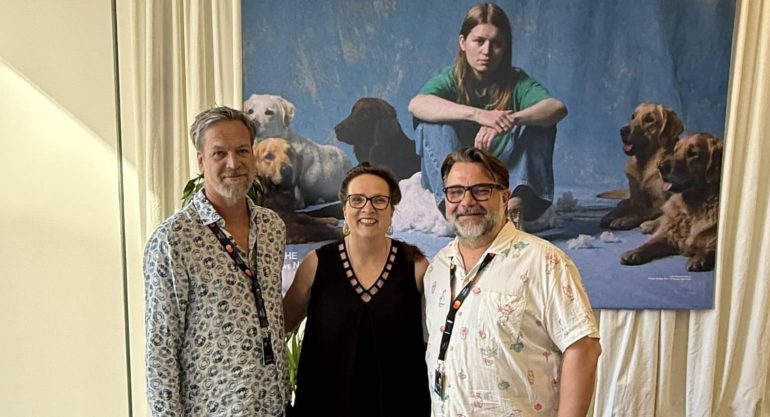
Cannes 2026: Knut Skinnarmo, Stine Oppegaard, Kjetil Omberg / Photo: Terez Hollo Klausen

“It was in the middle of Easter break, but we were of course wound up, so we went there now and then, and there was nothing, and nothing, and then, finally, there was a hand-written invitation from Jean Roy, then head of the Critics’ Week, regarding not one, but two Norwegian films. That was huge,” beams Oppegaard.

The two 1997 films in question, Insomnia by Erik Skjoldbjærg, and Junk Mail (Budbringeren) by Pål Sletaune, formed their own little “Norwave”, led by Bent Hamer, Norway’s own “Mr. Cannes” at the time, whose four-piece suite of entries, from Eggs (1995) to O’Horten (2008), looked unbeatable. Oppegaard and her NFI team started organising barbecue receptions on the beach, and got their Rolodexes thick with new contacts along the way.

Some 30 years later, that wave returns, with a boom on top, with the Golden Berlin Bear for Dag Johan Haugerud’s Dreams (Sex Love) (Drømmer, 2024) and the 2025 Cannes Grand Prix for Joachim Trier’s Sentimental Value (Affeksjonsverdi, 2025) as two splendid mementos of 2025. Come spring 2026, Trier picked up Norway’s first international Oscar for his film, a feat hard to match, one would think.

×
NEWS

Norway of the Nordics: a Cannes celebration

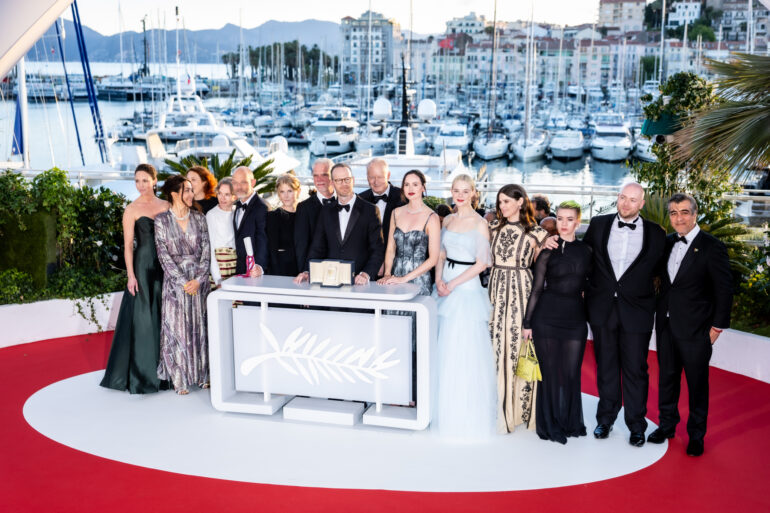
Cannes 2025: Sentimental Value / Photo: Erlend Štaub for The Norwegian Film Institute

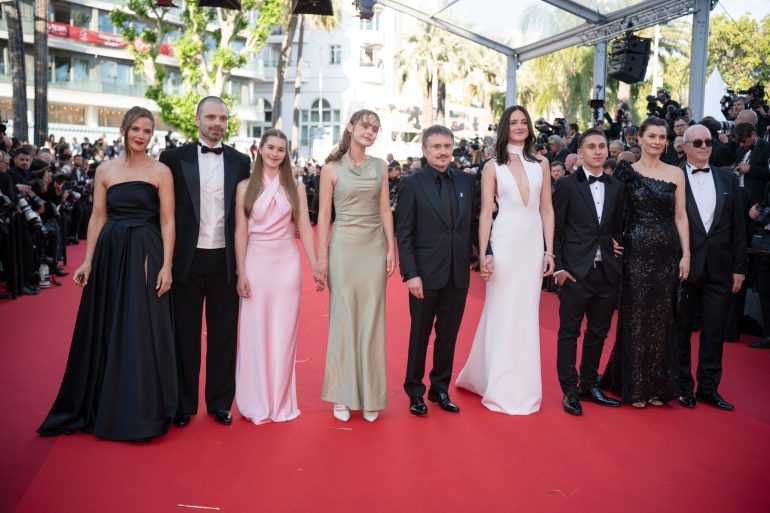
Think again. This Saturday, the Cannes Golden Palm went to Fjord. The film is written and directed by Romania’s Cristian Mungiu, who gets to keep the trophy, but the Norwegian role in the production is reason alone for a national celebration. Add to this an entirely Norwegian location (primarily Ålesund) and a highly distinguished cast of Norwegian acting talent, headed by Renate Reinsve. The story centres on a family headed by a Romanian husband (Romanian-born Sebastian Stan, Donald Trump in 2024’s The Apprentice) and a Norwegian wife (Reinsve) and their devotedly Evangelical-Christian ways of family life, which clashes with the progressive Northern European system that has a zero-tolerance level regarding corporal punishment, especially of children.

The drama, partly playing out in court, can be seen as a Cannes triumph for close to the full Nordic region, with Sweden’s Garagefilm, Finland’s Aamu Film Company, Denmark’s Snowglobe and Norway’s Eye Eye Productions all on board alongside France’s Why Not Productions and Mungiu’s own Mobra Films. Furthermore, the film’s Norwegian delgate producer Eye Eye Production got top-financing from Nordisk Film & TV Fond (NFTVF).

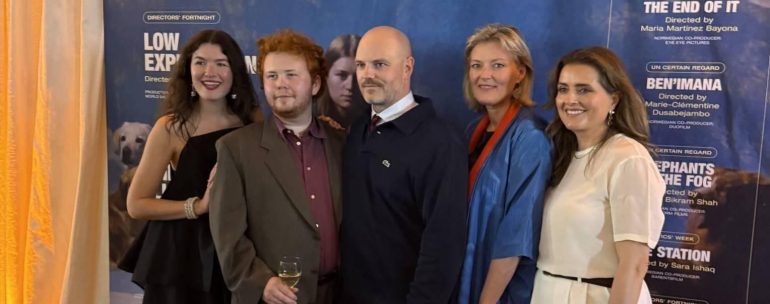
Snowglobe is also involved, together with Maipo Films, on the most “properly” Norwegian entry at the 2026 Cannes festival, and, given the current Norway buzz, possibly hilariously titled Low Expectations (Lave forventninger). It’s the debut feature of Eivind Landsvik, who joins the ranks of another Norwegian strand of quality which recently brought talents like Kristoffer Borgli, Halfdan Ullmann Tøndel and Lilja Ingolfsdottir, to name a few. The film is one of the few films but debutant directos that NFTVF supported last year.

×
NEWS

Norway of the Nordics: a Cannes celebration

Cannes 2026: Lotte Sandbu, Snorre Monsson, Eivind Landsvik, Synnøve Hørsdal, Kjersti Mo / Photo: Terez Hollo Klausen

Low Expectations, which played the Directors’ Fortnight section, stars Marie Ulven, best known under her music-artistic alias Girl in Red, alongside Anders Danielsen Lie, Tone Mostraum and others. Ulven shines as Maja, a severely depressed music artist, who puts her life on hold in order not to fall fully apart. Landsvik’ sensitively humanistic treatment of pain, hope, despair and wry humour gained warm reviews in the trade press, airing some…great expectations for the future.

As to the “why now?” and what has happened to a film nation at times regarded as the kid brother of “Bergman’s” Sweden or “Dreyer’s” and later “von Trier’s” Denmark or even “Kaurismäki’s” Finland or “Friðrik Þór Friðriksson’s” Iceland… How did it go from “Oh, slow!” over “Norwave” to “Norway of the Nordics”, with Joachim being the big Trier of Cannes, rather than Lars?

Stine Oppegaard confirms a certain lack of a Norwegian brand back in its day, keeping things on a somewhat lower level.

“Look at Lars von Trier and Peter Aalbæk Jensen from Zentropa, excellent at selling their brand, including the fuss every time Lars came to Cannes – ‘Will he or won’t he be here this year?’ They created a full apparatus, a unifying power. While the Norwegians have each been operating from their own little hut. But many things are happening now, we have more and more prolific companies, like Eye Eye, Maipo, Mer Film, and Motlys, and we now also have a film school. Very positive.”

“I’d also address the classic Nordic community. We’re all pretty good, over different periods, we like to work together and help one another out when needed. We can rarely be great all at once, but we carry each other’s weight, and hope that one of us makes it. A Joachim Trier or a Dag Johan Haugerud gets talked about out there, and the eyes are on Norway, of course, but also the full Nordic region.”

Two discerning critics in agreement are Lars Ole Kristiansen and Karsten Meinich, who co-edit Montages, launched in 2009 and becoming one of Norway’s foremost sources of printed film criticism.

“Sure, we had good names like Hamer and Sletaune and Skjoldbjærg before, but they were more like separate entities,” says Meinich. Kristiansen fills in:

“One of Joachim Trier’s finest qualities is his role as a spearhead of Norwegian cinema, a collecting force. That’s really important.”

Eivind Landsvik probably even owes a little debt to Trier from back in the day.

“As a young film lover, I’d read now and again about some Norwegian getting a job in Hollywood, a big deal in the press, but totally unexciting to me. Then I went to the cinema theatre in 2006 and saw this little debut, which was Trier’s Reprise. ‘Aah,’ I thought, ‘so you can actually make a film like this – in Norwegian?!’ I went back and re-watched it five times. And here we are, 20 years later…”.

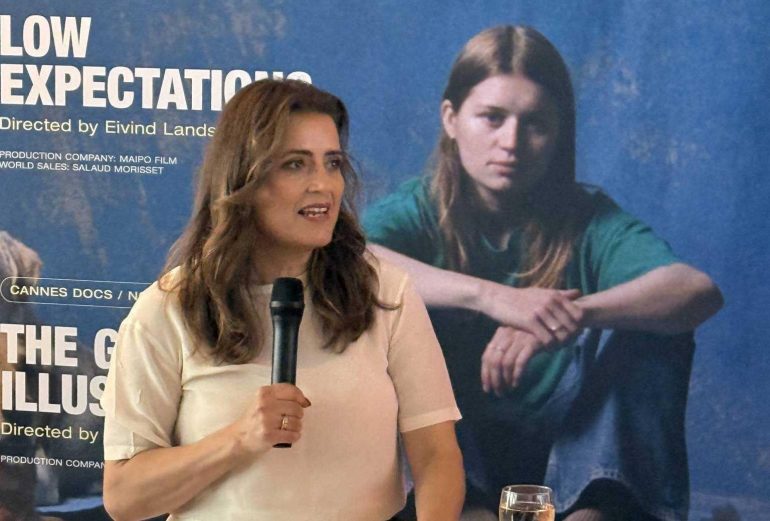
The final word should go to NFI CEO Kjersti Mo, who praises the Norwegian cultural-political system of long-term thinking, arm's length distance, and strong public support schemes, as well as a very well-defined operation around talent development, as witnessed via Landsvik’s Cannes presence this year. And much more, including the growing strengths of the producers on the scene and a goal-oriented strategy in working together with the audiences.

×
NEWS

Norway of the Nordics: a Cannes celebration

Kjersti Mo / Photo: Terez Hollo Klausen, NFI

“But film politics, of course, does not explain everything. I also believe that many of the Norwegian film successes in recent years have been very contemporary in theme and tone. They are often about relationships – families, love, identity, belonging and human closeness or distance, in ways that are experienced as both personal and universal.”

A good case in point would be this year’s Palme d’Or winner.

Fjord is first and foremost a film by Romanian Cristian Mungiu — but at the same time also a genuine European co-production. Not least, it’s interesting because it looks at Norwegian social structures from the outside. I actually think that says something nice about European film right now: That the most interesting films often arise in the encounter between different languages, experiences, and perspectives.”

Additional mention should also go to this year’s Camera d’Or winner, Rwandan director Marie-Clémentine Dusabejambo’s Ben’Imana, co-produced with Norway’s DUOFilm. and the Nepali Elephants in the Fog, with Norwegian co-production by Storm Films, which won the jury prize in this year’s Critics’ Week section.

RELATED POSTS