Written by: Mariana Hristova
19.05.26
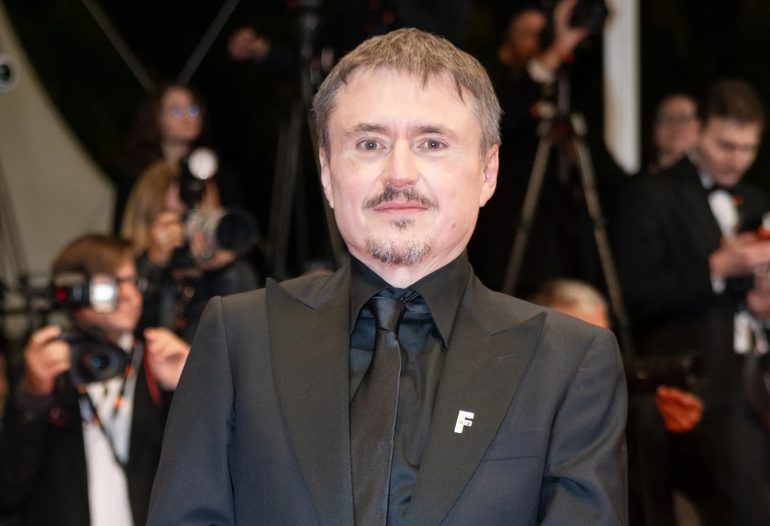
The Romanian director’s latest film, set in Norway, just premiered in the Cannes Film Festival’s Competition, and unfolds as a dispute-based thriller, clashing opposing views.
Norwegian Eye Eye Picture’s and Romanian Mobra Films Fjord marks Cristian Mungiu’s fifth Cannes Competition entry, following the Palme d’Or-winning 4 Months, 3 Weeks and 2 Days (4 luni, 3 saptamini si 2 zile), and Graduation (Bacalaureat), which won the Best Director Award. The film has drawn attention as Mungiu’s first English-language feature, continuing his exploration of social tensions and moral fault lines. Industry interest has been equally strong: Before shooting even began, Fjord sold distribution rights in more than 50 territories - Mungiu’s biggest pre-release sales success to date - with Neon acquiring rights for North America, the UK, Australia, and New Zealand.
Inspired by the widely publicised 2015 case of the Romanian-Norwegian couple Marius and Ruth Bodnariu, whose five children were taken into state custody in Norway, the film nevertheless does not attempt to recreate reality as it happened, as Mungiu clarifies in an interview for the NFTVF.
“Fjord is not a reenactment of that case, since, as one of the characters says in the film, ‘it is impossible to know what happens inside a family’s private life’,” he explains. “It has rather followed the elements which are typical for most such cases, and added a lot of fictional situations and characters to illuminate the main conflict, which is not between a family and an institution, but between the progressive ideas and the traditional ones in our global society.”
To construct this layered narrative, Mungiu immersed himself in extensive research. “I talked to everybody that agreed to talk to me: parents and relatives involved in such cases, lawyers, judges, representatives of the Child Welfare Services, social workers, journalists. I attended cases on this matter in the Norwegian courts,” he says. Access to official transcripts proved impossible as “legislation didn’t permit”, but the breadth of voices he encountered shaped the film’s central inquiry. “In the end, Fjord aims to be a story that encourages us to ponder about tolerance, authority, conformism, and the limits of personal freedom and intimacy.”
The doubt line
The case that initially sparked international debate also exposed deep social fractures, particularly in Eastern Europe, where similar cases involving immigrant families are often framed as liberal conspiracies. In Romania, Mungiu notes, reactions remain sharply polarised. “The topic divides society like no other: On one side, the conservative groups that have voted in favour of ‘the traditional family’ rage against any kind of education which is not based on the traditional gender difference, while on the other side, the liberal progressive groups always consider that people should be free to decide everything about themselves, and assume that when the Child Welfare intervened, it must have been for a reason.”
Engaging with such a polarised subject inevitably raised questions about the filmmaker’s own positioning. Mungiu acknowledges the risk of being labelled as “conservative”. “I took this risk because I feel that we need to keep our freedom to express doubts on any kind of issues, including the sensitive ones. I am not defending any of the parties involved in the story in any way, and by no means the ‘conservative’ party. However, today, even expressing doubts regarding some exaggerations coming from the original good intentions of the liberal progressivist groups is viewed as subject to cancellation.”
What concerns him most is not ideological difference itself, but the certainty with which opposing camps assert their truths. “I fear such people who are certain that they are right about things and who believe that truth belongs only to them, and unfortunately, from this perspective, there is no difference between conservative and progressive groups. I believe that the chances to fix this drastic gap in our societies begins with the willingness to really listen to the point of view of the other.”
Though Fjord unfolds within a Nordic setting, Mungiu resists framing its tensions as a simple East-versus-West divide. “I believe that the opposing values overpass the Eastern vs Western Europe difference of values. Watch what happens in the US with democrats vs conservatives, or in Italy, France or UK with the extreme left against the extreme right wing. The conflict is present in all societies of our global world, mostly between more liberal, educated and rational layers of society, and the traditional, intuitive and conservative layer.”
He also points to the political consequences of this divide. “The extreme right capitalised on this difference of views, and I am afraid that some decisions taken by the progressist groups in power had the opposite effect – boosting the popularity of the conservatives. But none of the doubts expressed in the film mean that, in general, the conservative views are better in any way. I also live in a polarised society, and I have the right distance to observe the exaggerations on both sides.”
Progress as imperative
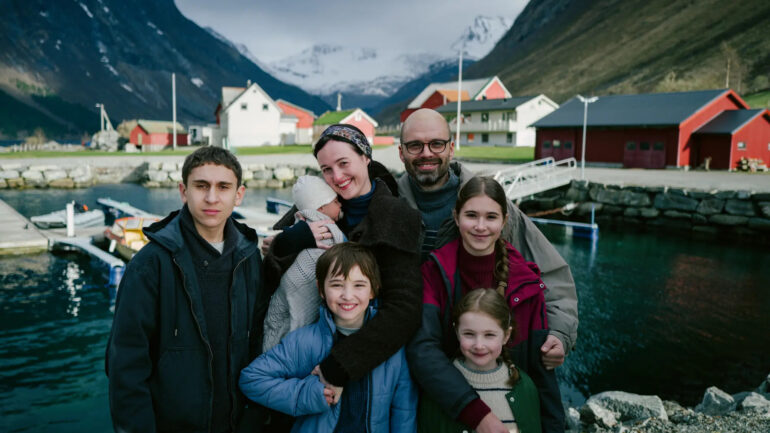
Within the narrative, the family at the centre eventually leaves Norway for Romania, a move that foregrounds questions of cultural and religious difference. Yet Mungiu is careful not to reduce the conflict to a single cause. “The religious issue is not the only problem, but it is the most obvious one, since it triggers a lot of other differences of views and values,” he says. His research in Norway also challenged certain assumptions. “While researching in Norway, I was surprised to find out that Norwegian society is actually more religious than one could imagine from the outside. Both the traditional Norwegian church and the neo-Protestant movements have quite a significant number of followers.”
At the same time, he acknowledges the role of cultural displacement. “Probably, besides the religious differences, the fact that such families usually belong to other ethnicities also mattered, since sometimes they brought along very different family values.” The Nordic setting, he suggests, is integral to the film’s tension. “The film is not set by accident in a Nordic country – since they are maybe the most civilised, educated and liberal in the world – but this degree of progress also generated the feeling that you should naturally commit to such values for your own good. When you don’t commit, the situation becomes more complicated.”
No one to blame
Casting Norwegian actress Renate Reinsve in the central maternal role was a deliberate choice shaped by both admiration and intuition. “I wished to work with Renate after seeing her in Joachim Trier’s films. During my first casting session in Oslo, I kindly asked her to read with me some scenes from the screenplay. We had a lovely communication, Renate has great intuition, empathy and insight, and I hope that I managed to bring her a bit out of her comfort zone of regular urban sophisticated women characters.”
As the film unfolds, it resists clear moral alignment, instead presenting a shifting landscape of perspectives. Even when institutional actors appear more heavily scrutinised, Mungiu refrains from judgement. “I am not entitled, and I do not judge the overall activity of Barnevernet, neither in my film nor in reality. I trust they act in favour of children in most of the cases. Presenting in Fjord a story where the situation was more complex doesn’t mean we are generalising about their regular activity.”
Ultimately, he reminds us that the film’s voices are not his own. “Characters’ lines, feelings or positions should not be taken as my own author opinions. Like in life, characters lie and manipulate and do whatever it takes to support their point of view and make themselves empathetic, and my mission is to render life in all its complexity, including the feelings, the irrationality and the ambiguity of reality – and especially not to take sides.”
Fjord is supported by Nordisk Film & TV Fond.
RELATED POST TO :
FESTIVALS
/
NORDIC INDUSTRY NEWS
/
NORDICS
& INTERNATIONAL