Subscribe to newsletter

Get the latest film & TV news from the Nordics, interviews and industry reports. You will also receive information about our events, funded projects and new initiatives.

Sweden’s Nordic Council Film Prize nominees on fictionalising children’s survival strategies in a tough adult world

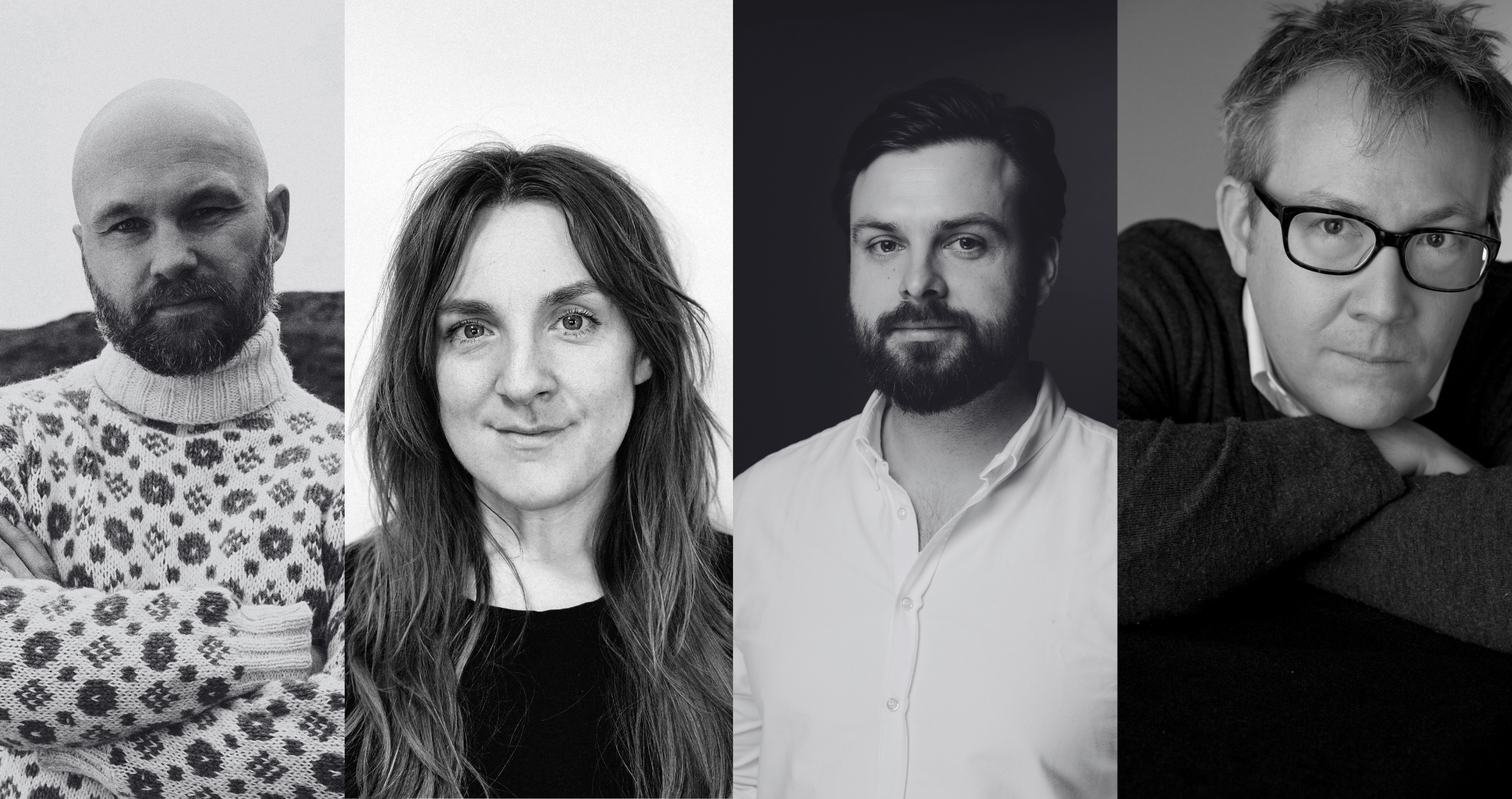
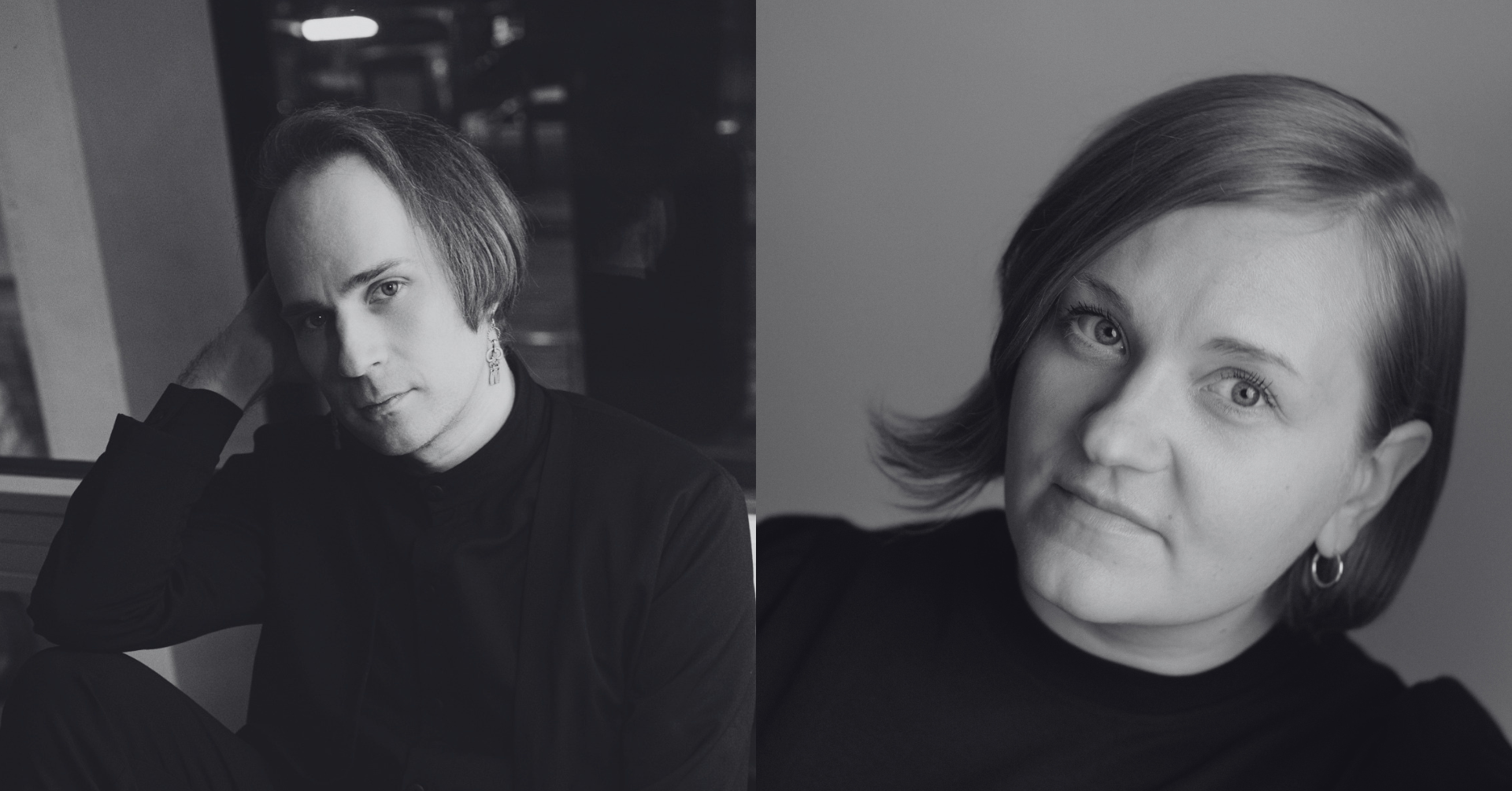
Pelle Rådström, Maria Eriksson Hecht, Lizette Jonjic, Ronny Fritsche / Photo: Agnieszka Czaplewska, Karin Alfredsson, Ola Kjelbye, Patrik Axén
×
NEWS

Sweden’s Nordic Council Film Prize nominees on fictionalising children’s survival strategies in a tough adult world

Pelle Rådström, Maria Eriksson Hecht, Lizette Jonjic, Ronny Fritsche / Photo: Agnieszka Czaplewska, Karin Alfredsson, Ola Kjelbye, Patrik Axén

Director Maria Eriksson-Hecht talks about how she worked with the young debutants that came to shine alongside experienced actors. “The young cast’s energy, presence and professionalism surprised us all,” says producer Ronny Fritsche.

The Swedish director Maria Eriksson-Hecht and writer Pelle Rådström, as well as producers Ronny Fritsche and Lizette Jonjic, are nominated by the Swedish jury for the Nordic Council Film Prize 2026 for their feature film Kevlar Soul (Kevlarsjäl).

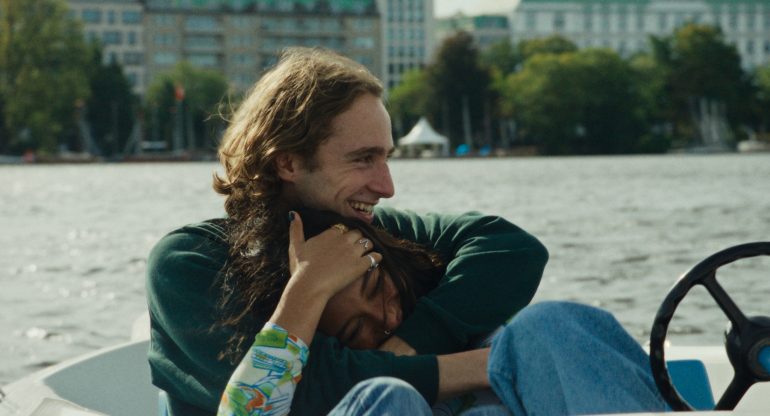
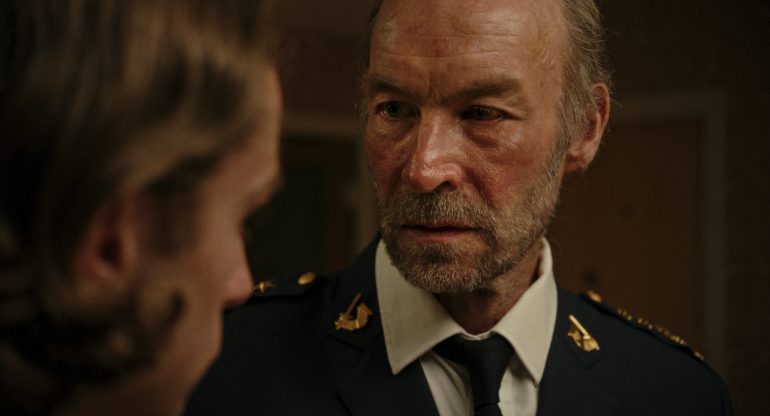
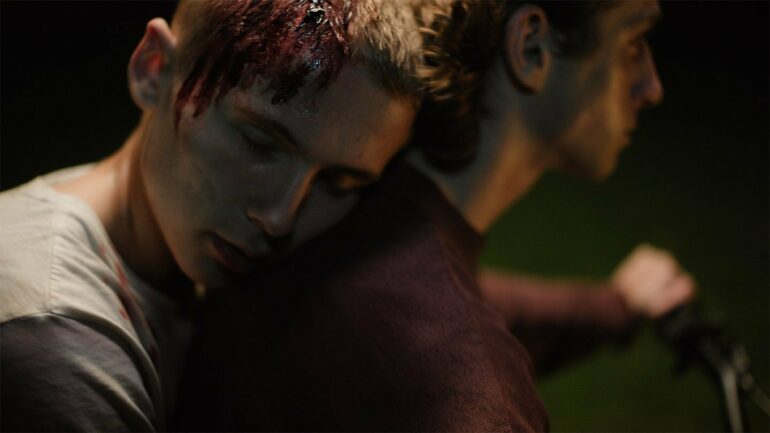
In the film, teenage brothers Alex and Robin are left to fend for themselves, as the adult world has let them down. Their strong bond is faltering when Alex experiences his first love. Robin, who has relied on his older brother until now, feels abandoned, and spirals into freefall.

Eriksson-Hecht holds a master’s degree in directing from the Stockholm Academy of Dramatic Arts. She is known for her portrayals of children who struggle with the challenges of an adult world that has failed them. Her 2017 graduation film Schoolyard Blues (Skolstartssorg) received more than 40 awards across more than a hundred festivals. Since then she has directed episodes for the acclaimed series Thin Blue Line (Tunna blå linjen) and Thunder in My Heart. She earned a Guldbagge Award for Best Director for her nominated debut feature Kevlar Soul.

Nordisk Film & TV Fond (NFTVF) publishes interviews with all the nominated directors, writers and producers. For all nominees: CLICK HERE.

Director Maria Eriksson-Hecht:

What inspired you and the scriptwriter to make this film?

Pelle, the scriptwriter, and I have made several short films about children and young people who, in the absence of responsible adults, are in a sense forced to become their own parents. Films that explore children’s survival strategies. In many ways, Kevlar Soul is a further development of themes from those films. We've also found inspiration in the countless interviews we've done with former criminals and people who grew up in circumstances similar to those of the characters in our film.

The fact that we continued with these themes from our short films also has a lot to do with changes in society. With youth crime becoming more serious, and a societal response that is almost entirely punitive, offering little in the way of prevention or any attempt to understand how these young people ended up where they are.

You have worked with themes of young people and destructive relationships with adults before. Why are these themes important to you?

I've witnessed, in various ways, up close and from a bit further away, how these kinds of relationships form and develop between children and adults. Children's survival strategies both move me deeply and leave me amazed at how creative and capable children can be. Then there's also a political dimension to it. I think the way a society succeeds or fails in relation to its children is a pretty telling measure of whether that society is functioning well or not, and whether society is developing in the right or the wrong direction. If you ask me, my home country, Sweden, is heading in a dangerous direction on these issues.

This is your debut feature film. How did you experience moving from shorts and tv series to the feature film format?

The big difference is really just that everything takes much more time. It takes longer to finance, longer to pre-produce, to shoot, edit, do sound design, and finally to launch the film. Otherwise, everything is very much the same. The work itself is the same, and I've also worked with roughly the same team size on short films, series, and the feature film. The uniquely great thing though about the feature film format as a storytelling expression is that you have the opportunity to go deeper and tell a story with another kind of concentration. The feature film demands that the audience sit focused (ideally together with others in a cinema theatre) and watch it for about 1.5–2 hours. And as a feature film, the story also lives on longer. I mean, it’s amazing that, about 1.5 years after our premiere, we're still able to show the film to new audiences in cinemas.

This film emanates from tough relationships, and you worked with both professionals and unexperienced actors. How did you direct the young actors, and how did the cast find the expression you were looking for?

I enjoy working with a mix of new and experienced actors. When you're portraying young people the way our film does, you need to find new talent. So almost all the young people in our film are first-time actors. As always, we work very thoroughly with casting, and the casting director Simon Borka Otterstål, together with his assistants, did a tremendous job finding these young people. People who both fit the specific roles and are able to work with the wide emotional range this film demands. There are several very demanding scenes that they carry off in a way that feels both true and vulnerable.

As always, I prepare the actors extensively before filming. I run a kind of small acting school with them. A 10-day workshop where my assistant director and I do various exercises and scenes in different constellations, so they can get to know each other, me, and their characters. We also do camera-technical exercises with the cinematographer. All of this is to build trust and a sense of safety, so they can deliver their very best once the camera is rolling. Filming is often a pressured and stressful situation in many ways, but by then we've established a way of working together so they can work from a place of safety.

I don't rehearse scenes from the script in advance (except for stunt and intimate scenes). Instead, I focus on the relationships. On set, I then try to create a permissive atmosphere where the actors have a lot of freedom. I encourage them, but I also set high standards, so there tend to be many takes. I work extremely close with my actors, and I always end up falling a little in love with their expressiveness - that's exactly why I choose them. I love watching them and hearing their voices. That's important to me, it's what gives me the energy to see the work through all the way to the end. My love for working with actors is perhaps the main reason I ended up making fiction films.

The film portrays a destructive family. How does it reflect today’s society?

Sweden is a country that has changed enormously during my lifetime, with sharply widening economic divides, an eroded welfare system, and rising child poverty. In the wake of all this come the major problems of very brutal youth crime, and young people who lack stable adult role models and who are repeatedly failed by society. It's this Sweden that our film portrays.

×
NEWS

Sweden’s Nordic Council Film Prize nominees on fictionalising children’s survival strategies in a tough adult world

Kevlar Soul / Photo: Josua Engblom

Scriptwriter Pelle Rådström:

The nominated scriptwriter Pelle Rådström holds a master’s degree in screenwriting from Stockholm University of the Arts. He has written several acclaimed and award-winning short films, feature films, and television series, including the series Pressure Point (Smärtpunkten), that won NFTVF’s prestigious Nordic Series Script Award in 2025.

What inspired you and the director to make this film?

Maria, the director, and I live together, make films together, and have children together. Around the same time we became parents ourselves, we started noticing a shift in the public debate around what a child is and what kind of responsibility can be demanded of a child. In Sweden, over roughly the past ten years, we've had significant problems with very serious violence linked to gang crime and drug dealing - violence in which both perpetrators and victims are, for the most part, very young people.

Rather than viewing a development like this - young people shooting each other to death - as a major societal failure, Swedish politicians have gone in a different direction. To a large extent, they have individualised the question of blame, placing it entirely on the young people who commit these acts. How far this thinking has gone becomes especially clear in one example: Our current government is pushing to put middle-school-aged children in prison. This is despite all research showing that this kind of brutally repressive measure only cements children's and young people's criminal identity.

With our film, we want to remind people what kind of lives the majority of children and young people who commit crimes actually live. We want to remind people what a child actually is - apparently this kind of basic lesson is still needed for politicians both from the right-wing camp and within the Social Democratic party. And we wanted to raise the question of who actually bears responsibility for children's criminal acts.

What is “kevlar soul” for you personally, and what was the impact of Kent’s song “Kevlarsjäl” with the same name as the film?

Kevlar is one of the toughest and most durable materials in the world, used for example in bulletproof vests. In our film the title is a kind of metaphor for how the young characters have been forced to create a protective shell around their soul, their emotional life, in order to survive.

We borrowed the title from a song by the Swedish rock band Kent. I always make playlists when I start working on a new film project. I do this to find a kind of tone, a feeling, that I want to run through the film or series I'm working on. For this particular film, though, it ended up being one song rather than a whole playlist that captured the feeling I wanted my script to carry. In the end, the song became so guiding, both in its tonality and its lyrics, that my script, oddly enough, became a kind of interpretation of the song, even though the song hadn't been the starting point for the project.

What themes were most important for you to explore?

A screenwriter colleague of mine told me, after seeing Kevlar Soul and having previously seen the TV series Pressure Point (Smärtpunkten), which I wrote for SVT, that he had started to experience my screenwriting as very Christian. He described it as a kind of cosmic struggle, between good and evil, over my characters' souls in both the film and the series. Even though Christianity has never been a consciously guiding part of my thinking or my identity, I think there's something to what he said.

If I go back to my original notes, from when I was trying to work out what I was setting out to write, there's quite a lot in there about sibling love, children's survival strategies when adults fail them, and individual versus societal responsibility. All of this has been important. But so, I suppose I should add now in hindsight, has salvation and damnation, and the possibility of reconciliation and forgiveness.

×
NEWS

Sweden’s Nordic Council Film Prize nominees on fictionalising children’s survival strategies in a tough adult world

Kevlar Soul / Photo: Josua Engblom

Producers Ronny Fritsche and Lizette Jonjic:

The films’s two nominated producers are Ronny Fritsche and Lizette Jonjic.

Fritsche is known for his environmental work in the Swedish and Nordic film industry, in his own productions, as well as for his support in sustainability work in other productions. Jonjic has been in the Swedish industry for almost thirty years, gaining several recognitions for her work as producer.

Fritsche: you are known for your valuable environmental work, how green is this film?

For me, as someone who has been working to advance these issues for many years, it was important from the very first moment the director and screenwriter pitched the idea that I could see the opportunity to make a film in which sustainability would be given genuine space throughout the entire process, and treated as a priority.

That ambition shaped my work from the very beginning, from the financing strategy to the way we planned and carried out the production.

In some ways, I actually saw it as a positive challenge that the film itself is not about climate change or the environment in the storytelling. I wanted to set a case, to inspire others, and most films are unfortunately not about climate-related issues today. And our story deals with something entirely different as well, but environmental work should belong behind the camera in all cases. Sustainability should not only be reserved for films that explicitly address environmental themes.

The film is about social injustice and about creating better conditions for young people. In that sense, it felt completely consistent that the production itself should also take responsibility for protecting their future. If we are telling a story about caring for the next generation, it should not come at the expense of the planet they will inherit.

The entire sustainability journey was documented by Kaisa Astikainen as part of her doctoral research at Aalto University, and a published article describes the process in detail.

The film was later recognised for its sustainability work and was nominated for environmental and sustainable production awards at both Berlin International Film Festival and Cannes Film Festival.

Jonjic: you were a co-producer of e.g. Norway’s nominee Sentimental Value. How important is Nordic collaboration to you?

I think Nordic collaboration is incredibly important. I enjoy collaborating across the Nordics and Europe. It's inspiring and creatively rewarding to work with people who bring different perspectives, while sharing many common values. We also share a unique and important support system across the Nordic countries, and that makes it possible to take creative risks and produce films that might not otherwise be made. Co-productions allow us to share both the financial responsibility and the creative ambition. Without these collaborations, many of the films we want to make would be much harder to realise, and I also think we need to join forces now more than ever.

What were the biggest challenges and moments of joy when producing this film?

Fritsche: Every production has its stories, and I think part of my role as a producer is to know which ones should remain behind the scenes. So let’s just say we faced some very challenging situations, and leave it at that. The greatest moments of joy came from the young cast. Their energy, presence and professionalism surprised us all. We knew they were talented, of course, but they brought a level of commitment and emotional truth that was far beyond what you might expect from children. The truth is that I expected them to be troublemakers, but they were the opposite.

Jonjic: One of the biggest challenges was balancing the creative vision with the realities of a co-production. With several financing partners came different spending obligations and production requirements that all had to align, so there wasn't a lot of room for improvisation.

How would you describe the current state of the film industry in Sweden?

Jonjic: Sweden has a great filmmaking tradition, but the industry is facing a challenging moment. Compared with our Nordic neighbours, public investment in film is significantly lower, making it difficult to sustain a strong and competitive film sector. There was considerable hope surrounding the recent national film inquiry (Filmutredningen), which presented a number of proposals to strengthen the industry. However, many of us were disappointed that the political follow-through has not matched the ambition of the report. We are still waiting for the long-term commitment the sector needs. With a national election approaching, I hope culture and film become a much larger part of Sweden's political conversation.

Official trailer:

RELATED POST TO : AWARDS / NORDIC INDUSTRY NEWS / SWEDEN