Subscribe to newsletter

Get the latest film & TV news from the Nordics, interviews and industry reports. You will also receive information about our events, funded projects and new initiatives.

Denmark’s Nordic Council Film Prize nominees share personal and industry experiences that made the film Beginnings happen

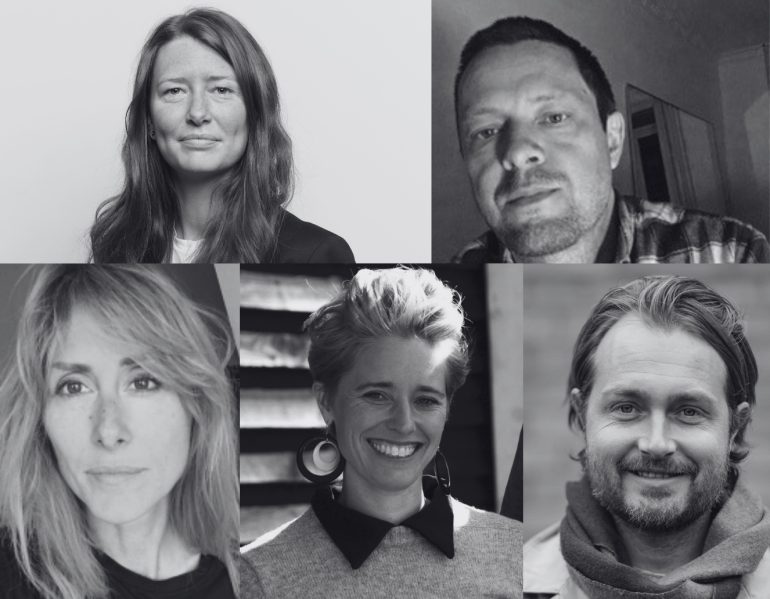
Jeanette Nordahl, Rasmus Birch, Eva Jakobsen, Katrin Pors, Mikkel Jersin / Photo: Donald Chamber, Snowglobe, Rolf Konow, private
×
NEWS

Denmark’s Nordic Council Film Prize nominees share personal and industry experiences that made the film Beginnings happen

Jeanette Nordahl, Rasmus Birch, Eva Jakobsen, Katrin Pors, Mikkel Jersin / Photo: Donald Chamber, Snowglobe, Rolf Konow, private

Nominated writer-director Jeanette Nordahl and writer Rasmus Birch know how an illness can affect a family. The producers talk about challenges when protecting the creators’ vision in today’s tough economic climate.

Danish writer-director Jeanette Nordahl, writer Rasmus Birch, and producers Eva Jakobsen, Katrin Pors and Mikkel Jersin are nominated by the Danish jury for the Nordic Council Film Prize 2026 for their feature film Beginnings (Begyndelser).

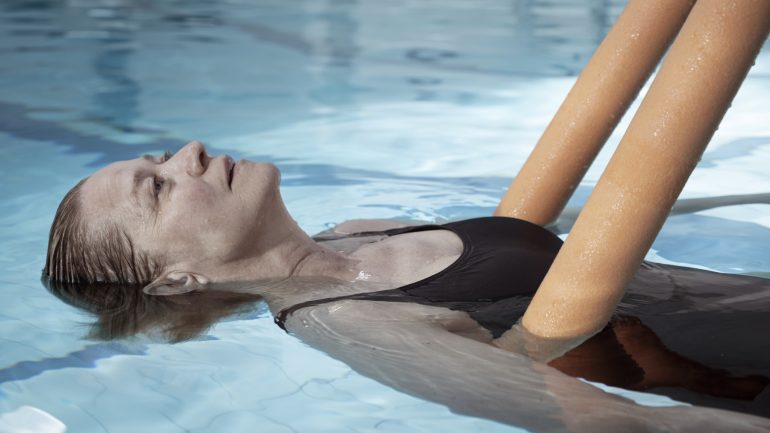
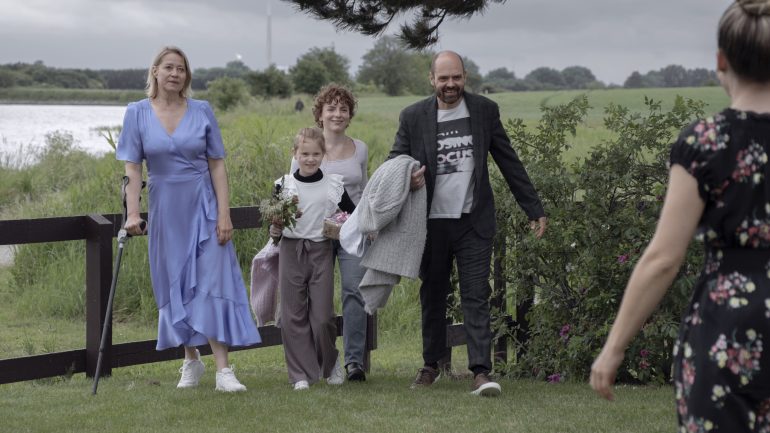
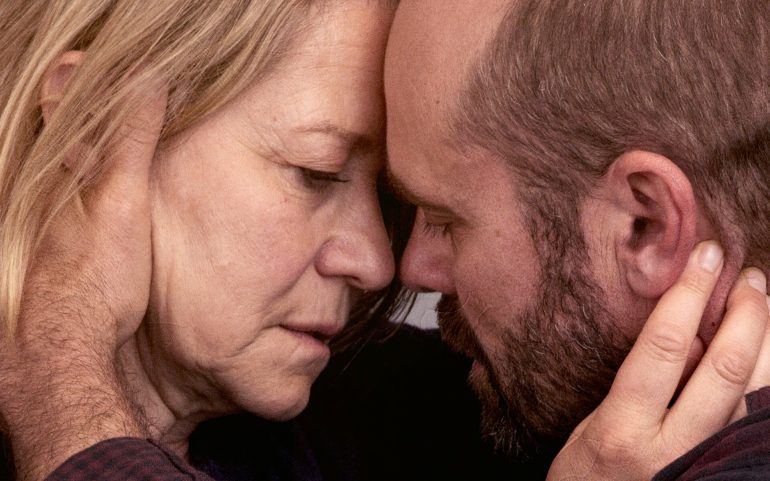
In the film, amid divorce, Ane (Trine Dyrholm) suffers a life-changing stroke, forcing her and Thomas (David Dencik) to stay together and delay telling their children. Together, they face a new reality, and find hope in unexpected places.

Nordahl graduated from the independent film school Super16 in 2012. Her critically acclaimed debut feature film Wildland (Kød & Blod) premiered at the Berlinale in 2020. Since then she has directed several series, most recently the three first episodes of the BBC drama Waiting for the Out, which won Best Script at this years SeriesMania. Beginnings is her second full-length feature.

Nordisk Film & TV Fond (NFTVF) publishes interviews with all the nominated directors, writers and producers. For all nominees: CLICK HERE.

Writer-director Jeanette Nordahl:

What inspired you to make this film?

This film is very close to my heart. It is a story I’ve been trying to tell for years. I grew up in a family where illness played a huge part. When I was 10 years old, my father became seriously ill. It started with a blood clot in his leg, then another in his lung, and later several smaller clots in his brain.

I remember thinking, “How do we get through this? How do we move on from something like this?”

These questions have become the essence of Beginnings, exploring what happens after disaster strikes, and how we move forward when everything we know has changed.

The film explores how a sudden health crisis can transform a relationship. What research or personal observations became important during the development process?

A crisis, in any form, brings change. In our story, when Ane falls ill, it affects not only her, but the entire family. The life they once knew changes, and the way they relate to each other begins to shift. Exploring these dynamics became our main focus during the development process.

Talking to families who had gone through similar experiences was incredibly important to us. We wanted to capture every emotion with nuance - including the uncomfortable and shameful ones. These are feelings I recognise from my own experience as a child: not feeling able to cope or feeling overwhelmed by the illness and the complete loss of control.

But I also remember experiencing a different kind of closeness to my parents, and noticing a different warmth in their relationship despite everything they were going through. The first time I saw my parents kiss was after my father became ill. That memory stayed with me throughout the development of this film.

What did your actors, and especially Dyrholm who portrayed a stroke patient, bring to the film?

Everything. They brought everything. They are the film. Trine Dyrholm and David Dencik portray these characters with such honesty and complexity. They are fearless actors who know each other well and genuinely enjoy working together. We improvised in almost every scene, and together we explored what the characters were capable of.

Trine is a force of nature. Physically, it was a very demanding role, and she gave everything - both in her preparation and during filming. She told me many times that she had to let go of all vanity in order to play Ane with the honesty and respect she felt the character deserved – and to be able to explore each scene freely. And she did. She truly did.

The children are extraordinary. We were incredibly lucky to find Bjørk Storm and Luna Fuglsang Svelmøe. They both have the ability to be emotionally present in a scene and react instinctively. Honestly, I enjoyed every moment working with these actors.

The film deals with complicated family themes; how did you decide on the story’s ending?

The ending in the film is the ending I wrote in the original treatment eight years ago. The ending was the idea. The ending was the point of it all. And I’ll leave it at that, so I don’t spoil it here...

×
NEWS

Denmark’s Nordic Council Film Prize nominees share personal and industry experiences that made the film Beginnings happen

Beginnings / Photo: Christian Geisnæs

Scriptwriter Rasmus Birch:
The nominated scriptwriter Rasmus Birch’s debut feature Brotherhood (Broderskab) won several awards, including the main prize, at the Rome International Film Festival in 2009. Since then he has written scripts for several critically acclaimed productions, such as When Animals Dream (Når dyrene drømmer), Miss Viborg, Acts of Love (Kærlighedens gerninger), and recently premiered No Rest For The Wicked.

What inspired you to make this film?

I grew up in a family where illness played a big part, and where the dynamics of the relations within the family were influenced by it. In many ways the trauma becomes collective to the family, every family member is influenced by the illness and has to relate to it themselves, even those who are not physically harmed. But though the trauma itself is negative, it has a natural urge to transform into a starting point for something positive as well; affirmations of love, reassuring insights, unknown strengths, courage and new beginnings. So many families find themselves in this type of conflict, and I really wanted to give them a film where they feel seen and validated.

Can you describe the process behind creating the story and the characters?

When director Jeanette Nordahl presented me with the first draft that she wrote, I could instantly tap into the emotional world and dynamics of the family. Our similar family stories created a very personal space between us that made it very inspiring for me to move the story and the characters onwards from first to shooting draft. Between the two of us there was a lot of material to create from.

From the start it was important not only to make the story about the disease, but about the family and the love among them as well. These relations were the axis of conflict. Though Ane’s identity battle after the stroke runs as a line of its own, this is always under the influence of her relations to Thomas or the kids.

You are known for films that link to other genres, like mystery, fantasy, horror and comedy, how does the process differ when you write pure drama?

The process actually does not differ all that much. It is still primarily about the characters and their story and how you put that into play in the best way possible. Naturally some of the tools are different in genre films, we couldn’t let Ane’s frustration take the physical shape of a werewolf here, but on an abstract or mental level, Ane is not far from going full werewolf in some of the scenes. In that manner, it is the same, but different.

I guess I always strive to let the inner life of a character out on the screen. Sometimes in a more genre-like or in a subjective way, as we did with the dancing scene in the film. Here the pure drama is disrupted by something more genre-ish or elevated, which I really like.

How did you collaborate with the director when writing the script? Did you e.g. take part in casting or the final edit?

Working with Jeanette is not only a big pleasure, it gives you the sense of working in a team. She has the gift of bringing out the best in everyone, and she’s not afraid to let others shine in what they do best. And for me, that’s writing. So I took on the script from first draft and on, but with her ideas and guidance all the way. Though she is naturally the captain of the ship, she wants input. In that regard, being a feedback partner in casting and editing felt natural to me, like a team effort, as did Trine and David’s big engagement in the script before and during shooting - a very dynamic process in which Jeanette and I were in touch daily, rewriting scenes or pieces of dialogue in order to keep the material organic and authentic.

×
NEWS

Denmark’s Nordic Council Film Prize nominees share personal and industry experiences that made the film Beginnings happen

Beginnings / Photo: Christian Geisnæs

Producers Eva Jakobsen, Katrin Pors and Mikkel Jersin:
The film has three nominated producers: Eva Jakobsen, Katrin Pors and Mikkel Jersin. All three producers are founders of the production company Snowglobe. Jakobsen has more than 50 titles to her name, including Miss Viborg and Wildland. Pors is known for building creative collaborations, and has been nominated several times for the prize, recently with Godland (Vanskabte land). She is also a nominated producer for this year’s Icelandic NCFP nominee The Love That Remains (Ástin sem eftir er). Jersin has been involved in more than 55 feature films. He co-produced Icelandic Nordic Council Film Prize 2015 winner Virgin Mountain (Fúsi) by Dagur Kari and 2016 winner Louder Than Bombs by Joachim Trier. He also produced the 2015 Icelandic Nordic Council Film Prize nominee Sparrows (Þrestir). All three producers were also co-producing The Worst Person in the World (Verdens verste menneske), Norway’s Nordic Council Film Prize nominee in 2022.

What were your individual reasons for making this film happen?

Jakobsen: Jeanette Nordahl and I go back to the very beginning of our careers as filmmakers.

We developed and produced her first feature, Wildland, together at Snowglobe, the production company where Mikkel, Katrin and I were partners.

With Beginnings, there was both a strong artistic and a deeply personal motivation. The story is very close to Jeanette’s heart, and its themes resonated strongly with another long-term collaborator of mine: writer Rasmus Birch.

From the beginning, it was clear that this was not only a film about illness, but about what sudden illness does to an entire family. The trauma becomes collective. Even those who are not physically harmed are changed by it, forced to redefine their roles, their relationships and their understanding of love. But the film is also about how something painful can become the starting point for something new: a deeper affirmation of love, unknown strength, courage and new beginnings.

As a producer, I felt a strong responsibility to help bring this story to the screen, because it speaks to something many people recognise, but which is rarely portrayed with this level of authenticity and emotional complexity.

Pors: We were so lucky to produce Jeanette’s first feature Wildland that premiered in 2020 in Berlin. Jeanette is for me one of the biggest talents of her generation in the Nordics, and has the rare capability to make a film that both touches, tells an important story, and at the same time has a high cinematic quality that makes it appeal to both a broad local audience and the international festival circuit. I hope Jeanette will be making many more films in Denmark.

Jersin: At Snowglobe we believed in the story, and Jeanette is a very gifted director. We wanted to bring her story to an audience.

What was the most difficult and most joyable moments of the financing and production process?

Jakobsen: The most difficult part of the process was the financing.

The Danish Film Institute changes its artistic commissioners every four to five years, and Beginnings had to change hands during the process. That transition made it difficult for us to secure the crucial initial production grant, which forced us to look for alternative ways to finance the film.

In the end, that challenge pushed us towards a more international financing strategy. Fortunately, we were able to secure support from European co-production schemes and supranational funds such as the Nordisk Film & TV Fond and Eurimages. We could not have managed that strategy without the unwavering support of FilmFyn, our international sales agent REinvent, our Nordic distributor Scanbox, and the commitment of our main cast, Trine Dyrholm and David Dencik.

It was a long and demanding road. Eventually, the Danish Film Institute came in with the final piece of financing, which enabled us to make the film.

Pors: The financing of Beginnings was long and complex. During that process, staying true to the core of the film, Jeanette’s voice and the reasons to make this film, was sometimes difficult to balance, while still pushing forward for the financing.

The most rewarding for sure is the response from the audiences that have been moved, and all the dialogue among audiences that it has created.

Jersin: Financing was difficult, completing the journey was enjoyable.

How did the three of you collaborate as producers?

Jakobsen, Pors, Jersin:

In the early years of Snowglobe, we made a conscious decision to work collaboratively and to credit ourselves equally on all films, while still having one of us take the lead producer role on each project.

That lead position would usually arise quite naturally, depending on who had developed the project and who had the closest relationship with the director and writer.

On Beginnings, as with our other films, the collaboration was built on a common ambition to protect the director’s vision.

How would you describe the current state of the film industry in Denmark?

Jakobsen: Challenging.

The market has rarely been less willing to take risks on projects that are not obviously commercial, genre-driven or upbeat.

For filmmakers working within arthouse cinema, this means that we have to be even more insistent, inventive and strategic in the way we finance, produce and distribute our films.

At the same time, I believe there is a real responsibility in continuing to cultivate talent and original voices. Danish filmmakers must be allowed to develop their craft, their vision and their cinematic language — also in Denmark, and in the Danish language. If we want to remain relevant as a film nation within a global industry, we need to acknowledge what sets us apart.

There are also reasons to be hopeful. Denmark has recently strengthened its position as an attractive co-producing country through the introduction of the new tax rebate, and with emerging regional funding structures that also include Copenhagen. Hopefully, these developments will help the Danish film industry flourish and create new opportunities — not only for larger productions, but also for ambitious, director-driven cinema.

Pors: I think we are among the luckiest producers in the world. We have an institute, a regional film fund, tax credit distributors, and broadcasters that both support upcoming talent, author-driven film and films for a broader audience, as well as international productions.

Of course it’s competitive, and we have to do our best every time we make a film, but I believe we are lucky to have a system that supports a broad variety of film. Only a few films make it internationally, but almost every year we have Danish films competing at top festivals and awards, as well as big local success and the emergence of new talent. I think it’s important that we keep on believing in, supporting, and helping talents grow.

Jersin: Challenging and ever-changing, but still very creative and ambitious.

Official trailer:

RELATED POST TO : AWARDS / NORDIC INDUSTRY NEWS / DENMARK