“Misanthropy is easy. Dystopia is easy. It’s for brats and art students. I’ve been both, but this time I wanted to show an entertaining path, from hate and isolation to intimacy and reconciliation.”

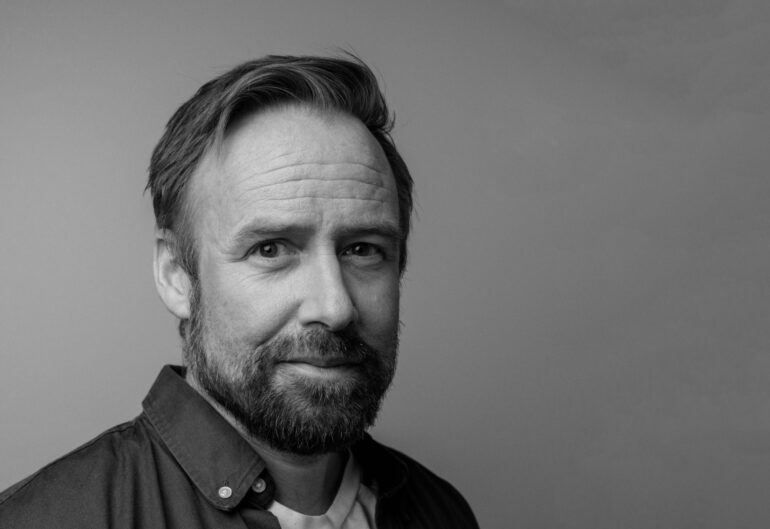
Norwegian writer and director Thomas Seeberg Torjussen is nominated for the Nordic Series Script Award 2026 for the four-episode drama series A Better Man (Ølhunden Berit). Seeberg Torjussen has written series, feature films, and stage plays.

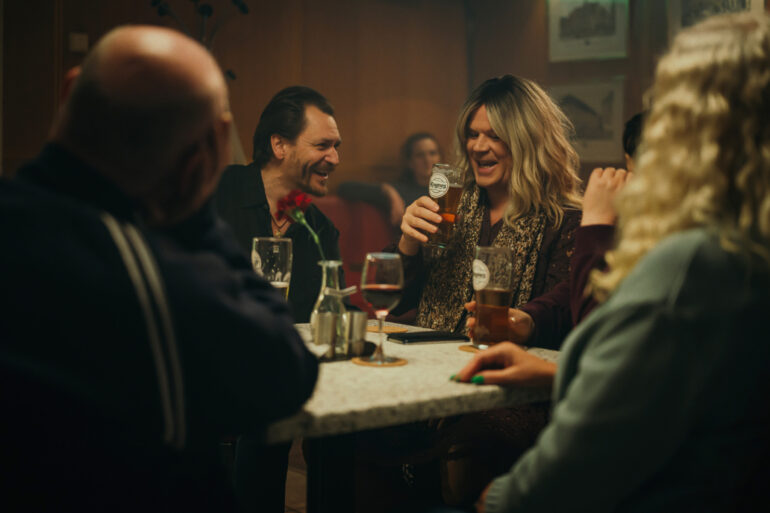
Tom is an Internet troll that works in his mother’s clothing store by day and unleashes his fury on the Internet by night, where he blames feminism for everything that according to him is wrong with today’s society. When his identity is revealed by hackers, the troll is trolled himself. Tom needs to hide, and dresses up as a woman. Through his new identity as Berit, the world opens up to him in surprising ways.

A Better Man premiered on NRK November 9, 2025, and is produced by Maipo Film.

Why and how did you become a scriptwriter?

I’ve told stories all my life, understood the world through them, and always used the anecdote as argument. I have wanted to be a writer since the age of eleven. While working in a video rental shop at nineteen, I realised that all the films I watched had been written by someone, and that screenwriting was a thing. I worked several years as a journalist before I finally applied for film school. I’m not a cineast, but I’ll tell stories wherever people let me - theatre, stage, radio, TV, and film.

What inspired you to create A Better Man and its characters?

It started with Tom, the main character, and my first notes are from 2011. I read Anders Behring Breivik’s manifest (our domestic 22 July terrorist), and like with the people he copied and the people who copied him, misogyny is very prevalent, and feminism is to blame for most of society’s faults. This occurs in every male subculture on the political right, whether doomsday preppers, Maga-boys, incels, gooners, and so on. I also like to study echo-chambers online as one character. Why is he so mad? Where is the sorrow underneath? What is the inner logic?

In 2016, when the script was fully developed, I realised that punk had moved from lefties to alt-right-people. My youth was filled with punk and being contrarian just for the sake of it. Today, in our egalitarian, progressive Nordics, the ultimate provocation is saying feminism was a mistake - that women belong in the kitchen. It led me to believe that these online misogynists are not all deeply rooted in their beliefs, but the feeling of being irrelevant to the economy and unwanted by women is impossible to rebel against. Edgelording and neo-reactionary posturing is one outlet.

What was the process behind creating a character who is both sympathetic and behaves like a misogynistic incel?

Like an actor, I believe a writer should love and defend his or her character. I believe you can be smart and still fall down a rabbit hole and be lost. When I procrastinate, it seems to be in the darkest corners of the Internet, and I have collected and sampled the sharpest and funniest, in my opinion, misogynists online. Jon Ronson’s book “So You’ve Been Publicly Shamed” has also been a great influence towards understanding his downfall and our reaction to it. It is a collection of interviews with people who have been doxxed (exposed) online after sometimes minor missteps. And it shows how eager we, who believe we stand in the light, are to condemn, and what a lynch mob we can be.

What themes became most important to you during the process?

That the real world, the analogue world, is much nicer and far more forgiving and pragmatic than the online world, and that people with too much screen-time seem to confuse the two worlds, and have lost faith in forgiveness, and that change is possible.

Once the script was greenlit, how did you balance your roles as a director and writer?

Occasionally I direct other people’s material, and I find it much harder than when having written the scenes myself. Every question an actor may ask, I have asked myself while writing.

How did you and co-director Gjyljeta Berisha collaborate?

Gjyljeta Berisha is a new acquaintance, and a fantastic one. She has been a pivotal part of this. She lives and breathes filmmaking, and I’ve come to regard her as something of a genius. Since I mainly write, I’m on set maybe every third year, and see myself more as a series creator than a director. Gjyljeta, by virtue of also being a script-supervisor, has enormous set experience, and sees things that I don’t. There are traces of her hawk-eyed attention to detail in every frame.

How do you find your very special balance between humour and drama? How do you avoid being too funny, in order to not lose depth?

I think in drama as in life, when things become too bleak, one needs to find a way to laugh at it. At least that is how I cope, and write.

I believe comedy in its core is a violation that is also somewhat benign. There is nothing benign about actually killing your whole family with AIDS, but the fact that Audun hasn’t got it, yet is convinced he has, makes all his torment, at least in hindsight, comical. I will always try to make a story funnier if it has the potential, and I don’t think a scene can be too funny, as long as the situation feels true, and the actors are not aiming for the laugh. There are times when actors want to approach a funny scene with comedy-acting, but I never allow that. I’m the only one allowed to be funny, he-he. It just seems funnier to me if the ridiculous is treated with sincerity. It’s been said about my writing since Norwegian Cosy (Koselig med peis) in 2011, that it is both funny and serious, as if that’s some sort of contradiction, or a weird new genre. I’ve never understood this. Comedy and tragedy have always been holding hands.

Having worked with films, stage plays and series: How do you decide which stories must be told in the series format?

I try to stick to the principle that the idea/story should choose its own format, and its collaborators. I never set out to write a series or a film or a play. I work with an idea till it tells me what it needs to be, and who it needs in every department in order to come alive. Yet, this time, it changed format. I was certain that A Better Man was a feature film, because it is somewhat of a road-movie, and the character changes profoundly.

I spent seven years trying to persuade the Norwegian Film Institute to fund it. When NRK asked if I wanted to make it into a series, I said yes, if I could do it in four parts, since it’s written in four acts. One of the many objections from the Institute was that it was too long; two hours and thirty minutes, so the script had been on an endless and futile diet when I was suddenly asked to put on weight and make it into a three hours and twenty minutes series. It was such a joy! Killed darlings came back alive, and the whole sequence with Audun in the orgy was written in a frenzy after I gave it up as a feature film. So all in all, I am grateful that it became a mini-series.

What was your biggest learning from A Better Man?

It has been incredible to read the feedback from viewers in the countries where it is now showing. The series contains so much hate and shame, dicks, vomit, and suicide, that I was afraid people would find it disgusting. Instead they write that it was warm and beautiful and gives hope. I‘m amazed. I guess when the ending is good, all is forgiven.

Things turn out as well as possible for all the characters in the end, and that has been the subject of much debate. Some of my friends are too cool for happy endings and find the last episode a bit embarrassing. But my thought has been that these are dark times, and that people need to believe that things can change for the better. I also believe the audience deserves it after all the gross stuff. Misanthropy is easy. Dystopia is easy. It’s for brats and art students. I’ve been both, but this time I wanted to show an entertaining path, from hate and isolation to intimacy and reconciliation.

The last few years have been quite tough for the drama series industry. How would you describe the current situation in Norway?

Terrifyingly many skilled colleagues are without jobs. Our politicians seem historically uninterested in the cultural sector, and the importance of telling local stories in our own language, moreover they don’t understand that we are also an industry. It’s disheartening, and if they don’t step up soon, we will lose competence for good.