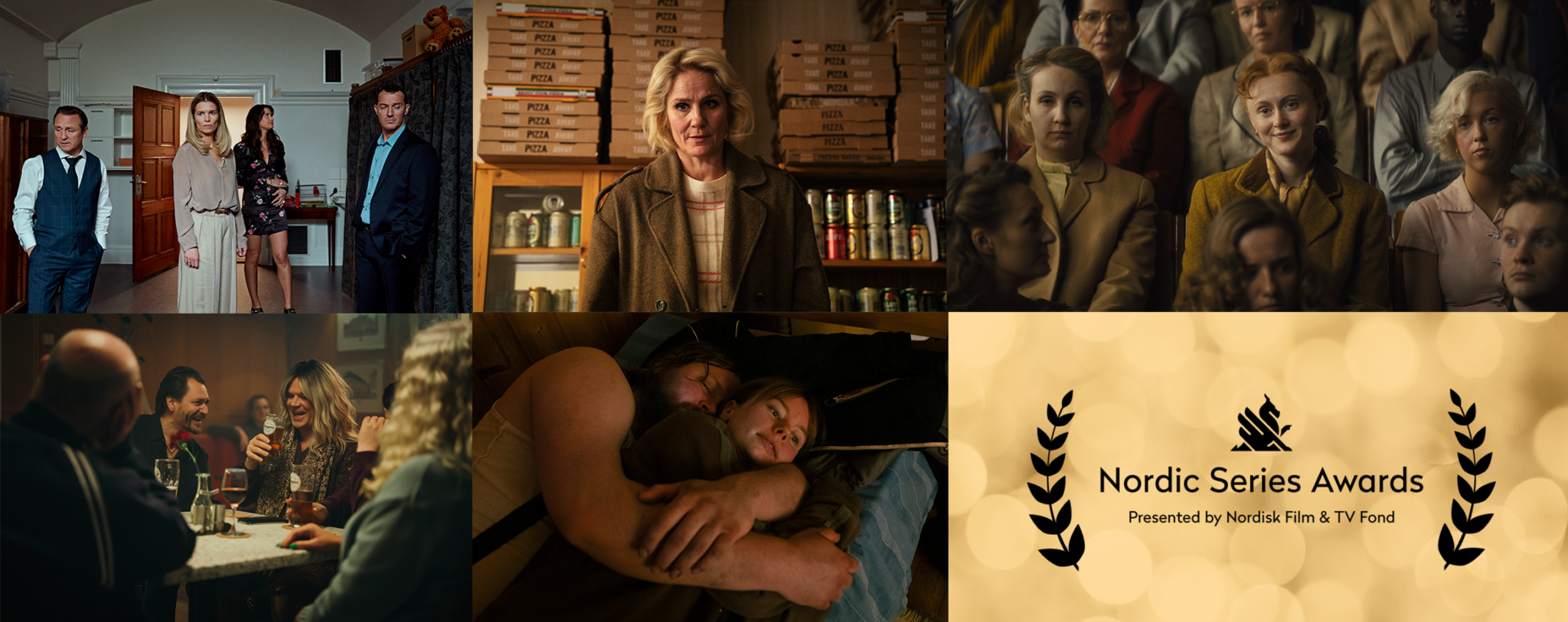
Writing suspense series comes natural to Topsøe, who wants her audience to stay hyper-alert. Secrets We Keep was inspired by personal experiences from the au pair system, which she today sees as political.

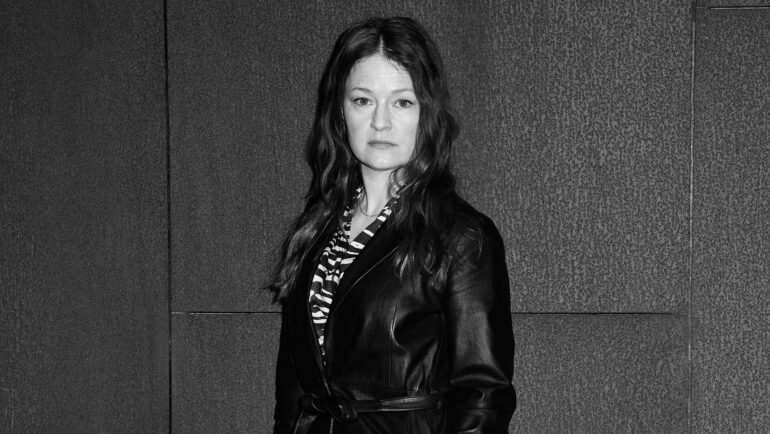
Danish writer and creator Ingeborg Topsøe is nominated for the Nordic Series Script Award 2026 for the six-episode drama series Secrets We Keep (Reservatet).

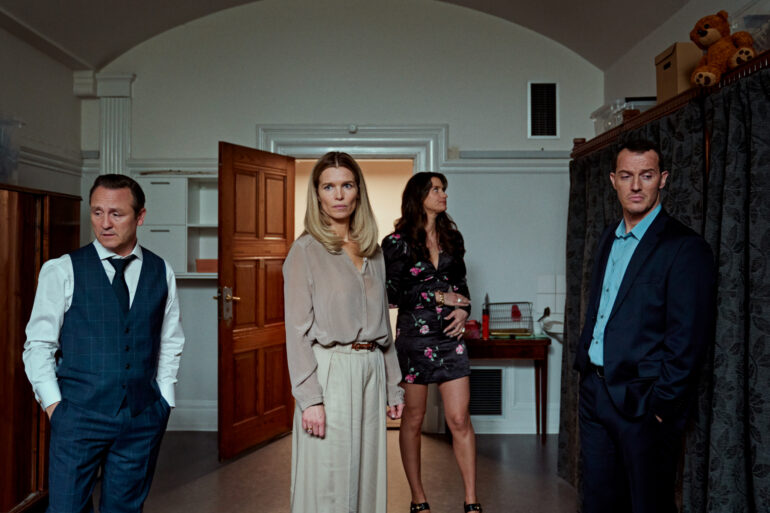
The series relates the story of the disappearance of an au pair from a wealthy suburb, which brings the lead role character Cecilie to seek answers to why her neighbour family’s au pair vanished. Secrets are unravelled, and her seemingly perfect world is crumbling.

Secrets We Keep premiered on Netflix on May 15, 2025, and is produced by Uma Film.

When and how did you become a scriptwriter?

I started studying philosophy at the University of Copenhagen after high school, but because I experienced a pretty bad depression, I stopped going to classes during the second year and couldn’t really uphold my everyday life. In order to get some structure back into my life, I decided to apply for the European Film College. You live at the school and eat all three meals with the other students, and have classes most of the day and various events in the evenings. This is where I first started writing fiction.

Later on I finished my BA in philosophy with an exchange year at UCLA, where I took a minor in creative writing. Then I really fell in love with writing. I remember one of my teachers, who was a novelist, said that if the TV business had had the same opportunities when she started writing, she would probably have gone in that direction. After UCLA, I applied for the National Film and Television School in London, as I was already writing in English and you could only apply for the Danish Film School every other year – which seemed like an eternity at the time. Had I not gotten in, my plan was to do journalism for my MA. There was no master plan, but an attraction to writing.

What inspired Secrets We Keep and its characters?

The idea for the show came from that interesting combination of something very personal, which is also very political. When I was three years old, my family moved to Germany because of my mother’s work, and my parents hired their first au pair. A young Danish girl who had just finished high school. From then on, my sister and I grew up with au pairs until our early teens.

I never thought too much about it until I was older and began thinking about starting a family myself. Around this time, I read an opinion piece in a Danish newspaper by a woman with a big career in the private sector, who wrote that she created so much surplus for the Danish society through her work that it was in everyone’s interest to make it easy and cheap for her to outsource housework and care work in the home to foreign labourers. I thought about this economical argument for how we structure our family life and what this means, and I started looking at my own childhood again in a new light. I started wondering what it means to outsource intimacy in a family. Are picking a child up from school and making a sandwich and washing their sheets acts of love, and ways for parents to get to know their child, or are they simply domestic tasks which can easily be outsourced without implications?

Can you describe your research and working process around creating and structuring the series?

I started researching the current use of au pairs in Denmark, who are no longer young European girls working abroad for a year, but mainly women from the other side of the world. 80% of the au pairs who work in Denmark are from the Philippines. And even though it’s officially a cultural exchange programme, there are some very hard-core power structures at play in those homes where foreign women live with their employers who also sponsor their stay in Europe. If they are fired or want to leave, they have 4 weeks to find a new host family or leave the country. But in my research, I found that the people who employ au pairs don’t seem to really acknowledge these power structures. Maybe because the language of the au pair programme itself is sort of vague or even misguiding. The grown women who come here are called au pair “girls”, they live with the host “mum” and host “dad”, but these people are their employers. They get an allowance, but many come here to support their families. We say that au pairs are “part of the family”, but they are on a contract.

There seems to be this interesting glitch, where the often well-educated and articulate people who have au pairs don’t really realise that they live in modern upstairs-downstairs homes.

Very early on during my research, I had the idea of an au pair going missing, and us looking into the disappearance from the perspective of a female neighbour and her own au pair. Women do the majority of care work and housework, so they are also often the ones in charge when it’s being outsourced. Focusing on the women was natural to the subject and to me. I think I chose the neighbour as the main character because the fact that we don’t have direct access to the home where the au pair goes missing creates much more suspense and suspicion. I liked the idea of Cecilie – our main character – being convinced that she administrates her privileges in the best possible way, unlike her neighbours, and that she is a good person. I structured the show around her slow realisation that there can be no symbiosis between the powerful and the powerless. She has to realise her own power and what it takes to stay in power. I think of my show as an antidote to shows like The Crown and Downton Abbey for instance, in which there seems to be a belief in the symbiosis. If the queen or the aristocracy is good, the servants in the kitchen and the miners in the mines will be happy too, and everyone will be in their rightful place. I really don’t believe in that.

What motivated you to write about the ethics and power dynamics of wealthy families in relationship to their community and their au pairs?

I realised that even though these upstairs-downstairs homes exist in Denmark, I’ve never seen them portrayed on Danish television. We Danes - as most Scandinavians - think of ourselves as living in a very egalitarian society, so it’s slightly uncomfortable to be faced with class division. And the wealthy suburb north of Copenhagen where you find the highest concentration of au pairs in the country, happens to be where my parents moved once they returned from Germany, and where I continued to go to school even when my family moved into the city. So I knew the area where the show takes place, and I knew the people living there, so a lot is inspired by that.

Once the script was greenlit, how did your work continue, for example during casting, filming and the editing?

I had worked with the casting director Anja Philip two times previously, and she knew the kind of characters I create and what they require from an actor, and I really trust her opinion, so working with her and director Per Fly on casting was great. Filming is obviously when reality really kicks in, and you have to adjust to that. Everything is moving very quickly, and with a lot of people on board. You don’t always get what you want, and if you have to make changes, you have to make them quickly. You really have to know your story and your characters by then, which luckily I feel like I did. Editing feels so much more like writing. Except I give notes, instead of receiving them. The tempo-change from filming is so calming, and the editors have time to try out different things. From watching dailies you know what you’ve got and what you’ve haven’t, so there’s a limitation to editing, which is quite different from writing, but like a fun creative constraint: Okay, this is what we got, now let’s make the most of it.

How did you collaborate with your co-writers?

Ina Bruhn was hugely important in structuring the show. One of the issues was that I had very few suspects and didn’t really want to create a lot of red herrings taking us out of the environment and the core cast. I was extremely lucky to have such an experienced episode writer on my first show. Ina Bruhn is the creator and head writer of several crime shows, and she has a structurally incredible mind and the best energy. She really balanced the fact that she was much more experienced than me and the fact that I was very reliant on her, while still respecting my tone and the fact that I often wanted to do things a little differently on this show - and then helped me accomplish that. In terms of the final scripts, I do adjust every line and every scene myself. The way I write is about getting a lot from a little. I don’t have car chases, a murder in every episode, and a million twists and turns. Therefore, tone, oddness, pauses, moods, looks and all of that is key to the kind of suspense I create. There has to always be a nerve in the writing and the situations, and I’m extremely detail-oriented, because my writing requires that - also from the teams realising the scripts. They’re not necessarily easy to realise.

What does working within the suspense genre give you as a writer?

It comes very naturally to me. I’ve never written anything that was pure drama. What I really like about the suspense genre is that it asks its audience to stay hyper-alert. They should be afraid of missing something. Maybe it’s because I have anxiety, but suspense just feels much more true to how I experience life in general. Always alert, wondering what something really means or what’s really going on.

In Secrets We Keep I purposely use the well-known techniques and themes of the crime genre to draw the audience in: The disappearance of a young woman, a concerned neighbour, a sexual motive, a police investigation. But hopefully I use it slightly differently as class, ethnicity, white guilt and privileges is an inherent part of how this crime story unfolds. It was always my intention to put an entire culture under indictment, and not just chase a perpetrator. Assigning guilt should not be as straightforward as in a normal whodunit, even once the truth becomes clear.

What was your biggest learning from the project?

It’s hard to say, but it’s probably not about the core creative tasks such as developing and writing and working with a long-form narrative and all that, but probably more about having that kind of position for the first time, where you’re not just head of a department, but also part of helming something with that many departments and people involved. I’ve learned a lot from that.

The last few years have been quite tough for the drama series industry. How would you describe the current situation in Denmark?

It has definitely changed a lot in the last couple of years. I don’t feel too affected personally, but from my less experienced colleagues I hear that it’s extremely hard for them to get gate keepers to take a chance on them. And in the long term, that will affect who enters the business. The more difficult it will be for the creatives graduating film school to make a decent living, the more it means that it will be an industry for people who are privileged and wealthy enough to have an insecure income for years and years. That’s not good for diversity or for the business as a whole.

Official trailer: