

Subscribe to newsletter

Get the latest film & TV news from the Nordics, interviews and industry reports. You will also receive information about our events, funded projects and new initiatives.

Is AI for real?

The Helsinki Effect / Photo: Polygraf
×
NEWS

Is AI for real?

The Helsinki Effect / Photo: Polygraf

In recent years broadcasters have redefined their AI strategies, especially concerning documentaries and non-scripted productions. Finnish Yle and Danish TV 2 explain what has changed and what is about to change.

The increasing quality in AI generated footage and sound is challenging the ethical choices in the creation of documentary films. What does this do to the ethical standards in the productions? And how do two of the Nordic broadcasters look at this?

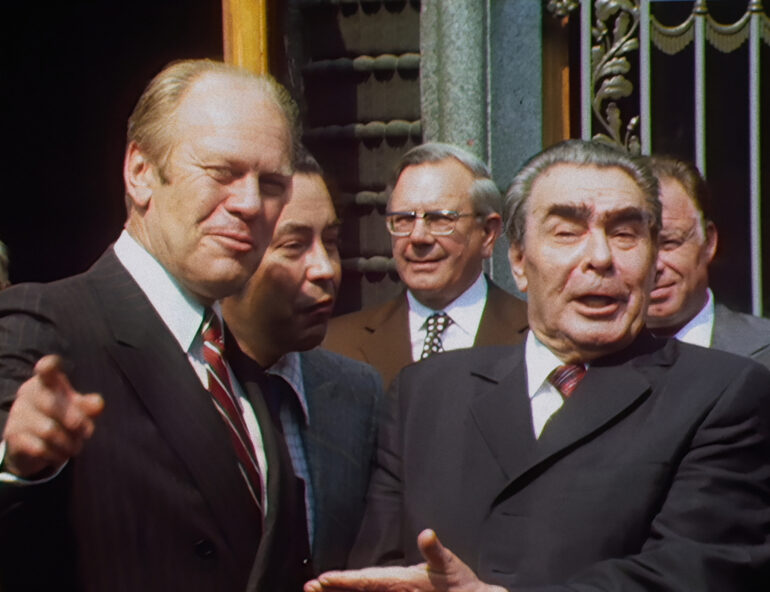
On the Nordic documentary scene, AI has already been used extensively in the making of the 2025 Finnish documentary The Helsinki Effect by director Arthur Franck. The film is an archive documentary about a large political Cold War conference in Helsinki in the summer of 1975. With a fresh subjective perspective and a comical touch, the film explores the art of slow diplomacy. In the film, Franck uses AI to bring a historical event to life on screen through AI generated voices. The voices are all based on written transcriptions from the presidential meetings and conferences.

Erkko Lyytinen at Finnish broadcaster Yle was the primary commissioning editor on the project, and took the lead in making sure the documentary was in line with the public service obligations and credibility of Yle. Upon thinking back on the process of commissioning the film, Lyytinen states: “I was very interested in the documentary proposal when Arthur Franck proposed it to me. His concept for the film was crystal clear from the beginning, and the use of AI was an integrated part of the project.”

“When Arthur discovered the transcriptions of the conference, the usage of AI was still in a very early phase. We had to test what was possible. When we heard the first tests with the AI generated voice of former US Secretary of State Kissinger, we understood that we could use this tool to build a connection to the audience.”

When talking about how Erkko Lyytinen and the team behind the film discussed the use of AI in the film, it appeared that from the early stages of the process they agreed that “it was obvious to us that we had to be very clear on labelling the use of AI, and state from the beginning of the film that the voices in the film are AI generated. The audience could never be in doubt about this. In the beginning of the film we stated what the tools of the story are, and invited the audience to have a joyride. We were very transparent with the circumstances of being in a blurry zone between historical facts and a humorous representation of what happened.”

Erkko Lyytinen shares that as the responsible publisher of the project, his concern about using AI for the film was actually more the legal aspects. “The production company Polygraf had to check the legal aspects of the use of Kissinger’s voice. Who actually has the right to use the voice of a former US Secretary of State? This was my biggest concern, as this was still largely undefined territory when we were making the film back in 2023 and 2024.”

The legal concerns about the copy rights aspects of using AI is also a topic that Morten Fisker from TV 2 Denmark brings up when he reflects upon the use of AI in productions published by TV 2.

“We have to use AI in a very responsible way,” states Fisker, who is Head of External Production and Rights at TV 2. “Obviously, this includes paying all the relevant rights holders.”

At TV 2 they differentiate very strongly between the use of AI in fiction productions and usage in non-scripted productions.

“As things stand now, we have an absolute no go policy when it comes to using AI in our documentary and factual productions,” states Fisker. “We are very protective of our brand, and we are careful with the tools we use to represent reality. We do not want to give our audience any doubts about the way we tell real life stories, and as a public service broadcaster we are of course very focused on our credibility.”

“To make this absolutely clear to the external partners we are working with, we have made very clear guidelines for what we accept in non-scripted and what we can accept in fiction productions.”

According to the TV 2 guidelines, AI can only be accepted in non-scripted productions if they are used for functions that are “assisting” the production process, like research, planning and transcriptions.

Erkko Lyytinen tells us that also Yle now has very precise and extensive guidelines for the use of AI in their productions.

“Many of the guidelines and regulations of AI, including those Yle have today, were developed at the same time as we were making The Helsinki Effect. Actually, we did not have that many discussions around the use of AI when we made it. Internally at Yle, everyone accepted the project with little legal concern.”

×
NEWS

Is AI for real?

The Helsinki Effect / Photo: Polygraf

“Now things are different, as we currently live in a period of concern. As humans, we seem to repeat those patterns, just like we have done with many other new technologies, like the railway and “googling”. When we made The Helsinki Effect, it was more like a period of excitement. So it might also have been easier for us to make it than it would be today. There are many things that would be discussed today which we did not have concerns about during the making of this film. One thing is for instance the environmental impact of AI and the large amounts of energy used in this process.“

“Now there is a very strict code of conduct for using AI at Yle. So, this has really changed a lot internally. This is of course also due to the technological development, as it is now much more difficult to differentiate and identify the AI generated material.”

To handle the growing challenges with AI, in December Yle initiated a special verification team to check and confirm information. See details here.

Despite these very clearly defined lines for the usage of AI in the current guidelines at TV 2 and Yle, this is not what Morten Fisker at TV 2 sees as the potential future use of AI.

“I think we will see a softening of these boundaries in the international market. We will likely have to follow suit as the usage and tools are developed and as the market perspective shifts. For instance, AI will be a tool for making reconstructions, something that was previously based on CGI. It will just be very important that we find ways to clearly label the instances when AI is used, so that we never leave any doubt about this with the audience.”

“One of our challenges is of course our international acquisitions. Here we have less control of the production process and almost no dialogue with the creators. This creates the challenge of controlling the completed non-scripted programmes we acquire.”

On the future perspective of AI in documentary making, Erkko Lyytinen at Yle is pretty much on the same page.

“Just like in the past we had problems with photos that were manipulated and altered in Photoshop, we will very likely have the same challenges concerning the use of AI. It is almost a part of human nature and the eagerness of storytellers that they want to use any method available to relate the story in the best possible way.”

“Considering our strict public service obligations and credibility as a broadcaster, we have to be extremely careful when it comes to what we publish.”

To read the guidelines that TV 2 Denmark has published for the use of AI in its external productions: CLICK HERE (available in Danish).

To read the guidelines Yle has made for the use of AI: CLICK HERE.

RELATED POST TO : PRODUCTION / NORDIC INDUSTRY NEWS / NORDICS