Written by: Per Laursen
06.03.26
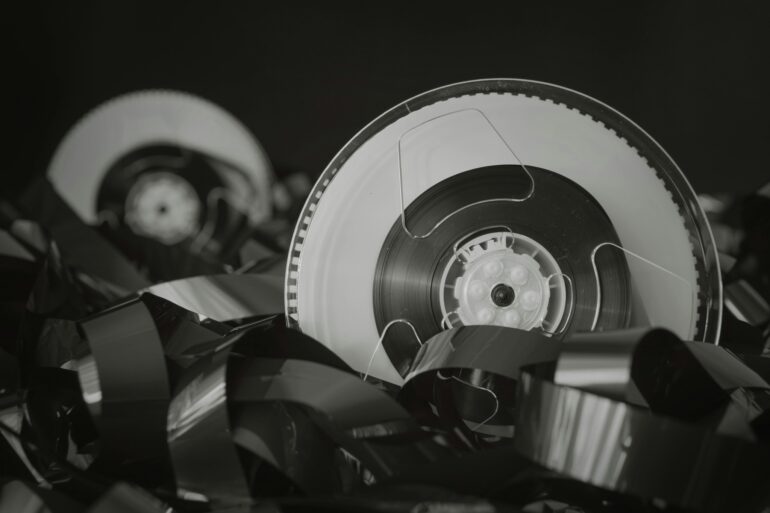
Cultural and industrial craftsmanship should be preserved, and the Nordics are good at preserving content, but bad at activating it.
The Nordic countries are often seen as frontrunners in preserving film and television heritage. Strong public service broadcasters, national libraries with legal deposit obligations, and early recognition of the need for digital preservation have ensured that a large share of the region’s audiovisual output has survived.
Yet preservation is only part of the story.
“You might say that we are great at rescuing material, less at activating the archives,” says Peter Englesson, CEO of Copenhagen-based Vintage Cloud. “Film and TV archives are not a nostalgic project - they are a democratic concern.”
Across the Nordic region, vast amounts of film and television content are technically preserved, but remain inaccessible. Archiving responsibilities are fragmented between broadcasters, national libraries, film institutes, and rights holders, while rights clearance and long-term funding have become major bottlenecks.
In Finland, much responsibility is concentrated with the Finnish Film Archive, which holds an extensive collection of older Finnish films that are made available online after digitization. “For us, digitisation means both creating a new preservation copy and opening up new opportunities for access,” Head of Film Archive Tommi Partanen, the Finnish Arts and Culture Agency, told NFTVF.
What should be preserved — and why?
Among Nordic stakeholders, there is broad agreement that archiving should extend far beyond canonised works or landmark titles. Film and television archives also have a responsibility to preserve news, documentaries, debates, children’s programming, minority voices, and the formats and genres that define specific periods — from linear broadcast TV to reality and experimental programming.
Equally important is what archivists often refer to as “contemporary witness”: preserving the imperfect, the trivial, and the controversial. These materials provide future generations with insight into social, political, and cultural realities that are often absent from curated histories.
Digitisation is not preservation
Saving audiovisual content for future generations in a technology-driven world is far more complex than finding enough storage space. While digital storage has become cheaper and more abundant, the real constraints lie elsewhere.
Long-term preservation requires continuous energy to power data centres, regular maintenance to prevent data loss, and systematic migration of files to new formats and platforms as technologies become obsolete. Without these measures, digital content risks becoming unreadable — even if it still exists.
Archives could deteriorate
Both analogue tape and film face a “burning platform”, because they deteriorate rapidly and risk loss. Some broadcasters maintain large archives of older tapes and film reels that are not always stored under optimal conditions. If the material is kept in rooms that are too warm or humid, degradation accelerates significantly. In particular, the so-called vinegar syndrome affects acetate-based film, causing the material to chemically break down, shrink, and become brittle. Once the process begins, it cannot be stopped, and the content risks being lost.
The Finnish Arts and Culture Agency is the only film archive in Finland that complies with the legal deposit requirement. The agency applies a hybrid archiving strategy in which films are digitised while the original analog materials are permanently preserved. “Digitisation alone does not constitute secure preservation. Digital materials require a robust archival infrastructure, which in Finland has been outsourced to a state-owned company responsible for preserving all government digital data,” Partanen, told NFTVF.
Prioritisation is another challenge. Not all material can or should be preserved indefinitely. Decisions must be made about what to keep, how extensively to document it, and in which form. Metadata is critical in this process: Preserved content only has value if future users can locate, understand, and contextualise it.
Despite this, funding and resources are often concentrated on digitisation itself — converting analogue material into digital files — rather than on the long-term stewardship required to keep those files accessible.
“As a result, vast amounts of digital content risk being created without a viable plan for long-term survival,” Englesson says. “There is a growing imbalance between digital production and digital stewardship.”

Technology: both obstacle and opportunity
When it comes to archives, technology is both part of the problem and part of the solution. Rapid technological change has driven format obsolescence, increased dependence on proprietary systems, complicated migration workflows, and led to the loss of contextual knowledge about software, codecs, and production processes.
Ironically, material digitised 20 to 25 years ago can be harder to access today than analogue originals. Early digital files often exist in outdated formats, with insufficient or incompatible metadata, and may require specialised knowledge to view.
Public broadcasters and film institutes are responding in different ways. At SVT, approximately 80–85% of analogue film has been digitised.
“Many films have been digitised again because new technology gives us better quality,” says Henrik Johansson, Head of SVT Archives. “With that experience, we do not discard any films, but strive to preserve as much as possible. However, most of our tapes have been discarded after digitisation because their lifespan and quality were assessed as unsuitable for long-term preservation.”
At the Danish Film Institute (DFI), a dual strategy is in place.
“Analogue films are preserved in climate-controlled storage, ensuring passive preservation for centuries,” says Thomas C. Christensen, Head of Collections at DFI’s Film Archive. “Digital films — both born-digital productions and retro-digitised works — are preserved in a digital system that continuously ensures duplication and storage in three separate copies.”
Fragmented responsibility
Responsibility for audiovisual heritage is often shared among multiple stakeholders, and this shared responsibility can create vulnerabilities. Without clear coordination, gaps emerge between institutions.
Broadcasters typically hold content and production context. National libraries and film institutes focus on long-term preservation. Authorities set legislative and funding frameworks, while rights organisations regulate access and usage.
“It is a costly task to operate both analogue film archives and digital preservation systems,” Christensen notes. “In Denmark, the responsibility for preserving the film heritage is clearly placed with the Danish Film Institute. The division of responsibilities is clear for film, although analogue and digital collections pose different challenges.”

Television content, however, often sits in a less clearly defined space, but not in Finland. The Finnish Arts and Culture Agency’s television archive preserves master tapes or digital files of television productions (excluding news and quiz shows, among others) and continuously records all Finnish national television channels in low resolution for archival purposes.
Mandates and resources: the broadcaster perspective
For broadcasters such as SVT, future challenges primarily concern physical film and long-term responsibility.
“SVT has no formal archival mission, and SVT’s resources are not adapted for long-term preservation,” Johansson says.
While SVT cooperates closely with the Swedish Film Institute, the National Library, and other stakeholders, the broadcaster’s role remains constrained by mandate and funding.
“If a national film heritage centre is established in the long term, resources must be allocated both to fund such a centre and to support SVT’s ability to deposit material there for long-term preservation,” Johansson says.
Towards Nordic solutions
Looking ahead, stakeholders increasingly point to the need for long-term, sustainable solutions at both national and Nordic levels. These include common archive standards, open, well-documented formats, clearer legal models for fair use, and stronger links among archives, research, and the public.
“It is time we view archives as critical infrastructure, not as a cultural bonus,” Englesson argues.
New challenges are already emerging: rapidly increasing volumes of content from streaming platforms and social media, AI-generated material, dependence on global technology providers, and the risk of losing national control over cultural heritage.
There is also the question of visibility — archived content that exists, but is rendered invisible by algorithms and platform economics.
YouTube’s algorithms could play a role
YouTube users are consuming more long-form, episodic content, i.e., TV shows, and an additional role for the platform is emerging: It could serve as a complementary archive platform for Scandi broadcasters.
“Absolutely, streaming services and broadcasters are focused on current programming, while your YouTube homepage shows you what is relevant to you. This makes YouTube an ideal place for a broadcaster or production company to connect their archive with an audience interested in that specific topic,” Nordic Head of Media Company Partnerships at YouTube, Joe Bergan, told NFTVF, noting SF Studios Classic as an example of a Nordic rights holder leveraging YouTube to connect new audiences with classic films from their archive.
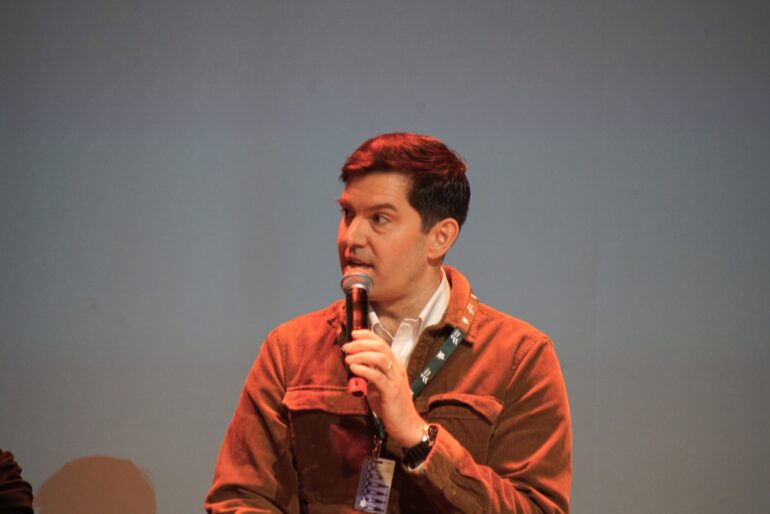
YouTube's potential as a complementary archive is significant, given its discoverability, algorithmic strength, and visibility. However, there are also challenges: rights and licensing restrictions, and platform dependency (YouTube control vs. public ownership)
Joint Nordic initiatives offer possible paths forward. Projects such as Norden på film aim to digitise and disseminate film heritage across borders, while Nordvision has long facilitated the reuse of archival material in new Nordic productions.
As Christensen notes, “the long-term challenges are clear: continuous and sufficient funding, retention and development of expertise, and sustained investment in digitisation and accessibility to ensure the cultural relevance of the film heritage.”
The question for the Nordic industry is no longer whether content can be preserved — but whether it can be meaningfully sustained, accessed, and activated for generations to come.
RELATED POST TO :
DISTRIBUTION
/
NORDIC INDUSTRY NEWS
/
NORDICS