Subscribe to newsletter

Get the latest film & TV news from the Nordics, interviews and industry reports. You will also receive information about our events, funded projects and new initiatives.

Hans Petter Moland on Growth of the Soil: “There are no beauty shots of nature”

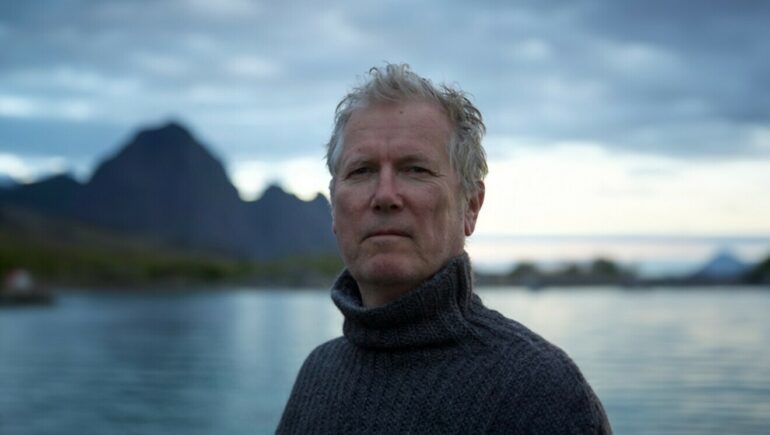
Hans Petter Moland / Photo: Maria Sodahl
×
NEWS

Hans Petter Moland on Growth of the Soil: “There are no beauty shots of nature”

Hans Petter Moland / Photo: Maria Sodahl

No dolly, no postcard Norway: the veteran helmer on the stripped-back filmmaking behind Growth of the Soil, a 17-year labour of love with a thorny literary legacy.

Following its Toronto world premiere, Hans Petter Moland’s Growth of the Soil (Markens grøde) heads to San Sebastián for its European premiere in competition on September 23.

Toplined by Herbert Nordrum and Asta Kamma August, the Knut Hamsun adaptation follows a couple building a farm and a family in the Norwegian mountains. The pic follows Isak (Nordrum) and Inger (August), who build a farm in the hills. When Inger returns from prison, her newfound independence tests their bond. Håkon Øverås produced the feature for 4 ½ Fiction, with Beta Cinema handling world sales. The film is supported by Nordisk Film & TV Fond (NFTVF).

Moland spoke to NFTVF about the making of his intimate epic.

You began developing the film in 2009. Where did you find its dramatic spine?

The novel is part of growing up in Norway. Everybody knows it: They either love it or pretend they love it because they should have read it at school! I read it when I was about 20. The film is very much an interpretation: Lots of characters are gone, and the focus is on the love story. It is about human beings capable of lifelong love.

Gard B. Eidsvold, my co-writer, had played Isak in the theatre, and had insights into the character and Hamsun’s work. He wrote an early draft. I have done the writing for the last 15 years, but he has been a good sparring partner, discussing the significance of scenes.

What did Nordrum and August bring to the relationship, and how did you prepare them?

Herbert has a rare quality: He can have the innocence of a six-year-old and still be sturdy in his commitment to this everlasting project. Being a farmer is not something you finish. You do your best, then leave it to the next generation.

Inger is interested in change. Her encounters with the unknown have been successful: meeting Isak, having surgery, learning to read and write. She is not afraid of it. That difference in their approaches to life is part of the conflict.

I met Asta while casting another film, and she was absolutely fantastic. We had lots of rehearsals, and I sent them to a boot camp for old-fashioned farming: handling cows, sheep and horses, and ploughing. They had already made a comedy together, so knowing each other helped. The conversation about where they love or misunderstand each other continued throughout.

×
NEWS

Hans Petter Moland on Growth of the Soil: “There are no beauty shots of nature”

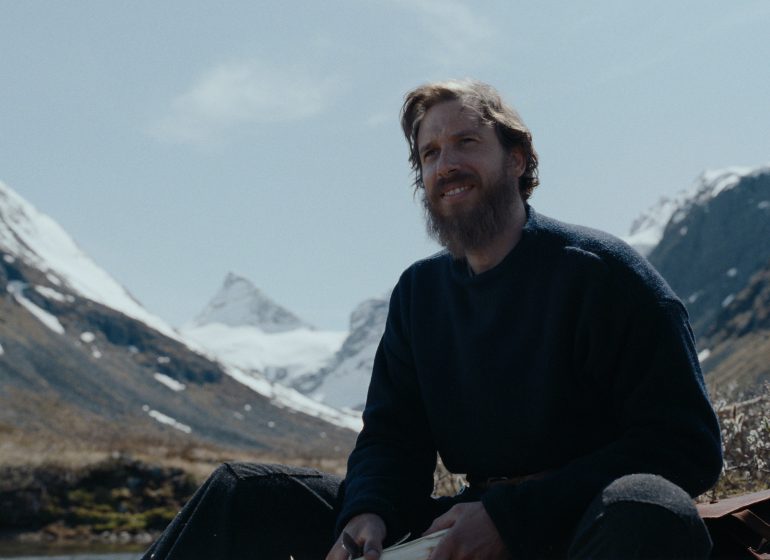
Growth of the Soil / Photo: 4 ½ Fiction AS

What did shooting across the seasons demand of you and cinematographer Oskar Dahlsbakken?

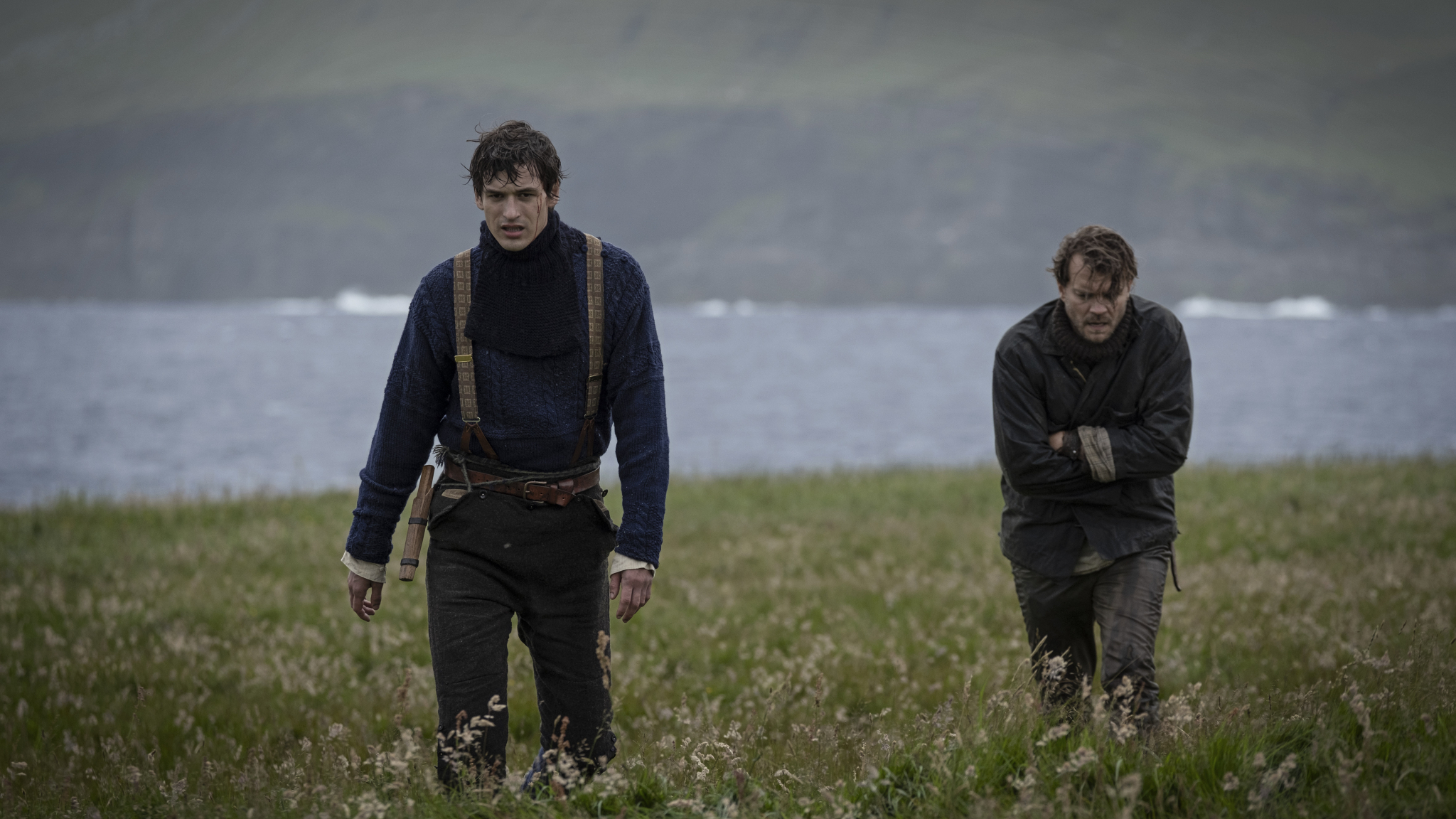
I first visited the location two years before shooting and returned in different seasons. From the green of summer to the naked trees and harsh mountains of winter, the changes were enormous. I was adamant about using that, which meant foregoing tools to expand the schedule.

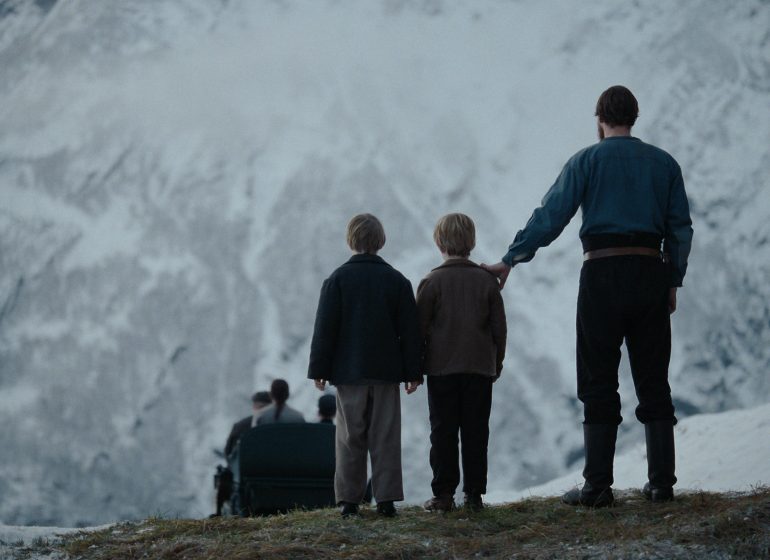
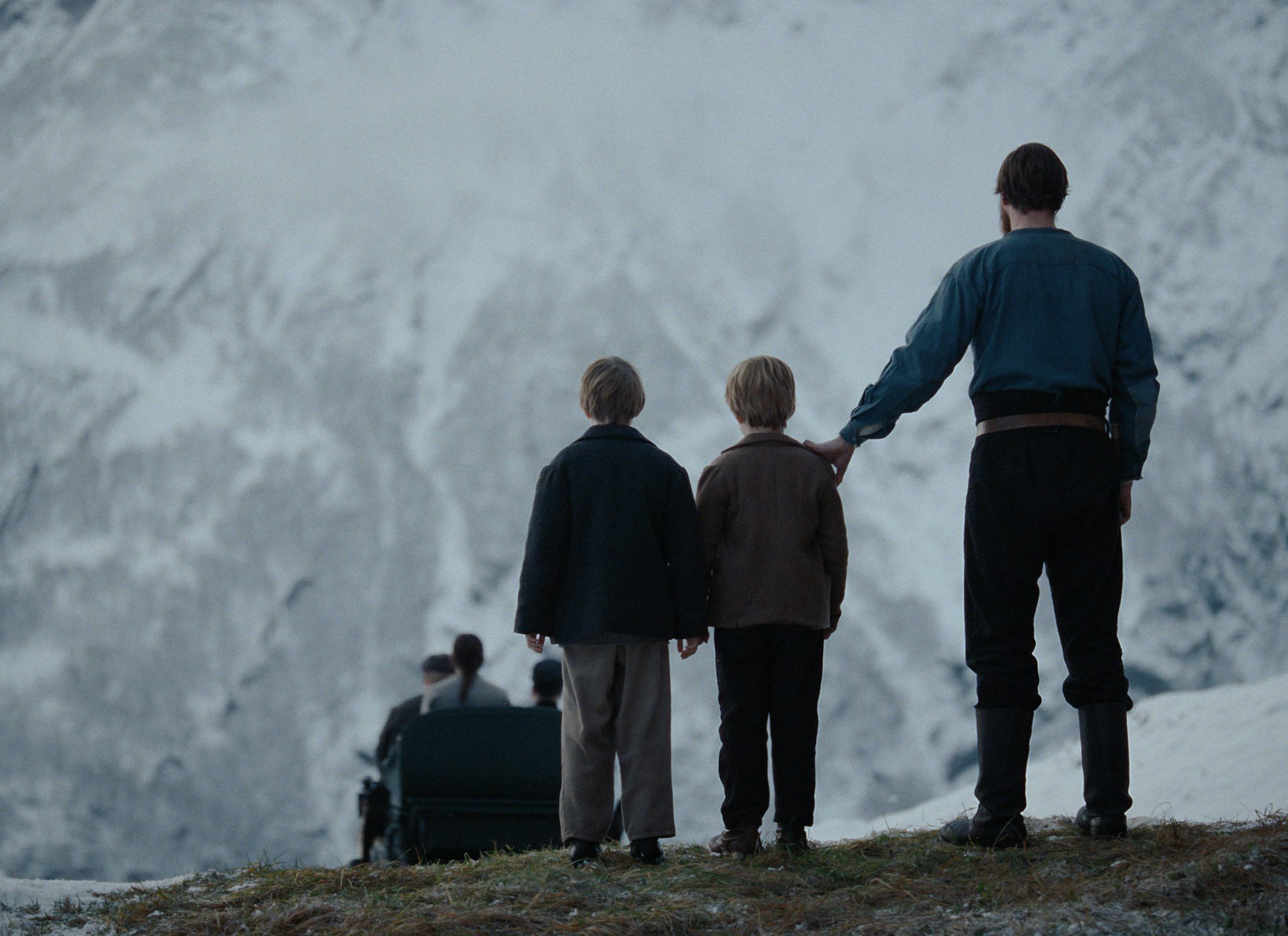
We started with: What can we do without? We stripped things down to get as many shooting days as possible. We had no dolly, and chose a format that accentuates the location’s verticality. As we worked together, we became more courageous. There are no beauty shots of nature, just nature as it is: amoral, magnificent, or brutal.

How did that restraint carry into the sound and score?

I have worked with sound designer Gisle Tveito for 25 years. With composer Kaspar Kaae, we planned for sounds to be human- or nature-made, not synthetic. No big orchestral embellishment: It is not a melodrama. We believed the emotions were already there.

There are moments when the build-up has to be released. When Isak’s wife tells him she would not have chosen him, and he sees nature destroyed around him, I imagined an explosion inside his head. Every illusion is broken. We wanted the audience to think everything was lost, including the marriage. Somehow, they find a way.

How did you and editor Linda Man shape the film’s rhythm and leaps through time?

Linda is very gifted and gutsy. We quickly asked the same question: What can we do without? How simple can we make it? I have been making films for 40 years. I know how to show off with the camera. I don’t think it’s interesting anymore. Trusting the actors, the story and a simple composition to have the impact you need is much more challenging.

We threw out a lot early on, which was liberating. Then we could spend our time on composition rather than hanging on to story elements.

I told the actors and crew to think of Isak and Inger as 250 years old: five generations of farmers gradually improving their lives. Realistically, they could not achieve all this in 20 years. But we are making allegories; we are not tied to realism.

×
NEWS

Hans Petter Moland on Growth of the Soil: “There are no beauty shots of nature”

Growth of the Soil / Photo: 4 ½ Fiction

What did co-production contribute, and how lean was the shoot?

The co-producers helped with financing and finding collaborators. The Danish editors I had worked with were unavailable, and my Norwegian editor had temporarily become a bureaucrat! Recommending editors and other crew was one of their specific tasks.

We did not have much money. Sometimes there were just 11 or 12 of us. There was no video village; I had a little playback monitor. In a small film community, you can speak directly to decision-makers. There are fewer layers and less politics. If something needs discussing, you go straight to the financier or distributor. More energy goes into making the film.

How do you approach Hamsun’s literary and political legacy?

He was an exceptionally gifted writer with horrible politics. His prejudices, including towards the Sámi, are there in the book. They are also the most boring, uninspired writing, reflecting prejudices considered acceptable at the time. You cannot deny that, or that he later became a Nazi sympathiser.

My father, mother and grandfather were deeply affected by the war: imprisonment, dangerous resistance work, friends being tortured. Yet Hamsun’s books were on our shelves. I was taught that you have to hold two thoughts in your head at once: recognise his greatness as an author without denying his politics.

What is underrated is the influence he had beyond his own opinions. He was adored and respected, so those opinions carried weight. He probably made them palatable to people who admired his writing.

RELATED POST TO : PRODUCTION / NORDIC INDUSTRY NEWS / NORWAY