Written by: Davide Abbatescianni
21.09.26
Mother Creature and No Rest for the Wicked claim top honours at NIFF’s 10th edition, which also launches a new filmmakers platform linking Greenland, the Faroe Islands and Iceland.
The 10th Nuuk International Film Festival (NIFF), held September 15-19 in Greenland’s capital, closed with a particularly strong showing for Faroese cinema. Maria Tórgarð’s hybrid documentary short Mother Creature (Mammuskepilsið) won Best Short Film, while Kasper Kalle’s gothic romance and folk-horror No Rest for the Wicked took Best Feature Film. Zaya Benazzo and Maurizio Benazzo’s Sila: The Life Within Everything was named Best Feature Documentary.
Tórgarð’s 29-minute Mother Creature, a Swedish-Faroese production that premiered at CPH:DOX earlier this year, explores the director’s relationship with her mother and the latter’s schizophrenia through home video, theatre, observation and Faroese landscapes. The pic had already won both the Geytin Award and Audience Award in the Faroe Islands before adding the Nuuk prize.
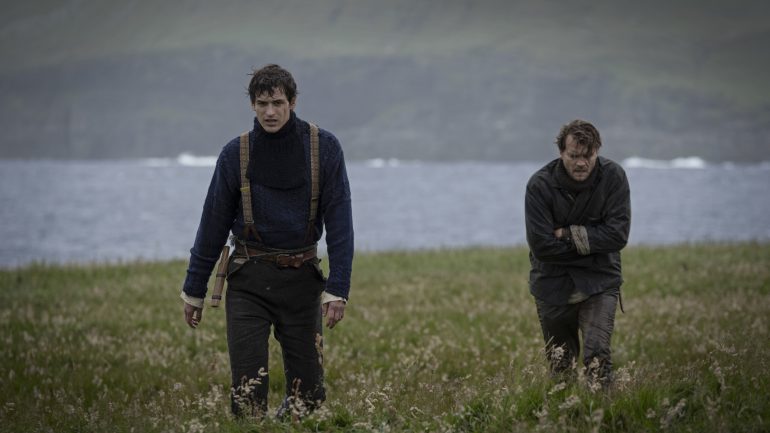
The feature film No Rest for the Wicked, meanwhile, is set in the Faroe Islands in 1862 and follows fisherman Baldur, whose life changes after he rescues Danish whaler Helge. Their attraction gradually collides with the suspicions of an isolated religious community and with supernatural forces. Produced by SF Studios Production and co-produced by Iceland’s Truenorth and Faroese company Outlier Projects and supported by Nordisk FIlm & TV Fond (NFTVF), the film had its world premiere at Montreal’s Fantasia before its Nordic release.
The documentary winner, Sila, turns directly towards Greenland. Its title refers to a Greenlandic concept encompassing weather, breath and a consciousness connecting living things, while the film traces Inuit women’s experiences across centuries of Danish colonialism, including forced assimilation and the contraceptive coil campaign. Its victory gave the awards a particularly fitting connection to NIFF’s long-standing emphasis on Indigenous and Arctic perspectives.
The anniversary edition comprised 34 events across six venues. Its programme mixed Greenlandic, Indigenous, Nordic and international work, opening with the world premiere of Johannes Ujo Müller’s Erfalasorput (Our Flag), exploring the origins and contemporary meaning of Greenland’s flag. The festival describes its wider mission as both bringing films to Greenland that rarely reach local cinemas and connecting Greenlandic filmmakers with audiences and international industry professionals.
That industry role carried particular weight this year. The Greenland Film Institute began operations in 2026, creating the country’s first permanent public film body and taking responsibility for areas including funding, promotion, film culture and the national film commission. Against that backdrop, NIFF’s Industry Days also hosted the launch of the North Atlantic Filmmakers platform, an online community designed for filmmakers and creators from Greenland, the Faroe Islands and Iceland.
The initiative grew out of the six-month North Atlantic Story Circle, supported by Nordic Culture Point, NAPA and the Nordisk Film & TV Fond and developed in partnership with Stockfish Film Festival & Industry. Faroese filmmakers Rakul Ró Steintórsdóttir and Niels Jóhan Sigurðsson of UFO Productions pushed the idea forward after the network’s workshop and think tank in Iceland earlier this year. The platform is intended as a practical space for sharing knowledge, finding collaborators and strengthening professional links between three small industries facing many of the same structural challenges.
Faroese producer Jón Hammer, whose Outlier Projects co-produced No Rest for the Wicked, backed the initiative, stressing the value of giving emerging filmmakers a place to find peers and collaborators across the region. Greenlandic Story Circle participant Alberte Parnuuna framed the logic even more simply: “Filmmaking is community building.” For industries facing limited funding, infrastructure and domestic markets, she argued, stronger North Atlantic connections can provide mutual support.
The platform therefore made an apt companion to the festival’s awards. Two of the three jury winners carried Faroese connections, while the new network formalises precisely the type of cross-border relationships on which smaller North Atlantic industries increasingly rely.
Founded in 2017 by Greenlandic filmmakers Pipaluk K. Jørgensen and Karsten Heilmann, NIFF began as a curated programme within the cultural festival Nuuk Nordisk before becoming an independent annual event. Ten editions later, its anniversary suggested that its role is expanding beyond exhibition alone. With a new national film institute now operating in Greenland and a North Atlantic professional network beginning to take shape, Nuuk is increasingly functioning as both a showcase for Arctic storytelling and a meeting point for the infrastructure needed to sustain it.
Nuuk International Film Festival 2026 and Greenland Producers Forum are supported by NFTVF. With special support from NFTVF and the Nordic Council of Ministers the festival screened this year’s Nordic Council Film Prize nominees: Beginnings (Begyndelser), Birita, A Light That Never Goes Out (Jossain on valo joka ei sammu), The Love That Remains (Ástin sem eftir er), Sentimental Value (Affeksjonsverdi) and Kevlar Soul (Kevlarsjäl).
RELATED POST TO :
FESTIVALS
/
NORDIC INDUSTRY NEWS
/
NORDICS