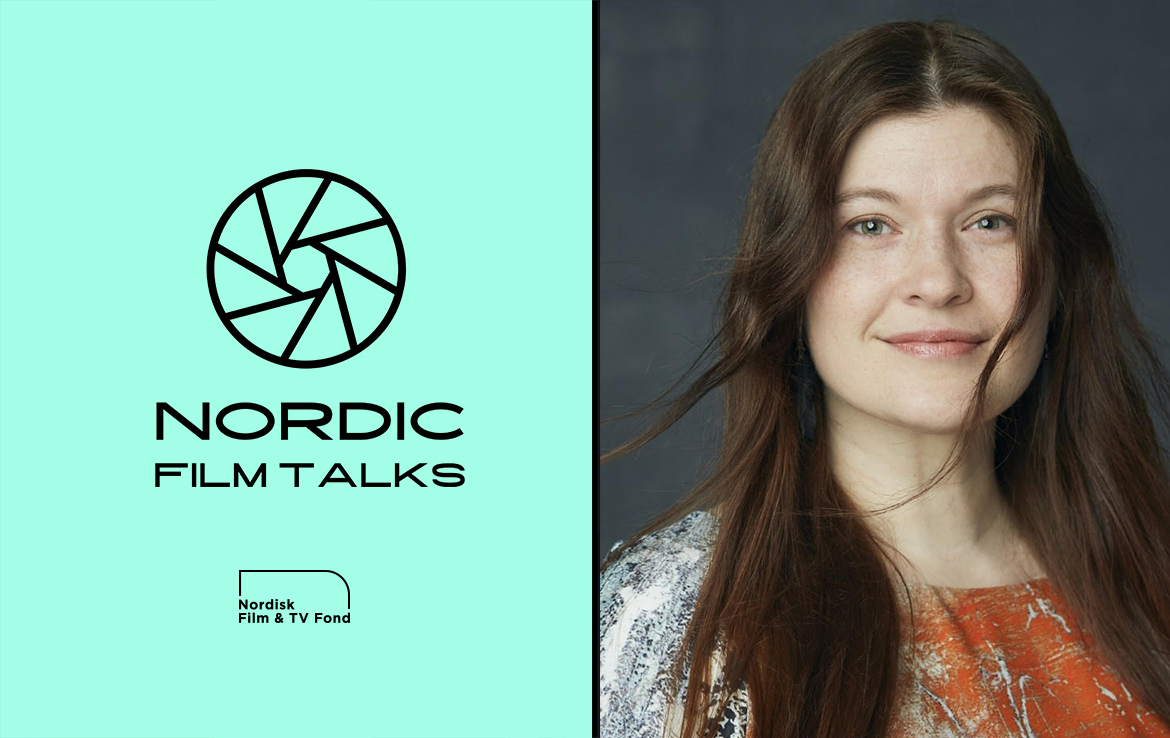
Nordic Film Talks: Hanna Bergholm
After her global hit Hatching, the Finnish writer/director comes to Berlinale Competition with her English-language debut, Nightborn, offering a twisted take on parenthood.
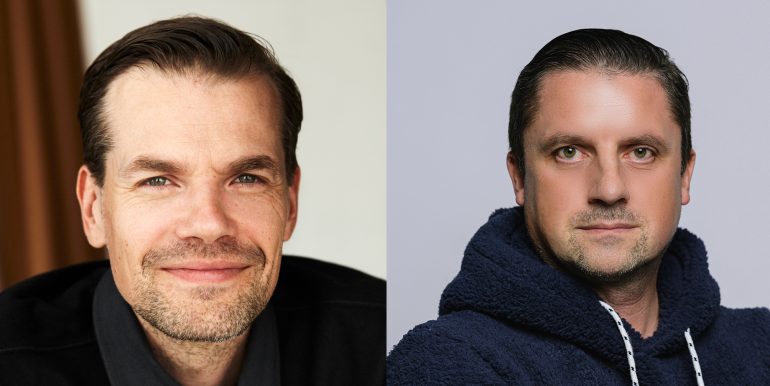
Producers Daniel Kuitunen and Arturas Dvinelis discuss the collaboration process behind the Nordic-Baltic co-production at Riga International Film Festival.
The Riga International Film Festival continues to emphasise the Nordic-Baltic relationship, Among the twelve titles in the annual Nordic Highlights programme three are co-productions between the two regions, all top-financed by Nordisk Film & TV Fond (NFTVF): Woman Unknown (Kvinde ukendt, Denmark, Sweden and Latvia), The Last Resort (Paradis, Denmark, Norway and Estonia), and Nightborn (Yön Lapsi, Finland, Lithuania, UK, Germany). These films illustrate how international partnerships can combine creative vision, technical expertise and production resources.
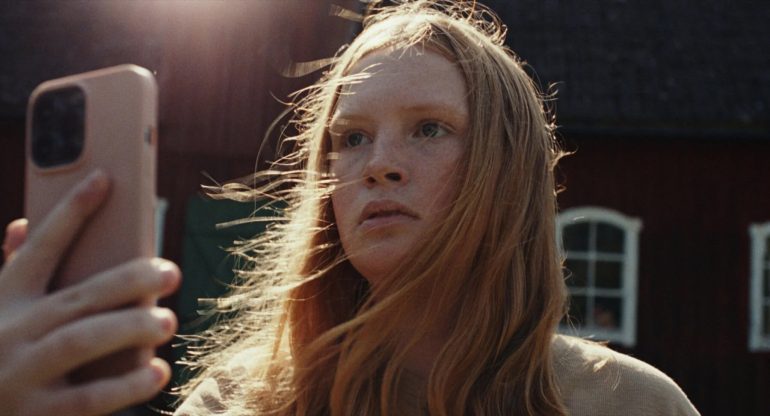
With an overall budget of €5.5 million and premiered at the latest Berlinale’s Competition, Nightborn is a fantasy-horror drama directed by Finnish filmmaker Hanna Bergholm about new parents raising their child in a remote Finnish forest.
For Finnish producer Daniel Kuitunen from Elokuvayhtiö Komeetta Oy, the project represents “a true European co-production in its most beautiful sense. Every country pitched in with their capabilities and their knowledge of filmmaking, whether it’s financing, creative or craftsmanship, investing their strongest features into the pot. And that’s why the result is so interesting.”
Lithuanian co-producer Arturas Dvinelis, representing the Filmai company, joined the project in 2023, during development. For both of them, the appeal lay in the film’s bold creative approach and the opportunity to bring together complementary expertise.
When asked what attracted him to a film with a distinctly female perspective, Kuitunen says the gender of the director or protagonist was not his primary consideration. Since producing his first feature in 2018, he has worked with both male and female directors.
“I’ve never had that as a topic in my head. Of course, I understand the bigger picture that the world is not gender equal, so I do understand the issue and why it’s raised. But it’s never been a thing in my head.”
What mattered more was the film’s willingness to push boundaries. “What intrigues me in this story is its openness. The directress Hanna Bergholm doesn’t hold anything back, I feel, and puts everything onto the screen – that’s what I fell in love with in the first place, the project’s boldness.”
Each production partner brought specific strengths to the project. Finland provided the core creative story, while the United Kingdom contributed its casting and specialist expertise in animatronics and special-effects makeup. The international sales partner also helped secure a US investor. Lithuania played a central role in the film’s physical realisation, particularly in set design and the creation of its troll characters.
“Our part was mainly the execution of the process,” Dvinelis explains. “Daniel and the Finnish team came with their creative ideas and the story, while the Lithuanian team was executing and also adding creative input into the process.”
Kuitunen, however, stresses that the Lithuanian contribution went well beyond technical execution. “Actually, Lithuania also contributed with a serious artistic input. For example, the troll characters are 100% a Lithuanian creative and manufacturing process. And the set design team had a huge percentage of why the film looks the way it looks.”
The entire film was shot in Lithuania, although the filmmakers needed landscapes that could evoke Finland. Finding the right forest proved challenging.
“Hannah, the director, knows what she wants, and is demanding,” Dvinelis says. “So, to find the exact scary forest for the story was not an easy part.”
Shooting in one country also made economic and logistical sense. Once Lithuania had been selected for the set design and manufacturing work, it made sense to shoot it all there. “The best way to blow the budget is to start splitting your shoot into different countries. Never do that,” Kuitunen says.
Despite the production’s international scope, the Finnish-Lithuanian administrative collaboration was relatively straightforward, as the two countries’ funding systems are sufficiently similar to facilitate cooperation. “From my point of view, the collaboration between Finland and Lithuania is really easy,” confirms Kuitunen. “Of course, we all have our own slight cultural peculiarities when it comes to administrative needs and eligibility, but the basics are the same, and that makes it possible.”
The producers followed a sequence that began with the Finnish Film Foundation, continued with Eurimages, and then the Lithuanian Film Centre. The core financing process took approximately six months, from late summer or early autumn 2023 until spring 2024. Nightborn’s Norwegian distribution handled by SF NORGE AS has a premiere date set up for November 20.
“All the pieces in the puzzles found their places, because probably it was done in the right steps, sequences, time, and with the right energy,” Dvinelis emphasises.
As an Eurimages-supported film, Nightborn also required theatrical distribution in Finland and Lithuania. Although it had already reached numerous international markets, the two domestic releases were also scheduled for November, partly because of the timing of the Finnish cinema market. “Season-wise, it’s a better season for a horror,” both producers agree.
For Dvinelis, Nightborn is not an isolated case. Another Finnish-Lithuanian project, Klaus Härö’s NFTVF supported Blue Baby (Hetki ennen valoa), had recently been released in Finland, while Kuitunen confirmed that he was developing another prospective collaboration between the countries.
“The Nightborn kind of co-production is not a single shot,” Dvinelis continues. “The working environment between Finland and Lithuania is welcoming - the projects are happening, and the results are good.”
The remaining Nordic Highlights titles shown in Riga are Sweden’s Adult Supervision (Arkipelag), Doggerland and The Quiet Beekeeper (Biodlaren); Denmark’s The Guest (Gæsten), Norway’s Low Expectations (Lave forventninger), as well as the co-productions Fjord (Romania, France, Norway, Sweden Denmark), No Rest for the Wicked (Denmark, Faroe Islands, Iceland), Brave New Love (Fagre nye kærlighed, Denmark, Sweden, Greece), and A Prayer for the Dying (Norway, Sweden, Greece, UK).
Meanwhile, the top award in Riga’s Feature Film Competition went to Swedish filmmaker Sunniva Eir Tangvik Kveum’s coming-of-age thriller Nipster (2026) for its provocative approach to an uncomfortable subject. Against a backdrop of xenophobia and far-right politics, the film “sheds light on the banality of contemporary indoctrination”, the jury stated, highlighting its use of social-media fragments, phone recordings and voyeuristic perspectives.
Blue Baby, Low Expectations, Fjord, and No Rest for The Wicked are also top financed by NFTVF.