Written by: Davide Abbatescianni
22.10.26

Nine Nordic projects at Cinekid for Professionals revealed shared concerns alongside contrasting approaches to co-production, animation and sustainability.
Grief, displacement, gender identity and environmental anxiety featured prominently among the Nordic projects at Cinekid for Professionals (13–15 October). Yet filmmakers are approaching these subjects through fantasy, humour, documentary horror and hybrid animation. The nine projects also reflect different financing strategies: Four appeared at the Junior Co-Production Market or its works-in-progress strand, while five took part in Script LAB.
In Norway's Astronaut, directed by Mikal Hovland and produced by Nicholas Sando for Filmbin, a seven-year-old tries to build a spaceship after his younger brother dies. The €2.2 million family feature, backed in development by the Norwegian Film Institute and Filminvest, is seeking international co-producers and a sales agent. The film places grief within a comic, imaginative adventure.
Line Hatland's Summer at Ghost Island, staged by Medieoperatørene, follows ten-year-olds at a phone-free island camp where ghost stories blur with reality. Producer Mari Monrad Vistven describes the documentary as in late development, with development financing secured; an application for production funding is planned for November at the Norwegian Film Institute. The team sought sales agents, distributors and co-producers at Cinekid. Children's test screenings will help determine how far the film can push its horror elements. “Can a documentary be more frightening than fiction?” Vistven asks.
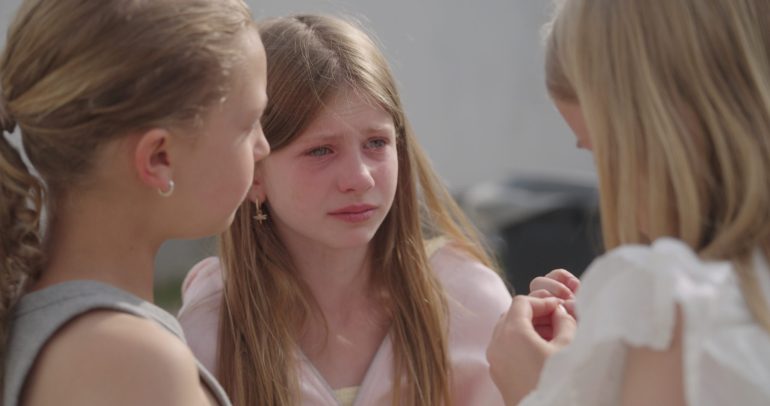
Meanwhile, Sweden's Valentino the Dream Sheep (Drömfåret Valentino) uses nightmares as therapeutic adventures. Samir Arabzadeh's 2D animated project, from Sideways Studios, is conceived as a 40-minute cinema special comprising six seven-minute chapters, with potential to grow into a 26- or 52-episode series. It has Swedish Film Institute production backing, broadcasters SVT and DR and distributors Folkets Bio and Angel Films attached. Ahead of a spring 2027 shoot, the team seeks international sales partners and gap finance.
Returning to Cinekid after a 2024 market pitch, Esben Toft Jacobsen's Millie and the Secret of the Crocodile (Millie och krokodilens hemlighet) is now 85% animated. Produced by Sweden's Snowcloud Films alongside Denmark's Nørlum and Vi Glæder os Preben and the Netherlands' Viking Film, it divides animation work between Sweden (50%), Denmark (25%) and the Netherlands (25%). International sales outfit LevelK has secured pre-sales and is preparing further sales activity at Berlin's 2027 European Film Market; theatrical releases in the three territories are planned for autumn 2027. Test screenings with schoolchildren have prompted dialogue and visual tweaks. The film is top financed by Nordisk Film & TV Fond.
For producer Petter Lindblad, Millie became a case study in sustainable production. At a Cinekid industry roundtable he explained how the team calculated emissions and developed a sustainability plan, using the Green Producers Tool and drawing on discussions about the Nordic Ecological Standard. Sweden began applying NES requirements to newly supported productions in March 2026.
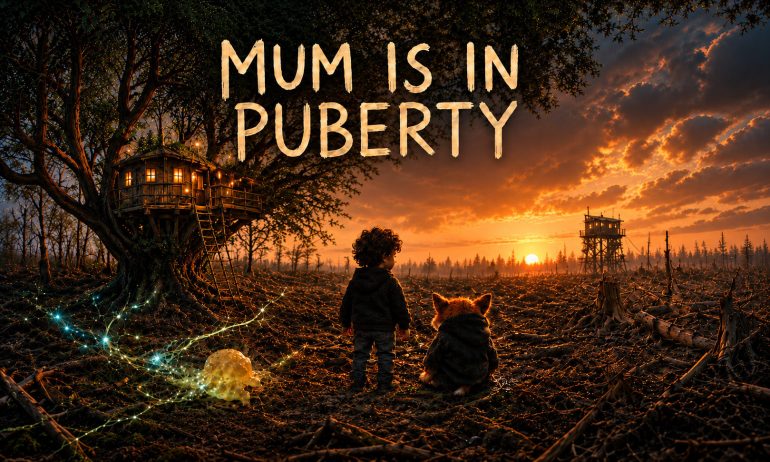
That overlap also shapes Mum is in Puberty (Mamma är i puberteten). Ami-Ro Sköld's stop-motion family feature follows a child whose non-binary parent is transitioning while their forest faces destruction. Sweden's Onoma Productions has assembled a €6.5 million co-production with Italy's Indyca, Denmark's Morph Film and the Netherlands' Family Affair Films, with Mary and Max producer Melanie Coombs executive producing. The project has secured €240,000 from Creative Europe for co-development, is closing its Swedish majority financing, and seeks another co-production territory. Morph is developing AI-assisted facial-expression transfer for physical puppets, while Script LAB helps integrate the family and ecological storylines.
Elsewhere in Script LAB, Norwegian producer LØV Film's Finding Home, written by Anja Mánou Hellem, uses 2D/3D animation to follow a displaced muskox calf taken from Greenland to Norway, exploring new bonds and belonging. Iceland's Kindlings, helmed by Álfheiður Marta Kjartansdóttir and co-written with Gagga Jónsdóttir, is earlier in its financing journey: Producers Rúnar Ingi Einarsson and Ingimar Guðbjartsson of Nordur and Rammi plan to seek Icelandic Film Centre funding later this year, before seeking Nordic and European partners.
Not every team wants a sprawling co-production. Norway's Mikrofilm is developing Annette Saugestad Helland's Morningbird and Murmelton: Fairytrail, a short preschool feature mixing live action with two animated imaginary companions who help a young girl process everyday frustrations. Building on two existing shorts, it can reuse animation assets and keep its budget to roughly €1.6 million. Producer Tonje Skar Reiersen envisages just one international partner: “We would like to keep it quite manageable.” Norwegian Film Institute development support has been secured through its debut-feature scheme; Script LAB focuses on the treatment and screenplay.
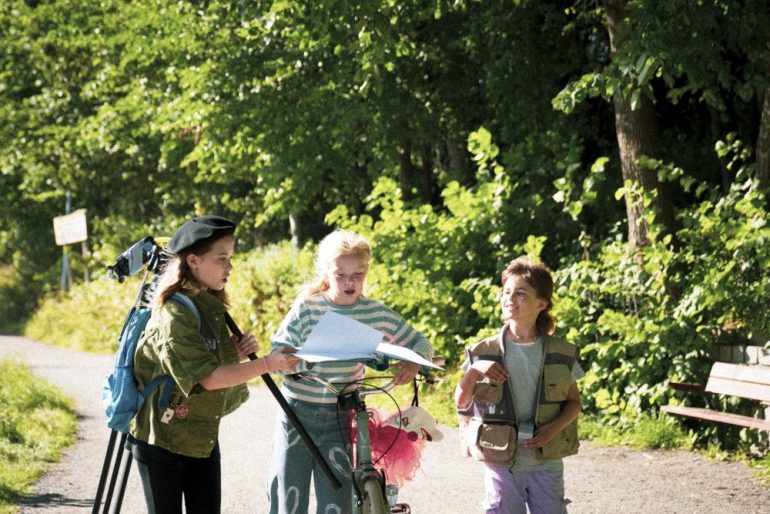
Also from Sweden, Lampray's 1 2 3 – Action!, by Anna Brodin and Victor Lindgren, follows an 11-year-old trying to win her school's filmmaking competition. Its creators found useful script feedback from Cinekid's Junior Critics, aged seven to ten, who said they enjoyed horror and made their own films. Across these projects, consultation with children is informing development rather than being reserved for distribution.
The three main Cinekid for Professionals prizes went to non-Nordic projects: The Island of Nose (Het eiland van de neus, Netherlands) received the €20,000 Eurimages development award, Finger Thief (Greece/France/Romania) won €5,000 in Filmmore post-production services, and Dutch series Matey secured €9,000 in audience-research services. Sweden did win the MediaLab Game Award, which went to Kitiklop, by Dorian Beaugendre and Felix Roman.
RELATED POST TO :
FESTIVALS
& PRODUCTION
& DEVELOPMENT
/
NORDIC INDUSTRY NEWS
/
NORDICS
& INTERNATIONAL