Join the Fund's newsletter!

Get the latest film & TV news from the Nordics, interviews and industry reports. You will also recieve information about our events, funded projects and new initiatives.

Do you accept that NFTVF may process your information and contact you by e-mail? You can change your mind at any time by clicking unsubscribe in the footer of any email you receive or by contacting us. For more information please visit our privacy statement.

We will treat your information with respect.

We use Mailchimp as our marketing platform. By clicking below to subscribe, you acknowledge that your information will be transferred to Mailchimp for processing. Learn more about Mailchimp's privacy practices here.

At the Göteborg Anniversary, a fragile TV industry finds its ‘optimism of the will’

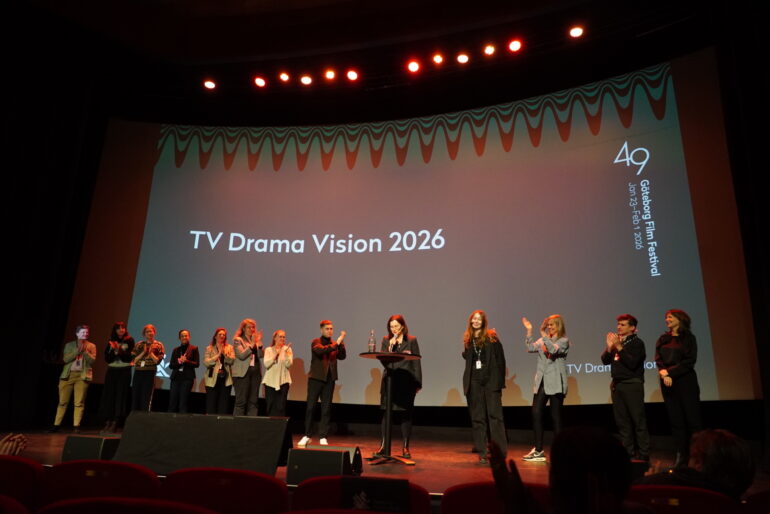
Cia Edström closing GFF's TV Drama Vision 2026 / Photo: Ulrik Bolt Jørgensen
×
NEWS

At the Göteborg Anniversary, a fragile TV industry finds its ‘optimism of the will’

Cia Edström closing GFF's TV Drama Vision 2026 / Photo: Ulrik Bolt Jørgensen

Selected take-aways from the 20th anniversary of TV Drama Vision, convening nearly 900 delegates under a banner that felt like a survival manual: “One Transformation After Another.”

As the industry grapples with the end of the "Peak TV" era, the mood in the Draken cinema was a study in paradox - a flatlining content market set against a defiant, creative urge to reinvent the medium.

According to Guy Bisson of Ampere Analysis, the global industry has settled into a “new steady state”, with commissioning activity down 25 per cent from its 2022 peak. By 2028, global streamers are projected to outspend legacy broadcasters for the first time, leading to a world of “diagonal integration”, where old-guard players must partner with the very digital platforms that once threatened them.

Rethinking the Audience and IP

The industry is shifting from an "attention economy" to a "relationship economy".

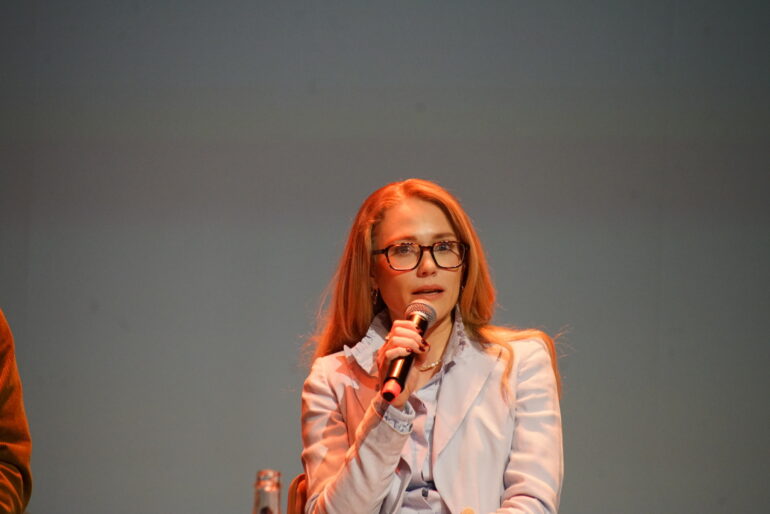
Joe Bergan from YouTube Nordics highlighted that younger audiences view the YouTube "archive" as anything older than six years, presenting massive opportunities for broadcasters to monetise their back catalogues.

Victoria Fäh from IPR.VC announced a new fund focusing on the "new content economy”, which treats IP as a 360-degree brand connecting digital content with physical experiences like retail and games.

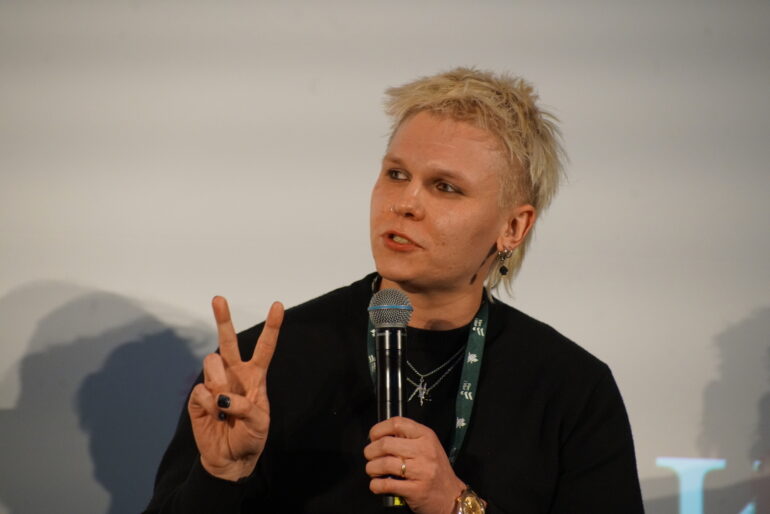
Arttu Lindeman’s presentation of Solar Films’ Case Study on the Finnish hit Cancel demonstrated how involving creators in the writer's room and using aggressive "fear of missing out" social media tactics can successfully convert digital followers into cinema audiences.

1/3
×
NEWS

At the Göteborg Anniversary, a fragile TV industry finds its ‘optimism of the will’

Joe Bergan / Photo: Ulrik Bolt Jørgensen
NEWS

At the Göteborg Anniversary, a fragile TV industry finds its ‘optimism of the will’

Victoria Fäh / Photo: Ulrik Bolt Jørgensen
NEWS

At the Göteborg Anniversary, a fragile TV industry finds its ‘optimism of the will’

Arttu Lindeman / Photo: Ulrik Bolt Jørgensen

From "relevance" to "resonance"

The conference concluded with a call to shift the industry's vocabulary from "relevance" to "resonance". Producers were urged to adopt “optimism of the will” to resist market conformity and to look toward the $400 billion “creator economy” for lessons in visual grammar and audience engagement.

Below is how the major players in the Nordic markets are navigating this transformation:

  • Netflix: With a massive 3 billion SEK investment in Sweden over the last four years, Netflix remains a dominant force, though its strategy is becoming more disciplined, according to Jenny Stjernströmer Björk, Vice Precident Nordic Content. While experimenting with crime series like the upcoming Jo Nesbø’s Harry Hole, the streamer is explicitly avoiding sci-fi, fantasy, and horror in favour of relatable, character-driven dramas and comedies.
  • Prime Video: Seeking to reinvent popular genres with a distinct Nordic feel, the streamer recently launched Snake Killer (Slangedræber) and the dystopian insomnia thriller Awake. Emilia Widstrand, representing Amazon MGM Studios, emphasised a strategy of flexibility in territorial rights and a push for collaborations with local broadcasters to expand their audience footprint.
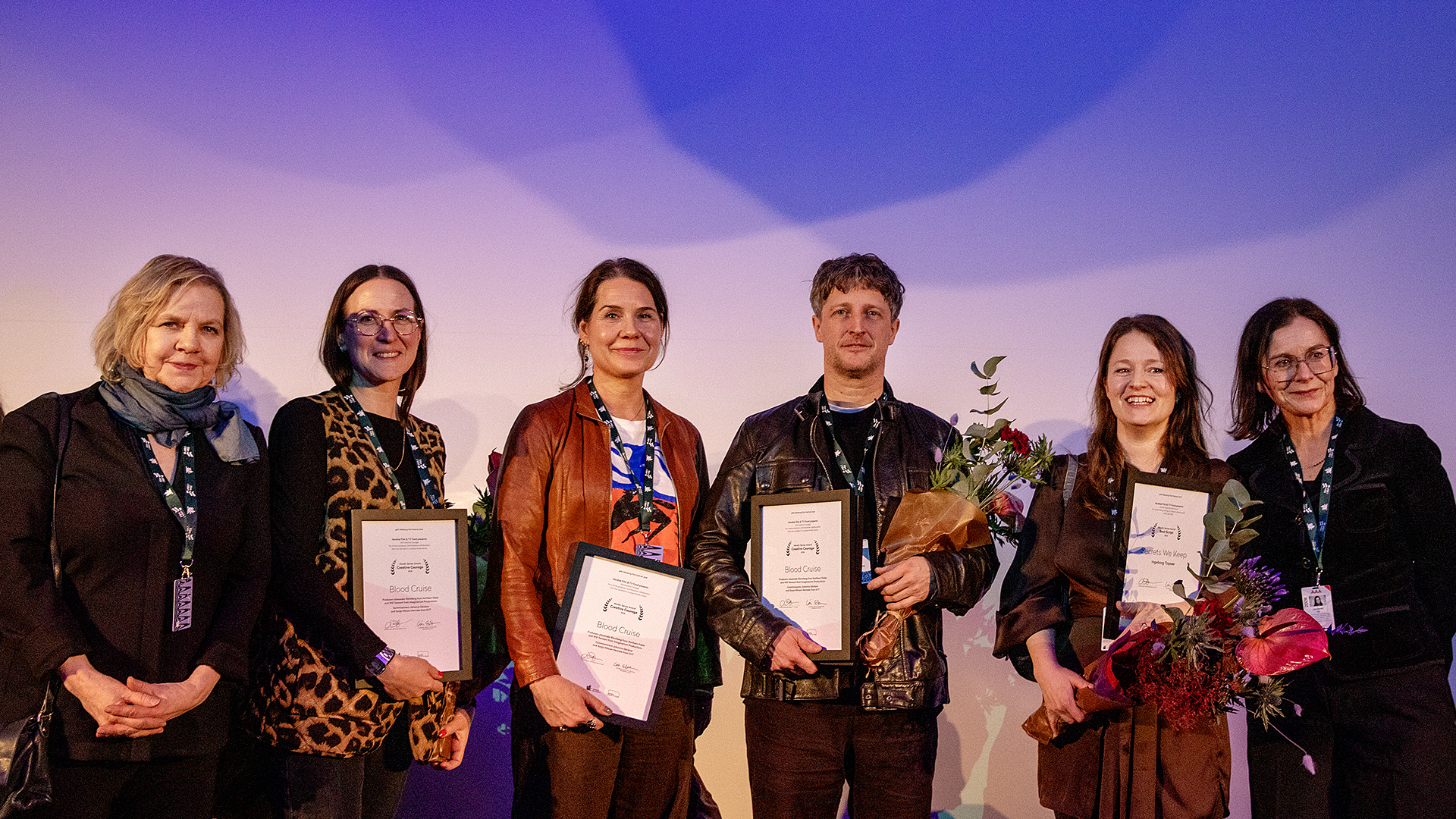
  • SVT (Sweden): The Swedish public broadcaster is focusing on “risk-taking” to drive originality, citing the success of the genre-bold series Blood Cruise (Färjan) (winner of the Creative Courage Award 2026). Head of Drama Johanna Gårdare highlighted the upcoming horror-tinged Summer of 1985 (Svärtan) as a key example of a series designed to reach younger, male-dominated audiences who are traditionally difficult to capture.
  • TV4 (Sweden): Head of Drama Johanna Lind is recognising that crime remains the primary "hook" for its audience, TV4 is transitioning its publishing strategy to treat film series - such as The Sandhamn Murders (Morden i Sandhamn) - as monthly "events". The broadcaster is also a key player in the Scandi Alliance, co-commissioning large-scale fiction like Royal Blood (Blått Blod) alongside TV 2 Norway and TV 2 Denmark.
  • NRK (Norway): Marianne Furevold-Boland emphasised the broadcaster’s mandate to create “connecting points” in a fractured society. NRK is launching the ultra-realistic hospital drama Still Breathing (LIS), which utilises real doctors as consultants to heighten authenticity.
  • TV 2 Norway: Executive Alice Sommer championed complementary windowing as a way to enable growth through collaboration rather than competition. By partnering with Prime Video on projects like the World War II drama Rinnan, the broadcaster aims to raise its creative ambitions, while strategically managing shrinking budgets.
  • Yle (Finland)’s Suvi Mansnerus has found a major hit in the skiing-world rivalry series Guts, which has become the second most watched fiction of the year in the 30–44 demographic. The show, centred on an underdog's ambition to unseat the "queen" of the ski team, functions as a high-stakes international co-production involving partners in Sweden and Slovenia.
  • Elisa Viihde (Finland): This Finnish platform continues to prioritise international co-productions not just as a financing tool, but as a creative space. According to Executive Producer Sari Lempiäinen.
  • DR (Denmark): Facing the challenge of a disappearing young audience, DR’s Head of Fiction Henriette Marienlund is focusing on the “double mission” of being simultaneously entertaining and socially relevant. Projects like The Uniform (Uniformen), set in a police academy, and the farming-centred drama Harvest (Høst) are designed to attract viewers who do not currently use the broadcaster's digital platforms.
  • New8 Alliance (ZDF, NPO, VRT, NRK, SVT, DR, RÚV, Yle): This eight-country public broadcasting coalition has officially renewed its collaboration for another three years. The group focuses on high-quality, "bold and entertaining" series for the 18–45 demographic, exemplified by the surrealist Belgian mystery This Is Not a Murder Mystery, which utilised 21 different partners to reach the finish line.

Wonderful Things That Work. Part I: Creative Conversations

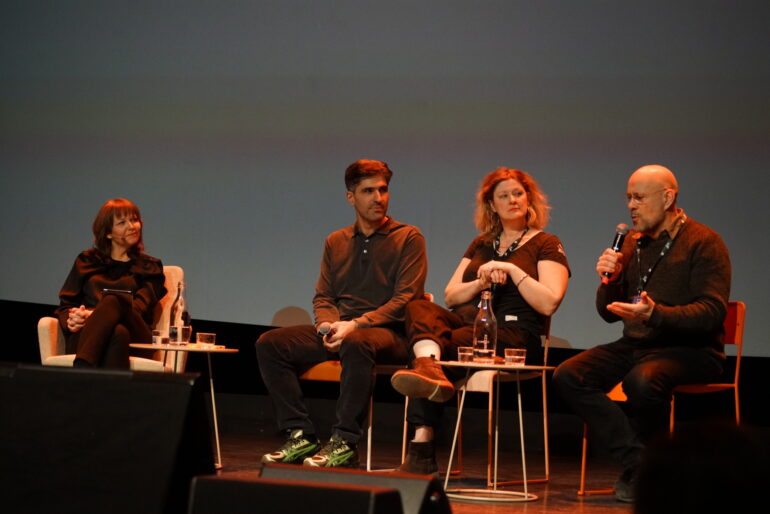
In this session moderated by Andrea Reuter three strong Nordic filmmakers discussed how to sustain their voices in today’s climate. Isabella Eklöf, Milad Alami and Benedikt Erlingsson were outspoken in explaining how to best keep the artistic vision, especially when moving from film to series.

×
NEWS

At the Göteborg Anniversary, a fragile TV industry finds its ‘optimism of the will’

Wonderful Things that Works: Creative Conversation / Photo: Ulrik Bolt Jørgensen

Accoring to Eklöf “there are too many voices in television and everybody knows it.” Sometimes well-known artists are still allowed to daring things. This was the case in her recent comedy series The Death of Bunny Munro (Sky Atlantic, 2025) as it was written by Nick Cave.

They all agreed that finding the right producer and commissioner is crucial. Milad said that he is looking for people to “dream together with.” Very early in the process he, therefore, wants to know WHY someone wants to join a production. Erlingsson needs to know that he can rule in the end as commissioners since to be afraid of new variations. He suggested that the industry looks how theaters experiment today. Eklöf summed up what she is looking for “intellecutal curiosity, kindness and empathy” stating that “some people are just so cynical”. The conclusion was that friendship and trust are needed to perform well and that fear is the biggest danger in tough times .

Nostradamus’ upside down clue

The overarching conclusion from Johanna Koljonen’s Nostradamus Closing Keynote is that on a systems level, "nobody knows anything" about what comes next. This realisation is presented as “incredibly liberating”, as it allows the industry to stop pretending it understands the current transformation, and instead focus on being “extraordinary and super ambitious in its storytelling”.

RELATED POSTS