Written by: Moa Aulanko
18.06.26
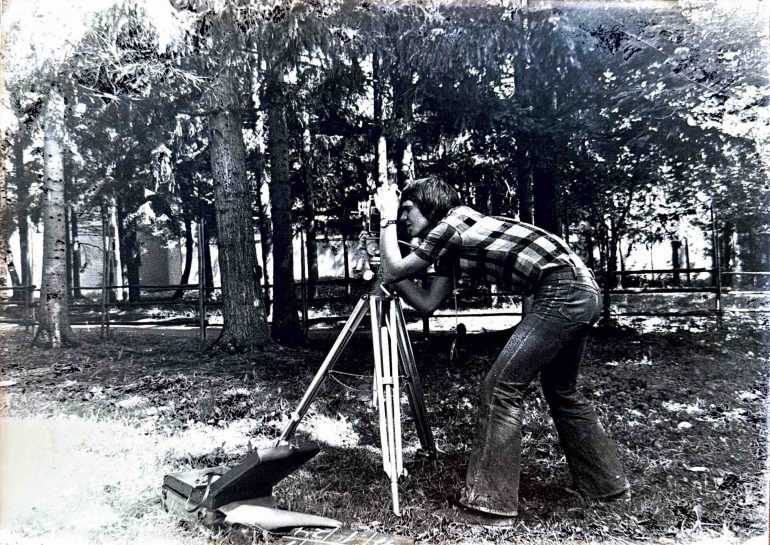
After reading over a thousand scripts, and having a profound overview of all the fiction being produced in the Nordics, the time has come for Torleif Hauge to retire from his role as Senior Fiction Advisor at Nordisk Film & TV Fond.
Torleif Hauge retires with five decades in the industry, including fourteen years at Nordisk Film & TV Fond (NFTVF). Leaving the role as Senior Advisor Fiction, he will miss the stories and the people:
“I will miss reading the big variety of scripts and being part of the industry. We’ve been to many different festivals, and people are always so nice. I appreciate all the people I have been involved with and that I’ve met through this job.”
During his years as Senior Advisor Fiction at NFTVF, Hauge has read over 1000 scripts. He admits that he has read rather few books during his years as fiction advisor, as reading scripts takes a lot of time and reading-capacity:
“I often laugh or cry when I read a script. It’s very different from reading a book, but when I read a script I try to see it in my mind’s eye as a film or a series, and most of the time I manage to. Intuitively, I have a good or a bad feeling about a script. Most of the scripts that I get to read here are quite good, because they have been through many other people’s hands before they come to us.”
You have been involved in allocating more than NOK 1.2 billion. How important is NFTVF for the Nordic industry?
“It's important that the Fund is here, because our support makes it more attractive to get your film screened in more than one Nordic country outside your home country. And that pushes the producer to find new ways. I think that during the past five years, a lot of small distributors have been popping up, which is quite good, because they are also very interested in working with Nordic arthouse films and then getting them an audience.”
You have a very good overview of what has been produced in the Nordics the past 14 years. What characterises the Nordic countries?
“Norway has managed to create differentiated types of films and series, and they have had the most special titles for at least the past five years. Denmark very often produces heavy family drama. Sweden has crime, of course. Nordic Noir started in Sweden, so that's kind of typical of them. Finland is sort of more of the odd one out, because the Finns have a somewhat different kind of humour and a very different language than the rest of the Nordics. But I think that the industry in Finland has been more and more professionalised. Some years ago, I told a group of young Finnish aspiring filmmakers: “You kind of always feel that you're the underdogs of the Nordics, but you have to believe in yourselves.” I think that's important, because there are great Finnish successes. In Iceland, they are very much tied to their national nature, and this often plays into the films and series, more than in the other countries. I think Iceland is one country that has always been very good at co-producing with other countries, because of course the Icelanders have less money and smaller audiences, but a lot of Icelandic filmmakers are educated in the United States or Denmark, and this has influenced their storytelling.”
You have been in the industry for five decades. How has the Nordic industry developed since you started?
“In the Nordics, I think the biggest difference to when I started in the industry is the co-producing. For example, in Norway we didn’t need co-producing. There were no tax incentives, and co-financing with other countries was much less common. What also changed, especially in Norway, was the making of films for a larger audience instead of ‘politically correct’ films, and believing it was the audience that didn’t understand the filmmakers, not the other way around. And of course the technology has changed a lot. The future with AI will be very exciting.”
Hauge worked as a first assistant camera on the feature Orion's Belt (Orions belte, 1984), directed by Ola Solum and produced by Dag Alveberg, Head of NFTVF 1995-1999.
“This film was a turning point, and the first commercial breakthrough for Norwegian films.”
Working on the film is one of the memories Hauge cherishes when looking back at his career:
“Orion’s Belt was an exciting production to work on. It was shot in Northern Norway and Svalbard, with the crew living in a boat while shooting. In addition, everybody knows about it. I can mention 15 titles that I worked on that nobody has ever heard of. But the most exciting film I worked on was Destination: Paradise (Pakketur til paradis, 1982), directed by Eldar Einarson. We were in Sri Lanka for two months, and it was quite an experience. I was the first assistant camera operator, and we got access to very many places that you normally wouldn’t see in Sri Lanka as a tourist. It was probably the most memorable film I’ve worked on, but the least seen.”
During his years in the industry, Hauge has held many different roles. His interest in film and photography started already when he was 12. In 1972, at the age of 16, he made his first film shot on a 16mm Paillard Bolex with spring wind-up and a turret lens. It was a 10 minute documentary about milk production in Norway. A few years later, in 1977, he got his first paid job in the industry at Centralfilm, a company that made commercials and information films. His first job on a feature film was as production assistant on Blood of the Railroad Workers (Rallarblod, 1979), directed by Erik Solbakken.
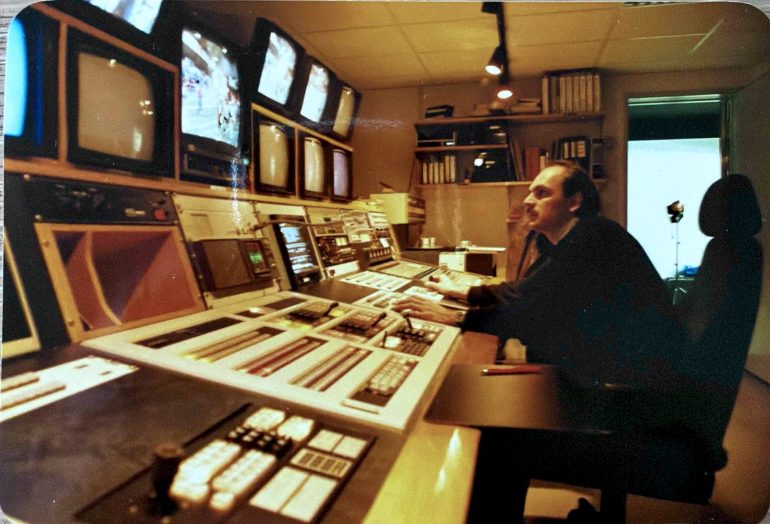
Since then, he has worked with lighting, grip, camera, editing and production on 20 feature films, including second unit cinematographer/first assistant camera. Hauge has also worked with commercials as a producer and editor, and he started out as a freelancer in Moland Film. In 1992 he started JBR Film under one of the leading advertising agencies in Norway, and produced many award-winning commercials. Four years later, he co-founded Paradox with director Erik Poppe and producer Finn Gjerdrum. At Paradox he produced feature films like The Beast of Beauty (Lille frøken Norge), Hawaii, Oslo, and Pitbull Terje (Pitbullterje). He acted as associate producer on Dancer in the Dark, in addition to producing several commercials. In 2006 he founded Fender Film, where he produced the features Manhunt (Rovdyr) and The Accident (Ulykken). He also held the position of Production Advisor at the Norwegian Film Institute for two years.
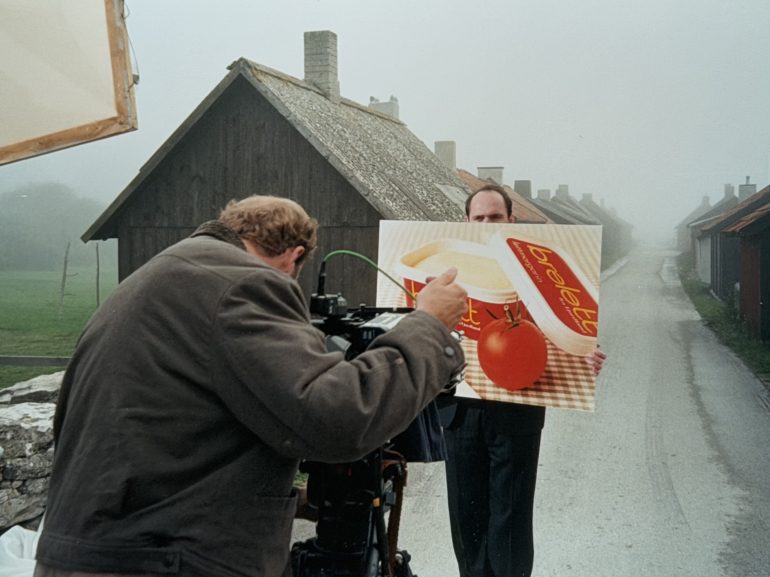
Hauge says a background in producing has been an advantage in his role as Fiction Advisor: ”I've been sitting on the other side, so I know how hard it can be to enter a meeting and get your application approved. When you then actually get the money, we, as funders, have to make things as easy as possible, within the rules and guidelines of course, but we have to show some flexibility.”
He adds that in the film business, not everything is in place at the start, and especially with tax incentives and co-productions, it’s difficult to get contracts in place before shooting starts:
“I think that very often in the bureaucratic world of institutes and all the places you have to get money from, people have the tendency to kind of fulfil their own job rather than think about the applicants as customers. You have to to treat them like customers, and you are there to serve them.”
Hauge’s interest in cameras and technical gear has resulted in him having a big archive of photos and film that he will start going through when retiring. He also looks forward to spending time at his beloved summer house with his family, and to start reading more books again.
Cecilie Aspenes takes over the role of Fiction Advisor at NFTVF within June.
RELATED POST TO :
CORPORATE
/
NORDISK FILM & TV FOND NEWS
/
NORDICS