Written by: Geoffrey Macnab
21.08.26
From suspicion to collaboration: Nordic and UK producers are finding new reasons to join forces on some of cinema’s biggest projects.
“It has never been easy co-producing with the UK. Somehow it seemed that they were kind of on their own island. They were always more oriented to the US than to the rest of Europe. To me, it seemed for many years that the UK was not interested in us,” Jasper Morthorst, co-founder of the Danish production company Motor, sums up what used to be a prevailing Nordic attitude.
“If you go back a few years, the UK was further away than the map says,” agrees Andri Ómarsson, CEO of the leading Icelandic production company Glassriver.
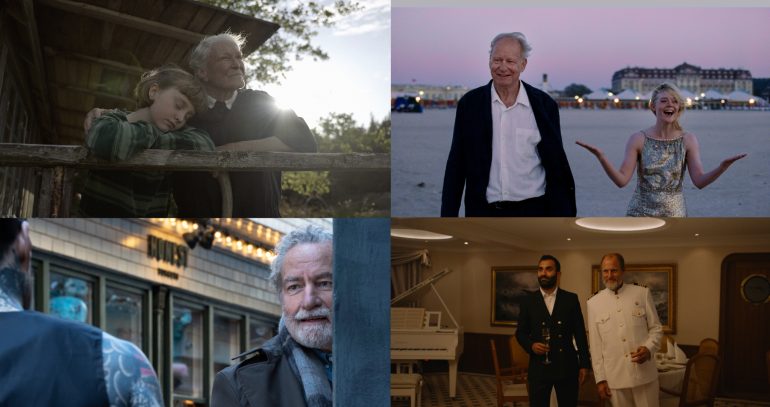
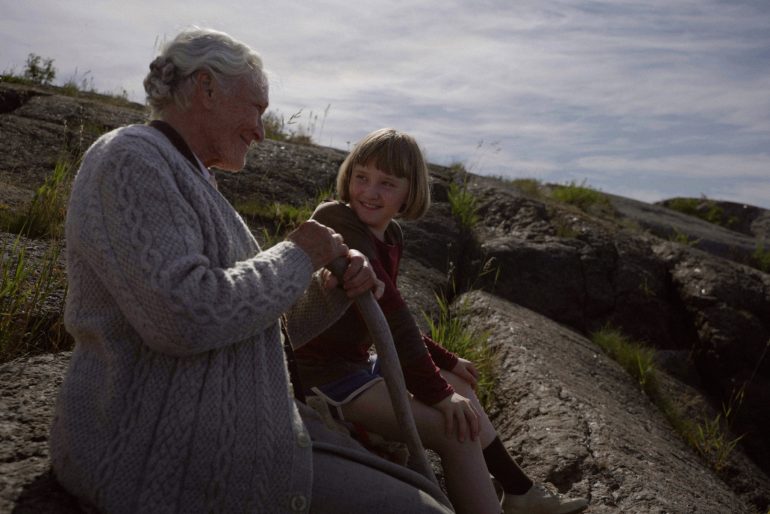
Now, though, top Nordic films regularly have UK involvement. Swedish maverick Ruben Östlund’s multi-award winning Swedish hit Triangle Of Sadness (2022) had backing from the BFI and BBC; Icelandic director Baltasar Kormákur’s Oscar-shortlisted Touch (Snerting, 2024) was co-produced by the UK’s Good Chaos. There was “crucial” British funding through the BBC late on in the financing of Joachim Trier’s Norwegian Oscar winner, Sentimental Value (Affeksjonsverdi, 2025), and that film’s writer, Eskil Vogt, is currently working on a psychological thriller, as yet untitled, expected to shoot in the UK and to be co-produced by Norwegian outfit Mer Film with UK company Potboiler. The BFI Global Screen Fund last year pumped £200,000 into Swedish-Costa Rican director Nathalie Álvarez Mesén’s Gothic horror pic, The Wolf Will Tear Your Immaculate Hands, starring Alexander Skarsgård. Kevin Loader’s Free Range (see below) was UK co-producer on the Finnish-shot drama The Summer Book (Sommarboken, 2025). Mer Film is working on Mary Wollstonecraft biopic If Love Should Die, starring Renate Reinsve, which will shoot in the UK. A new UK version of the low budget Danish scheme Dogma 25 was announced in Cannes. The UK’s leading production company Working Title has been working in Norway on Jo Nesbø’s Detective Hole (Jo Nesbø’s Harry Hole) for Netflix.
Since Brexit in 2016, then, the British have been busily trying to ingratiate themselves with Nordic partners.
“I guess it is because it is more difficult for them to find finance in their usual commercial ways in the UK and US, and so they are looking into more traditional European co-production,” suggests Morthorst, who was executive producer on Viggo Mortensen’s western The Dead Don’t Hurt (2023). He is working with the UK company Recorded Picture Company, and has several other projects with British partners in the pipeline. He believes that Denmark’s new 25% production rebate scheme is already attracting UK producers. “Suddenly they can see the idea of shooting here, of co-producing with us.”

Top Nordic talent, meanwhile, regards the UK, which has its own 40% independent film tax credit, as a bridgehead from which to break into the international English-speaking market.
“The stars are aligning,” Ómarsson says of the fast improving Nordic-UK relations. His company, Glassriver, is currently preparing a major Icelandic/UK project, Reykjavik Noir, a nordic noir crime drama that will shoot in 2028 in both London and Reykjavik. “We are pairing up with producers in the UK for both development and financing and packaging of that show.”
He points out that with “everyone trying to find a way to produce bigger shows, co-production and co-commissioning is becoming the norm. One of the upsides of collaborating on a UK project is that Iceland is a relatively expensive country. Our costs of operating are similar. When we are co-producing with territories less expensive than Iceland, that can cause friction about where to allocate costs - and collaborating with countries on a fairly similar budget rate saves a lot of headaches.”
Mer Film’s Oscar winning producer Maria Ekerhovd (Sentimental Value) is one prominent Norwegian looking to forge closer ties with the UK.
“After a lot of years not being particularly interested in European co-production, the UK now has opened up. With the BFI Global Screen Fund, the BBC and Film4, there are a lot of partners who are very eager to be part of big European co-productions,” she says. “The UK is a big asset. It has great crew, great people. Since it has been such a big industry for such a long time, there is great knowledge financially and creatively. I think there is a big opportunity now to work with Britain.”
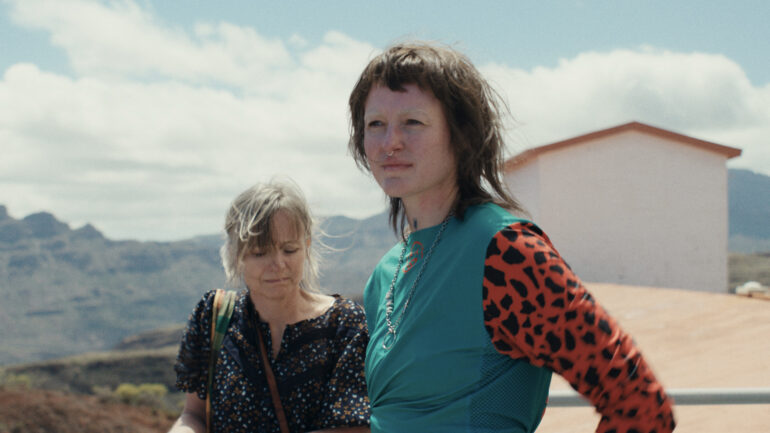
Mer Film’s recent Butterfly (2025), starring Renate Reinsve and top-financed by Nordisk Film & TV Fond, received backing from the BFI Global Screen Fund - and was co-produced by the UK outfit Quiddity.
Ekerhovd notes that the sardonic Norwegian sense of humour is “very compatible” with that of the deadpan British. “I feel that British and Nordic culture is complementary and works very well together,” she says. “In Bergen, where I am from, we have always had a strong relationship with the UK, ever since the war. People feel very strongly connected to the UK.”
Fellow producer Dyveke Bjørkly Graver, who runs Eye Eye Pictures with Andrea Berentsen Ottmar, acknowledges the UK “might not be first choice for a smaller Nordic film”. For bigger international projects, though, like Eye Eye’s Western A Prayer For The Dying (2026), or their new sci-fi film The End Of It (2026), “the UK definitely makes sense, because we are becoming more international in the way we are thinking and producing. I definitely think there will be more collaboration.”
She too welcomes the arrival of the BFI Global Screen Fund, co-production financing that comes as a non-recoupable grant without strings attached. (Eye Eye received £210,000 from the Fund for A Prayer For The Dying). She also points to the networking opportunities that the British are now providing for Nordic producers, for example inviting them to events, including the industry days at the London Film Festival.
One prominent UK producer who recently collaborated successfully with Nordic partners is Kevin Loader of London-based Free Range Films. He worked with Helsinki Film on the Tove Jansson adaptation The Summer Book, starring Glenn Close. “I found both the authorities in Finland and the production company extremely user-friendly from the point of view of a UK filmmaker. In terms of sensibility, the northern European filmmaking culture is much closer to the UK than maybe even the French and Italian film culture. It felt pretty easy, a bit of a joy in many ways, and much less of a hassle than I expected.”
The British Film Commission signed a Memorandum of Understanding with Norway in 2022, and both territories have made a concerted push to boost inward investment. Meghan Beaton, Chief Executive of the Norwegian Film Commission, points to a run of blockbusters — from Mission: Impossible to No Time To Die — that have shot across the two countries, typically combining UK studio work with Norwegian exteriors.
Under the MOU, following Brexit, UK directors, producers and heads of department are classed as European under Norway's cultural test.
"Our producers are looking more and more to the UK for partners," Beaton says.
Some urge caution. They point out that after Dogme 95, the UK and Danish partners worked enthusiastically together on projects including Lone Scherfig’s Wilbur Wants To Kill Himself (Wilbur begår selvmord, 2002) and Andrea Arnold’s Red Road (2006), but feelings soon cooled. The UK’s FilmFour (as it was then known) had a major flop when it co-financed Danish director Thomas Vinterberg’s extravagant but ill-fated sci fi romance It’s All About Love (2003).
Nonetheless, the working relationship between the Nordics and the UK is now arguably as close as it has ever been. As British Film Commissioner Adrian Wootton says: ”I can’t remember when there has been so much real activity. They are (not?) just talking about it [working together], they are actually producing stuff!.”
In addition to Butterfly, Sentimental Value and The Summer Book are also top financed by NFTVF.
RELATED POST TO :
BUSINESS & SALES
/
NORDIC INDUSTRY NEWS
/
NORDICS
& INTERNATIONAL