Written by: Moa Aulanko
18.06.26
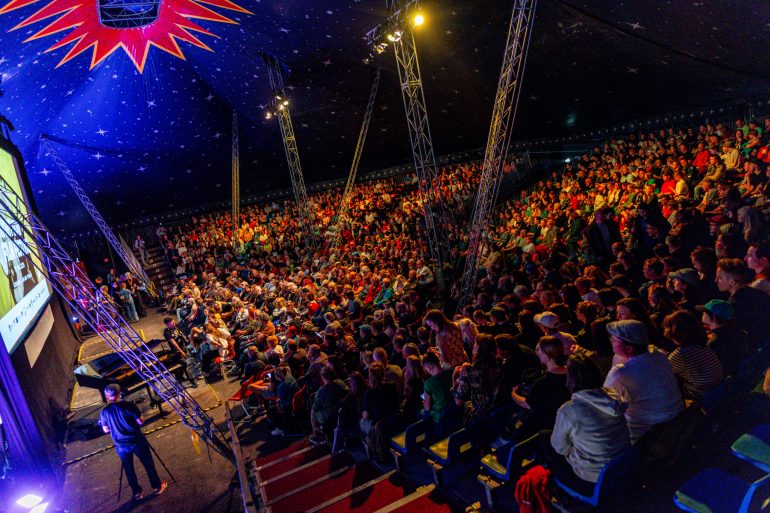
Why do filmmakers from all over the world keep travelling to the small Finnish village Sodankylä? This year new films were screened side by side with over 100-year-old films from the Swedish film archive.
The Finnish Midnight Sun Film Festival has taken place above the Arctic Circle in the small village of Sodankylä since 1986, when founded by directors Aki Kaurismäki, Mika Kaurismäki and Anssi Mänttäri and the late documentarist, writer and scholar Peter von Bagh, who acted as the festival’s Artistic Director 1986-2014.
The latest edition, June 10-14, summoned 32,000 national and international attendants under the never setting sun to discuss with professionals, and to watch new and old films. Fresh features, documentaries, and short films are shown around the clock. Interesting new films are screened and discussed with the same enthusiasm as over 120 years old archive treasures. This year’s international guest list included directors Abderrahmane Sissako (Mauritania-Mali) Susan Seidelman (USA), Stéphane Brizé (France), İlker Çatak (Germany), and Gabe Klinger (Brazil).
The festival’s opening film was Sissiko’s stunning and important Oscar-nominated film Timbuktu (2014) which deals with the jihdist ockupation of the ancient city from the point of view of cattle herders and musicians. It set the tone for the festival’s many discussions on the role of film in today’s society.
Timo Malmi, who has acted as Artistic Director since 2015, does not want the popular festival to grow bigger:
“Enthusiasm was tangible in the screening and the discussions, and people were very happy about the festival experience. The number of attendants seems to stay at a little over 30,000 in the course of five days (in four venues) year by year. And we don’t want it to go much higher, because we want to keep the festival intimate. Quality is more important than quantity!”
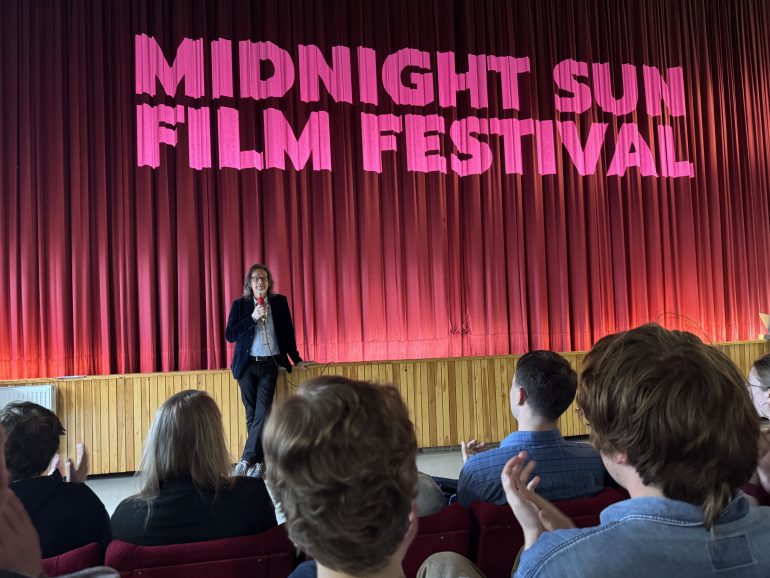
The festival has been visited by big international names through the years: Samuel Fuller, Francis Ford Coppola, Paul Morissey, Agnés Varda, Ettore Scola, Jaques Demy, Wim Wenders, Hanna Schygulla, Miloš Forman, Jim Jarmusch, Ruben Östlund, Claire Denis - just to name a few. This year the festival decided to go for a different strategy. Instead of focusing on the biggest film names, important directors with a say were introduced:
“It was a bit exciting to await the reactions of the public. But both the audience and the media seem to be happy. As we have always thought: When the programme is curated well, and the standard of both films and quests stays high enough - when we just keep faithful to our idealistic principles of cinefilia - people keep coming, not caring so much neither about celebrities nor trendy programming. After 41 years, our audience trusts our quality.”
The Midnight Sun Film Festival has kept its unique reputation since 1986. What is your recipe for success?
“The secret is in the adventure in the wilderness somewhere beyond the Arctic Circle, in a small village under the midnight sun - where we voluntarily enjoy each other’s company for five days of watching films enthusiastically and talking about them peacefully. Without any commercialism, competitions, red carpets, formalities etc. This is what the ‘big names’ have heard about - and want to experience themselves. The cinefilia label doesn’t mean that festival has ever been ‘difficult’. On the contrary, MSFF is for everyone who is interested in life, art and people.”
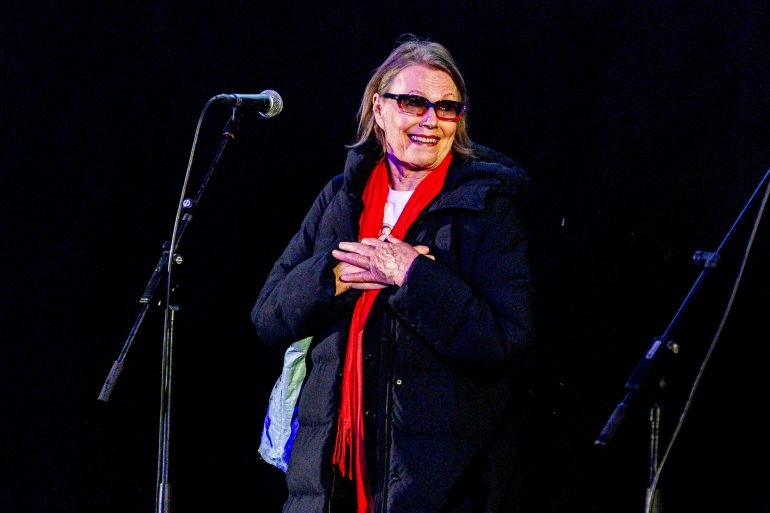
The festival focuses on fiction films, with a good documentary selection. This year, three of them were top-financed by Nordisk Film & TV Fond (NFTVF): Mika Kaurismäki, Ingvar Thordarson and Ragnar Axelsson’s Amongst the Birds (Fuglar (og menn)), Jukka Kärkkäinen’s Beauty of Errors (Kappale kauneinta Suomea) and Marko Talli’s Sing for me Arja (Laula minulle Arja) a biopic on singer, actor and activist Arja Saijonmaa. All three were introduced by the filmmakers in sessions moderated by NFTVF’s CEO Liselott Forsman, who has visited the festival since its first edition in 1986:
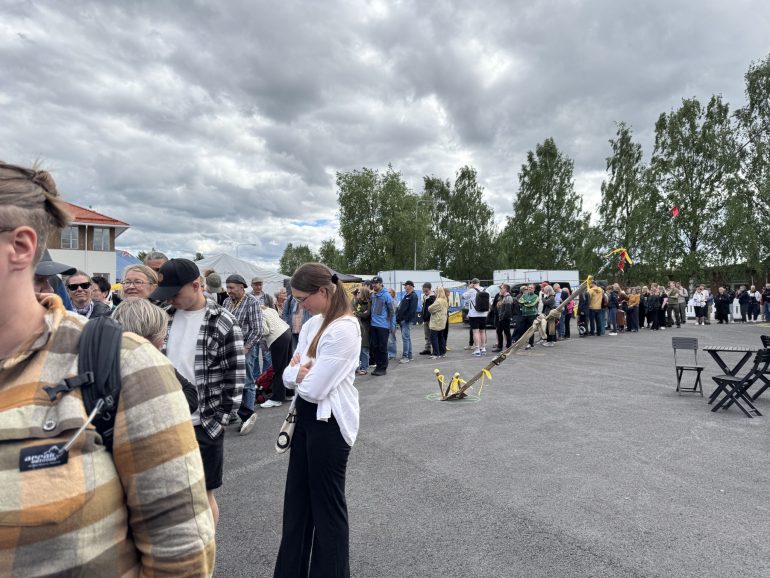
“It is amazing to witness how the festival has kept its unique spirit. This year, it was especially reassuring to see people of all ages queue up in rain or sunshine to be sure to get a seat to see a documentary, a feature, a masterclass or a film discussion. The engagement of the audience is one of the keys in Sodankylä. Films and the state of the world truly matter. Still, I have rarely seen such standing ovations as Arja Saijonmaa got on stage. Both her art and political engagement was truly appreciated by all ages.”
Since 2003 Forsman has moderated The Domestic Discussion (Kotimaisten keskustelu) with the domestic main guests. The title this year was “An Artist Must Have a Backbone”, a quote by Saijonmaa from Talli’s documentary about her. On the stage were directors Yasmin Najjar, Pia Andell, Aleksi Salmenperä, Jukka Kärkkäinen, Marko Talli, producer Mark Lwoff, singer-actor Saijonmaa and actor Tommi Korpela (who had roles in four festival films). The intense discussion on filmmakers’ visions and responsibilities in a troubled world resulted in a call for a film culture revolution.
“I studied film at university level, but my real film school was Peter von Bagh’s excellent 2-hour morning discussions with the international festival guests in Sodankylä and I truly still enjoy these long 2-person dialogues. I founded the Domestic Discussion more than 20 years ago to provide the Finnish guests with their own arena. I learn every year from these lively multi-angle discussions too” Forsman adds.
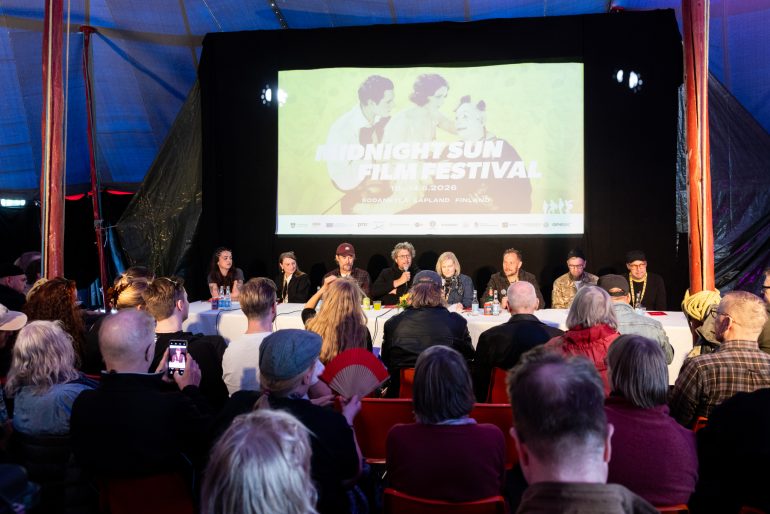
From Thursday to Sunday between 10 and 12, the festival organises long discussions with the main international guests. Among the most memorable ones this year were the dialogues between Timo Malmi and Abderrahmane Sissako and the one between Aalto University’s Senior Lecturer Satu Kyösola and Stéphane Brizé. Both directors opened up about how their motivation to make films grew from humble personal backgrounds and an awareness of injustices in the world.
Brizé explained his festival experience to NFTVF:
“We can see and access all the films in the world with two clicks. On the other hand, what we do not have access to is these kinds of meetings with the directors, and the encounter with other spectators. And to share moments of community when we meet. We live in a world of distrust, in a world of suspicion, in a world where one is afraid of the other. And here we are gathered to open up. It's a window to the world, the magic of cinema. We open a window, and on the other side is Africa. In Abderrahman's films, the whole world is present. This is extraordinary magic. It's also extraordinary to be able to share it together. The spectacle of these rooms crowded with curious people is absolutely very, very unique.”
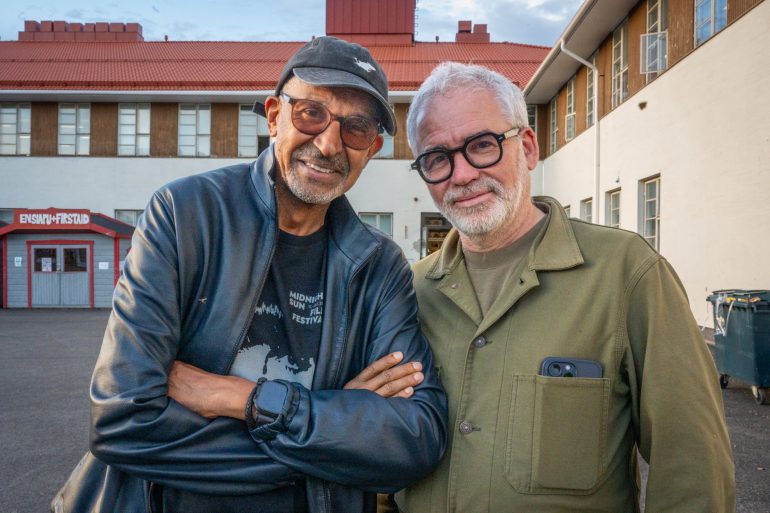
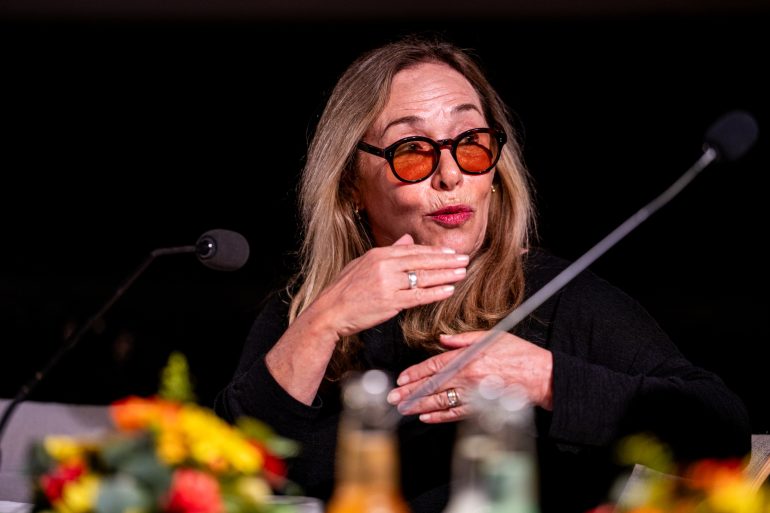
North American director, producer, screenwriter and teacher Susan Seidelman became a director in the 1980s, when female directors were still rare in the USA. She made her breakthrough with the films Smithereens (1982) and Desperately Seeking Susan (1985), the latter with Madonna in the lead. Seidelman portrays women who are outsiders, and who want to take control of their own lives. In Sodankylä she was especially astonished by the atmosphere. When asked by NFTVF to express what she experienced in Sodankylä in one word, she said: “Community.”
Karaoke and silent films with live music fill the enormous circus tent
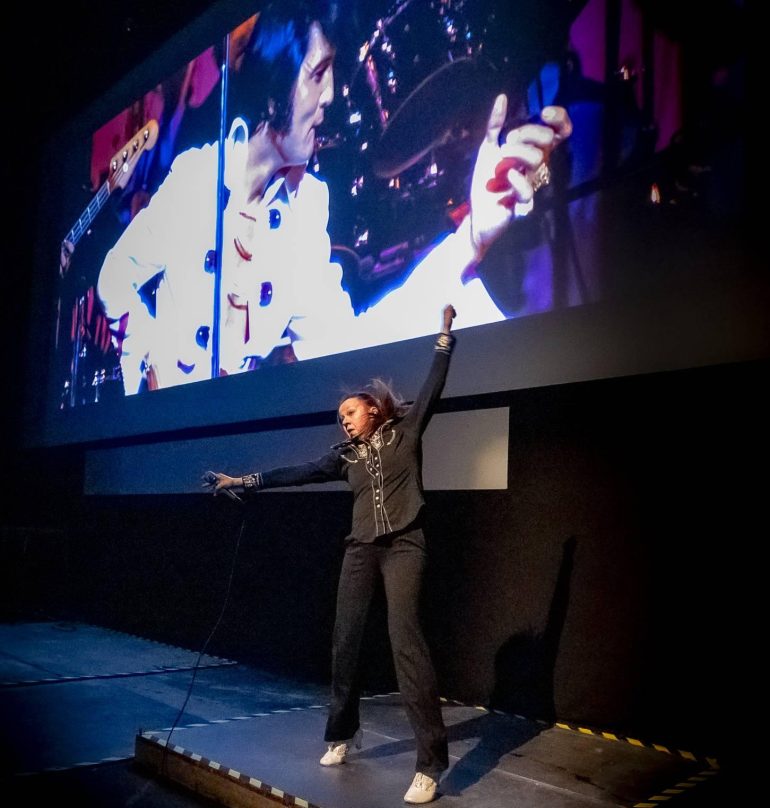
The big circus tent in Sodankylä that can fit close to 1000 people was sold out when silent films where shown with live music accompaniment, or karaoke screenings offered. Finnish rhythm & blues legend Marjo Leinonen was the lead singer for EPIC (2026), and Finnish celebrated drag artist and singer Pola Ivanka for The Adventures of Priscilla - Queen of the Desert.
Three silent films were accompanied by musicians, among them Charlie Chaplin’s The Kid (1921) with Dutch Maud Nelissen on the piano. She is the only musician who has received permission by the Chaplin estate to perform the film’s music as a piano soloist. She and Portuguese classic harpist Eduardo Raon accompanied G.W. Pabst’s Pandora’s Box (1929).
Swedish director Victor Sjöström’s silent film He Who Gets Slapped (1924), accompanied by Agnusdei & co, was introduced by Jon Wengström, Senior Curator of the Swedish Film Institute (SFI). Sjöström’s American film was the first film fully produced by Metro-Goldwyn-Mayer.
The Swedish way of preserving the world’s film heritage
At the festival Wengström also introduced even older films, a selection of silent films from 1896–1911 preserved by SFI. The selection proved how SFI has protected film heritage worldwide, and how diverse genres were offered to Swedish and Nordic audiences 120 years ago. One of the films had Danish title cards, as films were co-distributed within the Nordics back then.
This work continues in the digital age. Since 1980, Swedish producers are required to deliver material for the archive, in order to receive subsidies. Today, the obligation also covers distributors that receive funding from SFI:
“This way, we receive material from a few foreign films screened in Sweden, which also form an important part of the Swedish film heritage. But since Sweden is a small country, and we have enjoyed good relations with the industry, we have, in the form of voluntary deposit or donation, received material from films which have not received any subsidies from the Film Institute. Traditionally, we have only collected and preserved films released in cinemas, but with the current change in industry practice, we also collect and preserve (some) films only released on other platforms.”
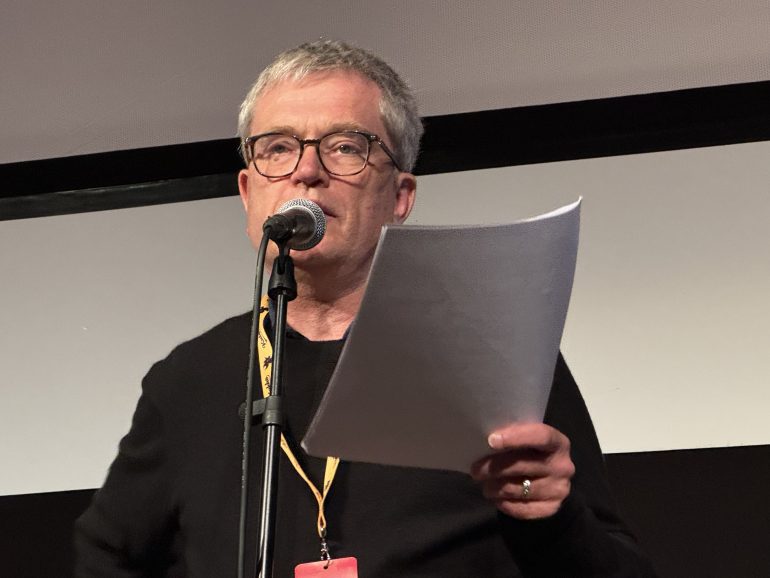
SFI has its own in-house digital laboratory for digitising and restoring older, analogue films. The digitised films are distributed to cinema theatres, but files are also provided to broadcasters and VoD providers:
“Since May 2026, we also have our own VoD service called Cinemateket Play, where you can subscribe for access to Swedish and international classics, and the site also has a free section with rare films from our collections. In Stockholm, Göteborg and Malmö we also arrange cinema screenings of analogue and digital films from our collections, from the collections of other archives (including the Nordic ones), and distributors.”
Every autumn, an annual Nordic Film Heritage Meeting is organised, which in 2026 will take place in Norway. Wengström underscores that despite differences in archival strategies, the Nordics collaborate closely:
“Even though the collecting and preservation of, and access to, film heritage is organised differently in the different Nordic and Baltic countries (in some cases the film heritage institution is an independent entity, in some cases a department of a bigger structure, such as a film funding agency, a national archive or a national library), we all share the same mission, and collaborate very closely, by exchanging experiences, ideas, and best practices.”
RELATED POST TO :
FESTIVALS
/
NORDIC INDUSTRY NEWS
/
FINLAND