



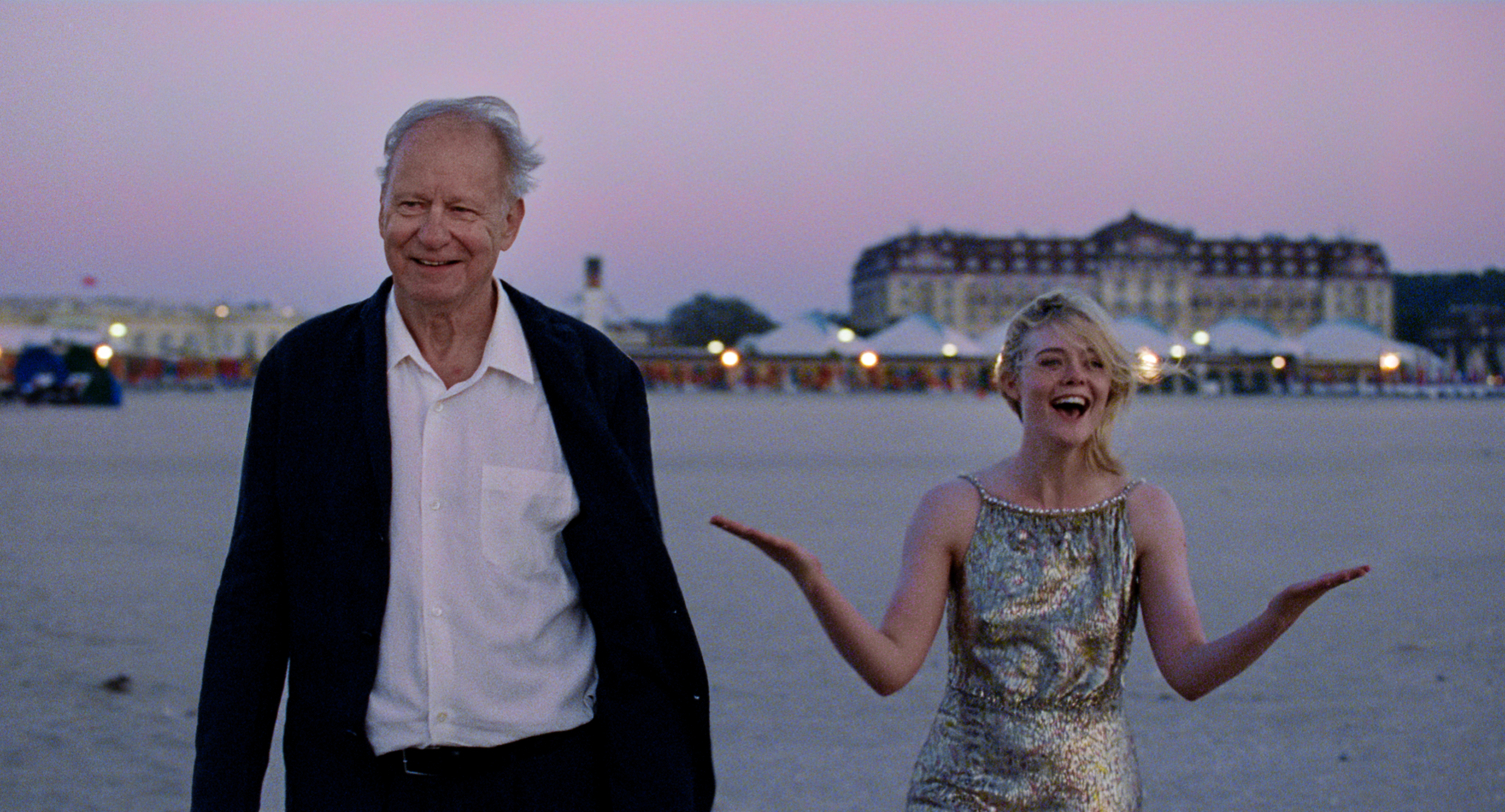
Swedish actor Stellan Skarsgård wins Golden Globe – the first one to a Norwegian film
Two Swedes received their second Golden Globes yesterday: composer Ludwig Göransson and actor Stellan Skarsgård.

Occupying a crucial slot in the awards calendar, the Californian event bridges discovery and campaign strategy, with Nordic cinema firmly in the spotlight this year across prizes and programme density.
As the awards season concentrates attention into an increasingly compressed timeframe, the 37th Palm Springs International Film Festival (2–12 January) reaffirmed its value as a strategic gateway for international titles - particularly Nordic films seeking to translate European momentum into North American visibility.
The most prominent breakthrough came with Joachim Trier and Eskil Vogt’s Sentimental Value (Affeksjonsverdi), which received the FIPRESCI Award for Best International Screenplay, reinforcing its standing as one of the season’s major European critical successes. In its jury statement, the film was praised as “a tale where love, family, art, and memory infuse new meanings and make us dig deep into our choices, regrets, and mistakes”, noting how it balances “the big and small tragedies of our existence” with “a pinch of humour and levity”, ultimately demonstrating the healing power of art “from Scandinavia to the world”.
Beyond Sentimental Value, Palm Springs offered a broader panorama of Nordic filmmaking at different stages of their international journeys. Anders Thomas Jensen’s The Last Viking (Den sidste viking) screened with the director in tow, while other Nordic titles included Beginnings (Begyndelser), Lars von Trier’s 1988 Medea, and Sweet Störy, alongside Oscar hopefuls such as 100 Litres of Gold (100 litraa sahtia), Eagles of the Republic, and The Love That Remains (Ástin Sem Eftir Er).
From a publicity standpoint, Palm Springs is increasingly understood as more than a prestige screening slot. Christian De Schutter, publicist of the Norwegian political dramedy No Comment (Ingen kommentar), notes that a selection at the festival “positions a film at a festival known for traditionally embracing international and Nordic storytelling”, while also signalling to the industry that a title “travels well beyond its home market”. Positive audience responses, he adds, can be leveraged throughout the year as part of a longer-term international strategy.
De Schutter explains that when Nordic films enter the US circuit, communication priorities are often recalibrated. “In essence, No Comment is a family and marital drama. It’s about power and what people are willing to do or to forfeit to retain that power,” he says, emphasising the importance of foregrounding universal themes rather than local context. Palm Springs, he adds, is effective because it “combines scale and accessibility”, encouraging deeper engagement with audiences, programmers and industry professionals.
That combination also allows Nordic films outside the main Oscars or EFAs race to benefit from the festival’s awards-season momentum. “Discovery is the priority at the festival,” De Schutter observes, noting how the presence of multiple country submissions naturally sparks curiosity and can lead to further US festival invitations, press attention, and, in some cases, distribution conversations.
Producers echo this assessment. Knut Inge Solbu of Fenomen, producer of WW2 drama The Battle of Oslo (Blücher), describes Palm Springs as a valuable testing ground for films that have already had a strong domestic life. “Engaging in Q&As with a completely new audience - watching the film with fresh eyes - has been particularly exciting,” he says, pointing to the festival’s “focused and concentrated feel” as a space for meaningful encounters and unfiltered audience feedback.
Solbu adds that positioning Nordic films internationally often involves resisting the urge to over-contextualise. Instead, the emphasis is placed on themes such as “preparedness, mobilisation, and the voice of liberal democracies in opposition to authoritarian regimes”, which resonate strongly with contemporary US audiences. Even outside formal awards contention, Palm Springs can generate longer-term momentum through chance encounters and sustained presence.
The mechanics of awards-season campaigning were particularly visible in the documentary field. Danish publicist Line Bilenberg, who handled the international and Danish press strategy for Mr Nobody Against Putin, highlights how awards visibility is the outcome of long-term, carefully coordinated work. “People don’t always realise how long this process is - you work an entire year to get to awards season,” she says.
For the film’s US campaign, Bilenberg worked alongside Sylvia Desrochers of 42West, who handled American press, trades and Academy-facing activities, while Bilenberg oversaw the broader international rollout. Once the film was shortlisted for an Oscar, “a whole new layer of PR begins - reaching Academy members, organising screenings,” she explains, underscoring the division of roles that often underpins successful cross-Atlantic campaigns.
In detail, Desrochers frames the campaign around the film’s ethical and emotional core rather than its geopolitics alone. “At the heart of the campaign is the idea that Mr Nobody Against Putin is not just a film about Russia or authoritarianism, but about moral courage under pressure,” she explains, describing it as “a deeply human story - one individual’s reckoning inside a system designed to erase dissent”. Desrochers notes that US press and awards voters have responded strongly to “the intimacy of the access and the personal stakes”, as the film “makes an enormous geopolitical conflict feel immediate and personal”. In positioning the title for the awards season, she adds, the focus remains on craft as much as urgency: “The goal is to underscore that this is not a polemic, but a cinematic work that trusts audiences to grapple with difficult truths.”
Bilenberg also stresses the human cost of sustained awards exposure, particularly for documentary protagonists. “It’s essential to remember that documentary participants are people, not machines. Oscar campaigns can completely drain you,” she notes, underlining the importance of pacing and care alongside visibility.
In conclusion, Palm Springs now functions as more than a symbolic stop on the calendar for Nordic cinema. In an awards ecosystem driven by narrative, timing and strategic presence, it has become a practical engine - amplifying major critical successes like Sentimental Value while offering Nordic films at all stages a space to test resonance, sharpen positioning, and extend their international trajectory beyond Europe.