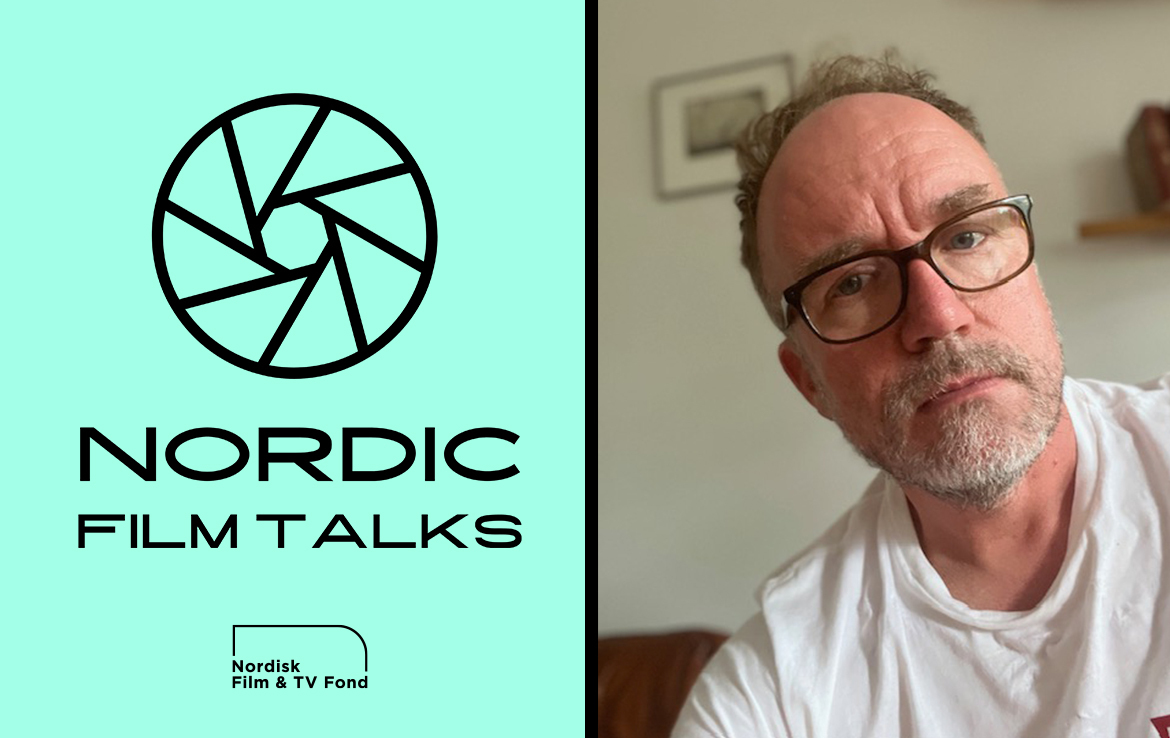
Nordic Film Talks: Aleksi Bardy
Finnish producer Aleksi Bardy is proud of the Nordic elements that Helsinki Filmi could bring to the adaptation of Tove Jansson’s The Summer Book that stars Glenn Close and Anders Danielsen Lie.
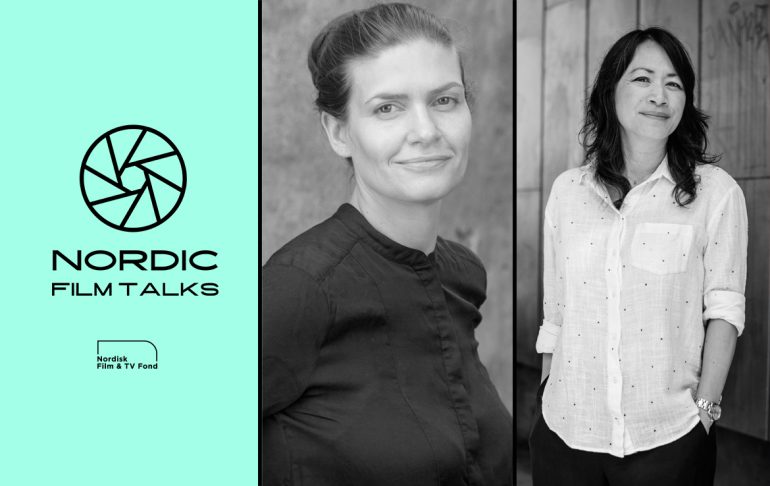
As Annecy kicks off, the internationally awarded Hambäck and Reiersen discuss why human creativity, and bold and playful stories, will help the animation industry continue thriving in the age of AI.
Will AI take over the animation industry? Not according to two Nordic animation experts headed to the Annecy Film Festival, interviewed in the new episode of the Nordic Film Talks podcast.
Swedish writer/director Linda Hambäck, who brings her third feature Dante (Dante & miljonerna) to Annecy, says she does foresee a lot of AI usage in animation in the near future, but she clarifies: “That's not the kind of film that I make.”
She sees handcrafted films as becoming even more important as AI rises in the creative industries. “I think that we should not be afraid of AI, but if you want to keep the art of the industry the way it is now, you need to have it more hand-drawn, you need to be able to really see that the film is handmade. I think that will really attract the audiences. A lot of things will soon start to look a little bit generic because of AI, because it sources from everything that has been done already.”
Producer Tonje Skar Reiersen, partner and producer at Norwegian production company Mikrofilm, whose credits include the 2007 Oscar winner short The Danish Poet (Den danske dikteren) and features like The Ape Star (Apstjärnan) and Titina, as well as serving as a co-producer on Dante.
She agrees that new technologies can be both good and bad. “When we started talking about AI two or three years ago, I think that people supposed we would have come further by now. One of the big companies announced that we’d all be cutting our budgets by 90%. But I’d say maybe now it’s like 10%, to be realistic. Hopefully we can use this to be even more playful.”
She continues: “Of course with AI, if you’re going to use it, you need to make sure you use it in an ethical way. You train it with your own designs and make sure you’re not stealing, and also ensure that someone is not able to steal your work either. But in animation history, there’s always been new technology. We used to draw on paper.”
“You see a lot of studios using motion capture as a base for animation, and game engines like Unreal. There’s a lot of things going on, but I think we need to be open and stay curious, but just be very, very careful with the ethical side of it.”
Dante comes to life
Dante is about a bank clerk, Helge (voiced by David Dencik), who meets a charming rat, Dante (voiced by Stellan Skarsgård), and they team up to solve the mystery of a bank robbery.
Hambäck co-wrote the script with Jessika Jankert, based on Frida Nilsson’s book “Me and Dante at the Dump”. The film is produced by Hambäck’s LEE Film in co-production with Nørlum, Mikrofilm, and Film i Väst; with support from the Swedish Film Institute, the Norwegian Film Institute, the Danish Film Institute, Nordisk Film & TV Fond, Creative Europe, Den Vestdanske Filmpulje, SVT, and DR.
World sales are handled by Attraction Distribution, Nordic sales by TriArt Film (which will release theatrically in Sweden in December), and French distribution by Les Films du Préau. The film already won the ECA Award at BUFF in Malmö, and just after Annecy, it will open the CineKindl Competition in Munich.
Hambäck, whose past features include Gordon & Paddy and The Ape Star, says she was proud to take the character of a rat - traditionally feared - and show him in a positive light as a good friend to Helge. “Maybe he looks like a criminal, but Dante says: ‘No, I’m a normal person, well a normal rat’,” Hamback says with a laugh.
Hambäck works with her esteemed voice cast in a unique way - not just them in a recording booth talking along to the finished animation, but instead gathering the actors in a room together as one of their first steps. “We gathered all the actors in the room. They played in front of each other, and we filmed them as well, so they can get the texture and some movements and expressions,” she says, also speaking about her fifth collaboration with recent Oscar nominee Skarsgård.
“We have so much fun. Stellan is a great actor, but I really appreciate that he’s really bringing himself to set, which creates the best atmosphere. Then we film that material and give it to the animators, so they can work with those expresssions and feelings.”
Bold voices
They aren’t the only two Nordic animation experts attending Annecy - Reiersen is chair of the board of the umbrella group Nordic Animation Association, which will be at Annecy with a panel on June 25.
She hopes the discussion can “showcase what is truly unique about the Nordics”, which she says is “stories that are bold. We have values that would sometimes be too controversial, especially for children's films, in other countries. To my mind, this is something that's actually a selling point.”
She adds, “We're going to talk about how having bold progressive values in our animation films and series, how that can be used also to boost the box office sales, but also how it can be difficult sometimes. Why you need to work together.”
She adds: “Annecy is our Cannes. Between 17,000 and 18,000 people come for the festival, professionals and students alike. What is so amazing about Annecy is that you have everything from the sort of Netflix executive to the big studios down to aspiring students. You will meet some directors, and then you will meet a lot of producers. But at Annecy, you also have the character designers, there's a lot of artists that go there.“
“Businesswise it's the most busy week of the year. It's super essential to be there, it’s where I meet sales agents and co-producers. But it’s also where I take the time to go to a screening, because the vibe is electric. Its pure, pure love for the art form is really something special.”
In the full podcast episode, Reiersen and Hambäck also talk about trends in Nordic animation (and why Sweden is catching up to Norway and Denmark); the international market trends for animation; and why animation can be so helpful for teaching children media literacy.
LIsten to the full episode here:
All Nordic Film Talks episodes are available on NFTVF’s website in the Industry Insights section (CLICK HERE), and on Spotify and Apple Podcasts.