Written by: Mariana Hristova
02.12.24
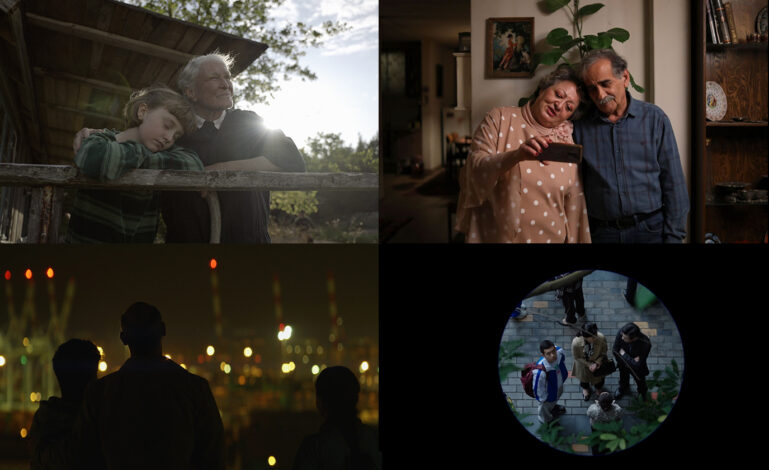
Four Nordic co-productions were showcased at the Arab world’s largest and oldest film gathering, while Norwegian producer Ingrid Lill Høgtun shared viewpoints on co-producing in Africa and the Middle East.
Swedish, Danish, and Finnish co-productions were featured across various sections of the recently concluded 45th Cairo International Film Festival (13–22 November). Among them was the opening film Passing Dreams (Palestine/Sweden/France), supported by Malmö-based Kinana Films, a company dedicated to promoting "diversity and providing a platform for unique voices in the film industry, bridging the cultural gap between Sweden and the Middle East”, according to its website. Directed by renowned Palestinian filmmaker Rashid Masharawi, this nostalgic road movie with comic elements follows the journey of a 12 year old boy chasing a carrier pigeon across Palestine and the Green Line – the symbolic demarcation between Israel and Palestine – while encountering other Palestinians who share their stories. The film won the Third Prize at the Palestinian Competition, while Masharawi received a Special Mention.
Another Swedish co-production, realised in collaboration with Stockholm-based HOBAB – boasting a track record of over 30 produced features – is the bittersweet romantic comedy My Favourite Cake (Keyke mahboobe man, Iran/France/Sweden/Germany). The film tells the story of a Tehran widow in her 70s who decides to break her solitary routine and revitalise her love life, leading to an adventure that culminates in an unforgettable evening. It was screened as part of the Official Selection Out of Competition.
Partnered with Copenhagen-based Tambo Film, known for producing fiction and hybrid films, Lin Jianjie’s Brief History of a Family (Jia Ting Jian Shi, China/France/Denmark/Qatar) competed in the Critics’ Week section and won the NETPAC Award for Best Asian Film. Set in the aftermath of China's one-child policy, the film explores the intertwined fates of a middle-class family and their son’s enigmatic friend, uncovering long-hidden secrets.
The fourth Nordic co-production showcased in Cairo was The Summer Book (USA/Finland), starring Glenn Close and Anders Danielsen Lie, and selected for the International Panorama section. Directed by Charlie McDowell, the film is based on Tove Jansson’s beloved novel about a young girl and her grandmother spending a transformative summer on a remote island in the Gulf of Finland. Finnish input comes from Aleksi Bardy of Helsinki Film, who also produced the acclaimed biopic Tove. The film is supported by Nordisk Film & TV Fond.
Additionally, the Norwegian producer Ingrid Lill Høgtun, representing the Oslo-based Barentsfilm, participated in the panel “Insight into Co-Production in Film Industry”. She has experience with co-productions in the Arab world with titles such as Costa Brava, Lebanon (Kūstā Brāfā, Lubnān) and You Will Die at 20 (Satamūt fīl-ʿishrīn), the first completed Sudanese film after a 30-year cinema ban under Omar al-Bashir’s dictatorship.
“It was an incredible project, filmed during a revolutionary period with a largely inexperienced local crew,” Høgtun shared during the panel about her experience in Sudan. “The lead actor, a young dentist's assistant who dreamed of acting, has since become a rising star in the Middle East. His performance brought the story to life. Despite challenges, such as delays in accessing camera equipment due to political concerns, the team's passion was extraordinary.”
You Will Die at 20 has won the Lion of the Future award at the Venice Film Festival, and became Sudan’s first Oscar submission, marking a historic achievement for Sudanese cinema.
Furthermore, the key topic of the panel was the concern among Arab filmmakers that European producers might dominate co-productions. “This fear often comes from newer filmmakers with little co-production experience,” Høgtun explained. She emphasised that the essence of co-production lies in collaboration and reaching wider audiences, assuring panellists and the audience that European producers aim to support and expand projects, not take over.
“In Europe, we have a strong tradition of protecting the director's vision, unlike in the US, where producers often hold the final cut,” she added. “Projects chosen for co-production are typically pre-selected at markets or festivals, ensuring they’re already curated and at an advanced stage of development. When European producers commit to a project, it is because they believe in it and in the director’s vision. Otherwise, we wouldn’t invest our time and resources,” Høgtun concluded.
RELATED POST TO :
FESTIVALS
/
NORDIC INDUSTRY NEWS
/
NORDICS