
EFM 2026 wrap: Nordic sales agents and distributors navigate a selective market
Full schedules met cautious buying, as tighter budgets and geopolitical uncertainty pushed distributors toward targeted acquisitions and longer negotiations.
Investors are redrawing our continent’s financing map, as slate equity and private-equity company backing gain ground alongside public funding.
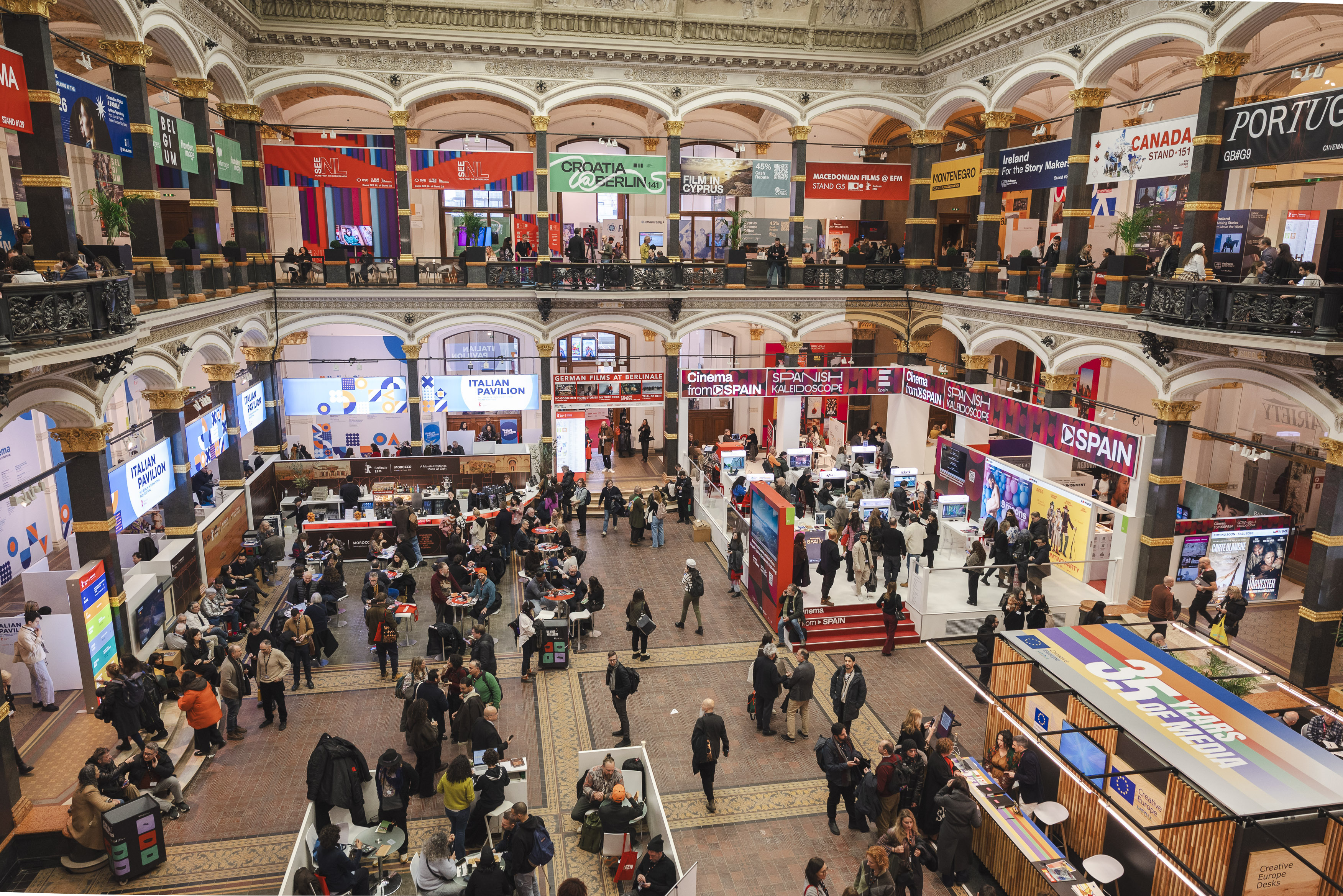
At the European Film Market (EFM, 12–18 February) in Berlin, talk about “new money” in film and TV kept circling back to a simple question: How can institutional capital enter a sector built on cultural value, fragmented regulation and uneven transparency? Two funds with very different methods — Finland’s IPR.VC and France’s Together Fund — offered a revealing snapshot of where the market is heading, and how EU-backed initiatives like MediaInvest are trying to accelerate that shift.
Slate equity vs company growth
Speaking at the EFM sessions Financing at Scale, held on 13 February, IPR.VC Executive Chairman and co-founder Timo Argillander framed the fund’s model as partnership-driven slate investing: “At IPR.VC, we collaborate with international distribution partners or ‘slate partners’. Our job isn’t to evaluate individual projects one by one. Our main task is to find partners who pick the projects that go into our slates,” he said in conversation with moderator Carl Clifton.
Founded in 2014, IPR.VC has raised over €200 million across three funds, and backs film and premium TV through equity, not loans or cashflow. The body’s current slate partners include A24, 42, XYZ Films, and Red Bull Studios. Argillander underscored why the slate structure matters for risk: “If you ask me whether an individual project will be profitable, I genuinely I don’t know… With a slate, we’re not dependent on any one film.” In practical terms, IPR.VC prefers slates of 10–20 projects, often financing the equity portion of budgets and aiming for roughly 15 projects per year.
Together Fund operates at the opposite level of the value chain. In The Screen Podcast, aired on EFM’s opening day, Managing Director Alexandra Lebret described a classic private-equity play: investing in companies, not individual titles, and making returns at exit. “Private equity is about accompanying companies in their growth. The fund lasts 10 years, and we make profit when we exit at a higher value. So growth is essential. We don’t do venture capital for very young companies; we invest in established companies ready for their next level,” she said.
What they fund — and why it matters
IPR.VC’s slate approach has allowed it to take part in a wide range of internationally oriented projects (including blockbusters such as Civil War, BlackBerry and Marty Supreme). Argillander stressed that IPR.VC’s value proposition for investors is largely financial and portfolio-based: Large allocators are thinking about diversification, correlation and time-to-return — not a single film “per se”. He argued that once regulatory, compliance and tax complexity is handled, “it becomes possible for large institutional investors to participate”, as he put it during the 13 February session.
Together Fund’s first deal, by contrast, was designed to prove that private equity can work in European production at the corporate level. Lebret explained that the fund’s first investment — into Belgian outfit Caviar — was a management buy-out, and she positioned it as both strategic and people-led: “After reviewing a few dossiers, the fact that I had known Bert for many years made it easy to conclude this first deal. I really believed in him. Private equity investment is a lot about men and women,” she insisted. She added that the structure “empowers the management to continue their growth”, with alignment between management and investor interests.
Nordic and wider European links
IPR.VC’s Nordic roots remain tangible. Argillander recalled that the first project in fund was the Finnish crime series Bordertown (Sorjonen), calling it “very profitable”, and he noted that early activity was “predominantly Finnish-language at the start”. Today, however, the Nordic and European connections are less about language and more about infrastructure: locations, incentives and cost bases. Argillander predicted that the European share of IPR.VC’s activity will rise: “Production costs in the US are getting very high — and the UK as well. Costs in the EU are more reasonable. I expect the European share will increase,” he said at the session, estimating European projects at “perhaps around 30%” across funds.
Together Fund’s Caviar move also carries a Northern European signal: A production powerhouse from a “small-capacity country” can reach scale attractive to private equity. Lebret highlighted Caviar’s cross-format, cross-territory storytelling: “Across everything Caviar does, there’s always that notion of scripted storytelling, even in unscripted work,” she said, presenting the company as a template for European producers seeking international expansion without being absorbed into a larger group. She also stressed Together’s preference for minority stakes: “We favour minority positions, so producers can continue doing what they have always done, and stay in control.”
Where MediaInvest fits in
MediaInvest is increasingly the connective tissue between these market experiments. The initiative, implemented by the European Investment Fund (EIF), aims to mobilise up to €400 million in investments between 2022 and 2027, using equity investments and guarantees channelled through financial intermediaries rather than direct project subsidies.
Lebret explicitly linked Together Fund’s creation to this policy push: “The Together Fund was born from an initiative by EIF, which manages the MediaInvest money. We approached them for equity financing. The fund follows financial criteria, not only cultural ones. EIF gave us €25 million, and we had to find other investors.” Her point is crucial: MediaInvest is meant to normalise private-equity logic in audiovisual — business plans, governance, exit horizons — not just fill gaps in production finance.
IPR.VC’s relationship with EIF is adjacent, but aligned. Argillander confirmed that EIF invests EU money “on commercial terms — it’s not a subsidy; it needs to be profitable”, and that EIF requirements for a European quota “align with our strategy”.
Two models, one direction
In conclusion, the funds map two routes toward a more capitalised European ecosystem: IPR.VC treats film and TV primarily as an investable slate asset class, whilst Together treats production firms as scalable businesses — closer to how private equity would approach other sectors.
As financing tightens and public support is asked to stretch further, the Berlinale conversations suggested these mechanisms will not replace Europe’s cultural funding model — but they may increasingly sit beside it, shaping which companies grow, which IP stays in Europe, and which stories can travel.