Written by: Davide Abbatescianni
18.06.26
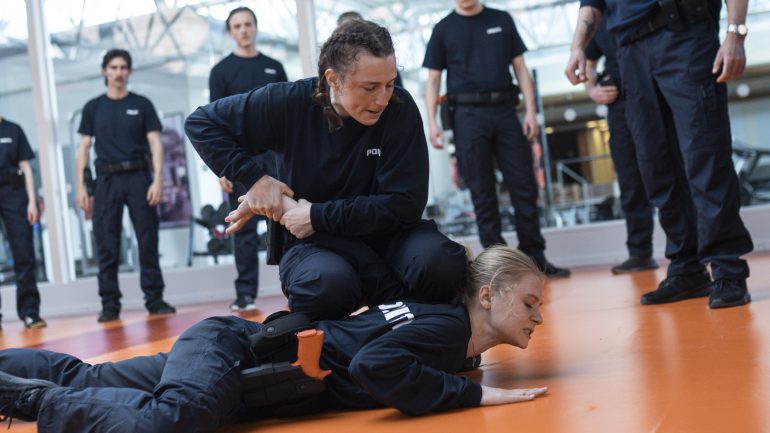
The two Nordic shows triumphed at the annual gathering hosted by the Principality, bridging high-quality scripted drama and hard-hitting factual storytelling.
Nordic television scored a double victory at the 65th Monte-Carlo TV Festival (June 12-16), with Denmark’s The Uniform (Uniformen) crowned Best Series and Sweden’s Mission Investigate: The Hunt (Uppdrag granskning: Jakten) winning Best Social or Cultural Feature Report.
The Uniform is a six-part Danish police-academy drama produced by Miso Film for DR, backed by Nordisk Film & TV Fond, penned by Oscar Giese and Anders August, directed by Jonas Alexander Arnby, and sold internationally by Fremantle. Already set for BBC iPlayer and BBC Four in the UK, the series premiered on DR in February, and, according to the team, reached a striking 47% share and 1.5 million viewers in Denmark. It has also aired across the Nordic countries.
Built around a fatal shooting by trainee Youssef, skilfully played by Soheil Bavi, the series follows the fallout inside Denmark’s police academy, where institutional pressure, loyalty and personal ambition collide. The writers said the opening shooting was not based on one real case, but on several incidents in which police actions had been questioned. It was also one of the most rewritten scenes in the series, because it had to carry the season’s moral architecture: It needed to be “right and wrong at the same time”.
That ambiguity became the show’s governing principle. The main challenge, said the writers, was to resist the easy grammar of the cop show. “When you write a cop show, it is very tempting to cut to blue lights and action and drama,” they told NFTVF. Instead, they had to keep reminding themselves that The Uniform was “a show about a school”, about education, and about what kind of person, and officer, a student is becoming.
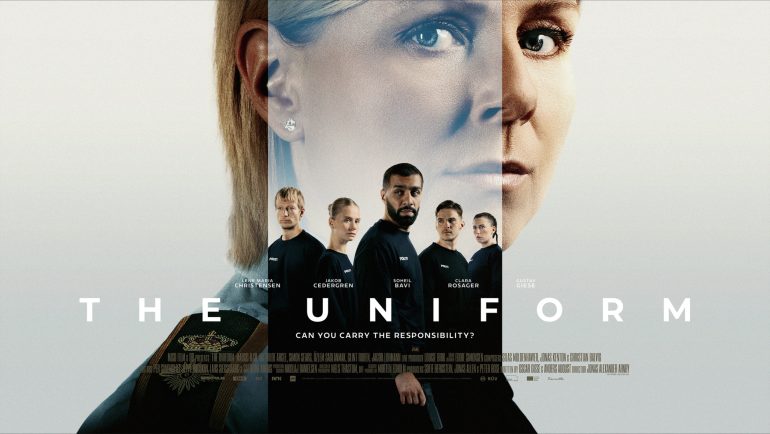
Arnby explained that the series contains a Nordic noir engine, but not in the conventional whodunnit sense. What drew him to the scripts was the relationship drama, which “almost becomes a Nordic noir thriller in itself”. That approach also shaped the visual grammar: fixed, tight observation inside the academy; a more immediate realism on the streets. The ambition, he said, was to make “reality meet authority”. The main production challenge was the shooting behind the bus, staged largely as a one-shot after extensive rehearsals. If one element failed, Arnby underscored, “everything falls apart” – but that fragility was also what created the electricity.
The title survived from working draft to finished series because it captured the central tension. The uniform marks the passage from civilian life into the academy and into an institution, but it also risks dehumanising the wearer: “You are not supposed to be a human anymore; you are just supposed to do the job.” The aim was to recover the person behind it.
If The Uniform confirmed Danish drama’s ability to rework a familiar genre from within, Mission Investigate: The Hunt highlighted the continuing international force of Nordic public-service journalism. This SVT title, directed by Henrik Bergsten, with Diamant Salihu as reporter, and lensed by Kalle Segerbäck, investigates an internet-focused police unit tracking child sexual offenders, under the Mission Investigate banner.
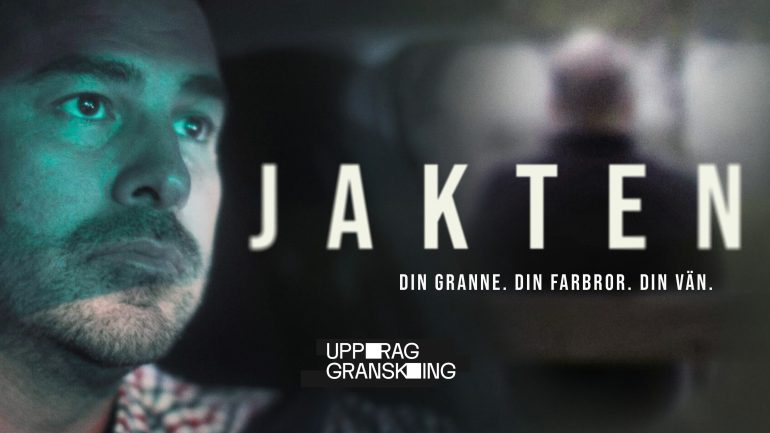
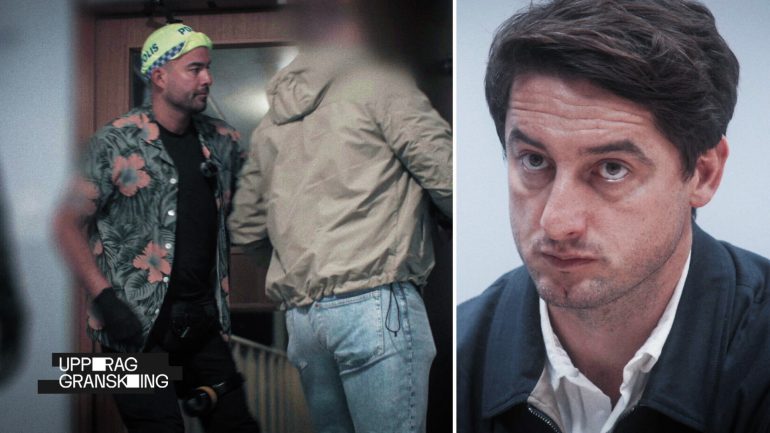
The project began with a tip to Salihu from a police officer who had moved from youth organised crime to the online child-abuse unit. His message was blunt: “This is much worse. You ain’t seen nothing.” For Bergsten and Segerbäck, the key issue was that these crimes were far less visible, and less prioritised, than gang violence in Sweden. Access took time. The team spent around three months in meetings with successive police superiors before filming, then followed the unit for about 18 months, often with only one or two people present to preserve intimacy and avoid exposing locations, suspects or officers.
Predictably, the emotional cost was high. Bergsten disclosed that the team tried to keep an open atmosphere and “talked about everything”, but admitted that both he and Salihu had breakdowns during the process. The most difficult material included recordings of offenders speaking to each other in online meetings. Segerbäck found another scene particularly hard: the arrest of a teacher while his children were at home. Much of it had to be cut to protect them, but the team kept enough to show the collateral devastation of the crime.
The documentary’s impact has extended beyond television. Bergsten confirmed that, after the broadcast, 300 people applied for ten investigator jobs in Region West, Gothenburg. The team also said Swedish politicians are moving to give police better tools, while differences in legislation between public and publicly funded private schools, exposed by the programme, are expected to change. A cinema premiere attended by four government ministers gave the unit a direct opportunity to ask for more support.
Asked whether such a documentary risks teaching offenders how to hide, the team stressed that The Hunt does not reveal the exact way police work or the specific tools they use. Segerbäck said his hope was instead that the programme might scare some people away from offending – or make them seek help earlier.
The 16 June closing ceremony saw a wider Golden Nymphs list led in fiction by Fadia, from Cinema Virgin, which won Best Film, Best Actress for Yara Jarrar, and the Jury Special Prize. Italian crime drama Gomorrah – The Origins (Gomorra - Le Origini) was named Best Creation, Johannes Hegemann scooped Best Actor for Olivia, and the Public Prize went to Ponies. In Feature Reports & News, La Guerre, Donald Trump et nous snagged the geopolitical/conflict award, whilst Into the Void: Putin’s Foreign Fighters received the Jury Special Prize. PFAS, Our Forever Poisons took the Prince Rainier III Special Prize.
Together, the recognitiong of The Uniform and Mission Investigate: The Hunt gave the Nordic region a strong Monte-Carlo showing across both fiction and current-affairs storytelling. One draws on drama to examine how institutions shape those who wear authority; the other uses investigative journalism to expose where institutions have failed to see clearly enough. Both wins point to Nordic television’s continuing ability to turn social pressure, institutional scrutiny and public-service ambition into internationally resonant screen work.
RELATED POST TO :
AWARDS
& FESTIVALS
/
NORDIC INDUSTRY NEWS
/
INTERNATIONAL