Written by: Davide Abbatescianni
11.06.26
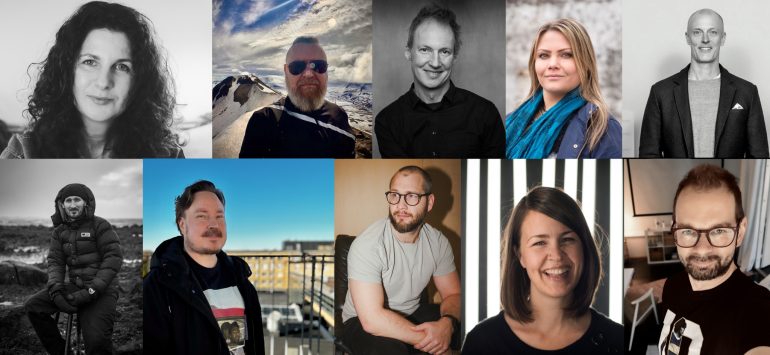
Across the Nordics, editors discuss their profession still driven by passion in times of underfunding, how does AI play in and what do guilds do?
For many Nordic film and TV editors, the job remains a key creative role in the screen chain. It is also becoming harder to sustain. Across Iceland, Finland, Sweden, Denmark and Norway, editors describe tighter budgets, shorter deadlines, longer gaps between jobs and, in some markets, a drift of post-production work abroad.
In Denmark, Estephan Wagner, a Chilean-born editor and docmaker based in Copenhagen, says high-end documentary remains healthy, with Danish films continuing to travel strongly internationally. Deadlines are tight, but manageable, and editors are increasingly brought into projects earlier. He argues that editing and filming should run more in parallel, allowing films to develop through cycles of shooting, cutting and rethinking.
Yet Danish editor Nicolaj Monberg is more cautious. The production boom of five to ten years ago has faded, leaving many editors with longer gaps between jobs and younger professionals struggling to establish themselves. Fees have remained unchanged, so salaries have effectively fallen with inflation.
In Norway, there is strong awareness of the challenges currently facing the profession. Trude Lirhus notes that the situation is demanding, with many experienced editors looking for work and uncertainty surrounding employment opportunities in the months ahead. While Norway benefits from collective agreements and minimum wage protections, she points out that there can still be pressure to classify productions under lower-cost categories or to shorten editing schedules. Tight deadlines are an increasing challenge for editors. Ensuring they have the time and resources they need will be important for maintaining the industry’s creative and professional standards.
That concern is echoed by Norwegian editor Kent Kampesveen, who also believes there are fewer working film editors than a few years ago. He points to tighter timelines, more social-media and promo deliverables, and greater creative responsibility for editors. Asked whether editors are recognised within the Nordic film and TV industry, his answer is brief: “I don’t think so.”
Meanwhile, A Better Man (Ølhunden Berit) editor Silje Nordseth traces the downturn to the end of the country’s TV-drama boom, saying that after years of steady work, “it just stopped”. Planning has become almost impossible, with editors no longer able to look six or 12 months ahead. She stresses that Norway has made real progress on standard terms, copyright and recognition, but says schedules are now too rushed: When every craft is under pressure, “it all ends at the editing table”. For Nordseth, AI is not the main threat; the real problem is the economy, and sustainability would require steadier year-round production and longer-term hiring.
Next, Icelandic editor and DoP Sebastian Ziegler is blunt about the economics, saying that it “hardly makes any economic sense to be in the business”, and that passion keeps him going. Lína Thoroddsen says the decline has become especially visible since early 2025. Despite winning an Edda Award for best editing in 2020, she has struggled to secure enough work since late 2024, and sees underfunded Icelandic companies joining foreign productions, while much of the post-production work happens abroad. Guðni Hilmar Halldórsson describes a field split between those who are extremely busy and those who are not working enough: “We are experiencing a little crisis right now.”
In Finland, Joona Louhivuori, an editor of around 25 years’ experience, says the profession has been stable for him personally, but quieter in the last couple of years. Matti Näränen gives a starker assessment: “The current state of the editing profession in Finland is quite bad,” he says, noting that many editors are looking for work, and some have already left the business. He links this to fewer commercials, reduced buying from streaming services, stagnant state funding and fees unchanged for around eight years. Toni Tikkanen identifies uncertainty as the defining condition: Projects are often greenlit so late that crews may not know whether they are working until shortly before production begins. He also sees more editing moving abroad through co-production financing structures.
In Sweden, Fredrik Morheden says working conditions are “not exactly evolving in a way that is good for our craft”. Production volumes have fallen since the pandemic, financing has become tougher, and fees have not improved for at least a decade. Sweden has made one important gain: Since 2021, editors have received artistic royalties. But Morheden notes that the market has also shrunk, as major streaming platforms have pulled back from Sweden.
Streaming is perhaps the most ambiguous force in these testimonies. Tikkanen recalls a temporary boom when “pretty much everyone in the industry was working”, followed by a hard stop when broadcasters and platforms slowed commissioning. Louhivuori says the bubble has “definitely” burst. Lirhus sees decline rather than growth in Norway, while Kampesveen believes streaming has created better opportunities. Wagner says streamers have not yet transformed Danish documentary editing as much as fiction and series.
Recognition remains unresolved. Thoroddsen argues that editors are often asked to “save” troubled productions, only to be blamed if the result disappoints, and overlooked if it succeeds. Näränen says the Finnish Cinema Editors Guild is trying to make the profession more visible. Wagner feels editors are highly respected within the industry, but says this rarely translates into public or festival recognition. Monberg agrees that outside those close to the process, the editor is still not widely seen as a creative author.
Technology is present, but not yet existential. Editors mention AI as a useful assistant rather than a creative replacement: Transcription for Ziegler; sketches, ADR and organising takes for Morheden; translation, transcription and syncing for Näränen, who warns that the creative side can become a time sink. Wagner uses AI mostly for clearly marked temporary material, Lirhus remains sceptical, Kampesveen uses it for transcription, audio and music editing, and Monberg hopes it may soon help organise footage more efficiently.
The sustainability question brings the answers back to money, time and respect. Finnish editors call for stronger public support, better planning, collective labour agreements, and more face-to-face collaboration. Morheden stresses that small-language markets such as Sweden cannot rely on self-financing alone. In Norway, Lirhus puts the matter plainly: “Editors are not machines, but creative participants, and an extremely important participant in making a film.”
What unites the responses is concern that the current model is eroding the experience on which the sector depends. For Louhivuori, the reason people stay is simple: When the material is good, the collaborators are professional and the pay is decent, “this is the best job there is”. But unless budgets, schedules and recognition catch up with the demands placed on editors, the cut may become too deep.
RELATED POST TO :
PRODUCTION
/
NORDIC INDUSTRY NEWS
/
NORDICS