
Subscribe to newsletter

Get the latest film & TV news from the Nordics, interviews and industry reports. You will also receive information about our events, funded projects and new initiatives.

Beyond the red carpet: Transforming a marketing strategy into an international success

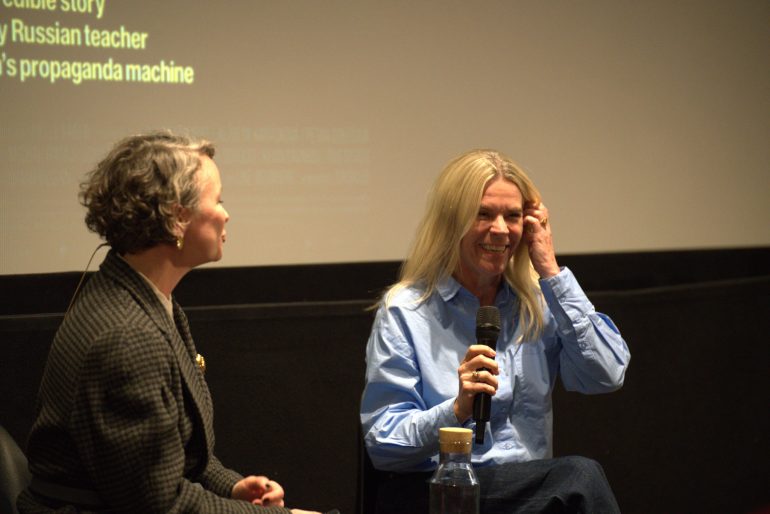
Helle Faber, Joanna Solecka / Photo: Ulrik Bolt Jørgensen
×
NEWS

Beyond the red carpet: Transforming a marketing strategy into an international success

Helle Faber, Joanna Solecka / Photo: Ulrik Bolt Jørgensen

How the Oscar-awarded doc Mr. Nobody against Putin built its recognisable brand, and why marketing strategies should start early at every department.

At the first of a series of town hall meetings at the Danish Film Institute, Lone Garde from the Creative Europe MEDIA Desk introduced international film marketing expert Joanna Solecka in a conversation with producer Helle Faber (Mr. Nobody against Putin) representing Made In Copenhagen.

In the modern cinematic landscape, the distinction between "making a film" and "marketing a film" is rapidly dissolving. For too long, marketing has been treated as a final coat of paint applied just before a premiere. However, as Solecka argues, marketing is not a peripheral administrative task; it is a creative part of the filmmaking process itself. To succeed in an increasingly crowded global market, producers must embrace a fundamental truth: The marketing campaign starts the moment you start developing your film.

The development stage: setting the DNA

In an ideal world, a marketing agency or expert should be attached to a project during development. This early intervention allows the team to define the film’s positioning for both the industry (B2B) and the eventual audience (B2C) before a single frame is shot.

At this stage, the tools of marketing are already in play. A project’s pitch deck, mood boards, and even its provisional title are all positioning the film within the marketplace. By analysing benchmark titles - not just for their artistic merit, but for their poster designs, topic reach, and character archetypes - producers can identify the specific "opportunities" their film offers. This early strategic thinking ensures that when the film is eventually ready for release, the foundation for its communication has already been laid.

Production: the golden opportunity for assets

One of the most common mistakes in film production is failing to capitalise on the unique energy and access available during the shoot. Once a film is finished, it is nearly impossible to recreate the costume designs, the makeup, or the specific chemistry of the cast for promotional purposes.

A well-executed strategy involves a precise brief for the still photographer. It is not enough to simply have "aesthetically great pictures"; the images must have meaning for the intended target audience, and must have a potential poster design in mind. Beyond standard stills, a forward-thinking marketing strategy during production includes:

Targeted Video Content: Recording interviews or "digital-first" clips that are formatted specifically for social media (9:16) rather than traditional behind-the-scenes "making-of" featurettes.

Attribute Shots: Capturing close-ups of specific props or character attributes (like a revolver or a specific costume detail) that can serve as visual hooks in a digital campaign later.

As Solecka notes, for a fiction film, every department meets to go through the script step-by-step; the same rigour should be applied to the launch strategy, involving the director, producer, sales agent, and - if already on board - the distributor.

The Digital Asset Package (DAP): empowering international reach

For Nordic films aiming for international premieres and distribution, providing a robust Digital Asset Package (DAP) is crucial. National and international distributors often lack the budget or time to create bespoke materials. A producer who can deliver a package containing not just a trailer and a poster, but also teasers intended at different target groups, animated posters, character portraits, quote videos and other tailor-made digital assets, significantly increases the film's chances of a successful release.

The language of digital marketing is "the opposite of cinematic". While filmmakers love the wide screen, social media demands vertical formats and brevity. For instance, it’s as short as a 6-second bumper that has become one of the most desired formats for distributors because it effectively targets audiences on platforms like YouTube and Instagram.

Case study: navigating sensitivity with Mr. Nobody against Putin

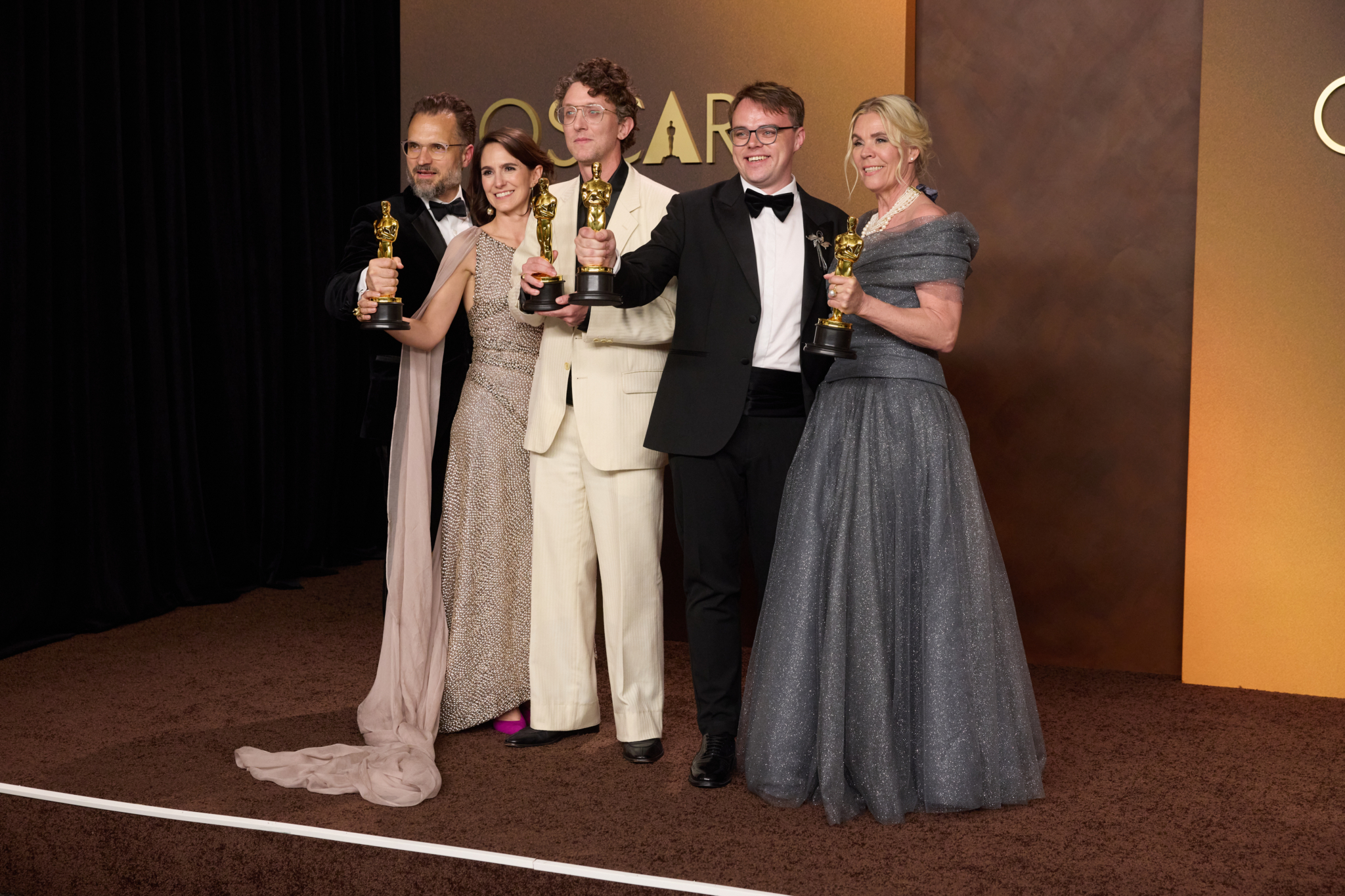
The power of a strategic, digital-first approach was vividly demonstrated in the Oscar campaign for the documentary Mr. Nobody against Putin. Producer Helle Faber and Solecka´s Berlin-based Alphapanda faced unique challenges: a limited budget, a politically sensitive title, and the need to reignite interest months after its Sundance premiere.

Because the title contained a name often flagged by Meta’s algorithms, the team took the strategic decision to use an underscore ("Put_n") in digital ads to navigate potential censorship. They also pivoted from a traditional trailer - which was problematic for social media ads - to focusing on the film’s strongest asset: its protagonist, Pavel "Pasha" Talankin. By using "authentic" iPhone footage of Pasha’s speeches and micro-targeting specific industry voters through digital tools, the campaign built a recognisable brand that eventually led to BAFTA and an Oscar® for Best Documentary Feature Film 2026.

×
NEWS

Beyond the red carpet: Transforming a marketing strategy into an international success

Mr. Nobody Against Putin / Photo: Pasha Talankin

Learning from data

A significant advantage of starting marketing early is the ability to gather data. During a festival launch, digital campaigns can provide statistics on which age groups or demographics are reacting to specific assets. In the case of the documentary Over the Limit (Polish documentary on gymnast Margarita Mamun, 2017), data revealed that 80% of the engagement came from females under 25 -a "younger" audience than initially expected. This allowed the team to tailor the pan-European release materials to focus on the "glitter and beauty" of the sport to reach that specific niche and broaden the audience beyond the usual festival and documentary crowd or sport fans.

A creative partnership

Marketing a film requires a specialised understanding of the audiovisual sector and a deep respect for the creative vision. However, for that vision to reach its audience, it must be supported by a strategy that is as meticulously planned as the production itself.

By integrating marketing into the development stage, producers can ensure they are not just making a film, but building a brand. Whether it is through influencers at a world premiere to reach beyond the "cinephile crowd" or through highly specific digital targeting, a well-executed marketing strategy is what transforms a local project into an international success. In the end, as the journey of Mr. Nobody against Putin proves, a clear message and a strategic digital presence can help even the smallest underdog stand out on the global stage.

RELATED POST TO : DISTRIBUTION / NORDIC INDUSTRY NEWS / DENMARK & INTERNATIONAL