Written by: Ove Rishøj Jensen
30.04.26
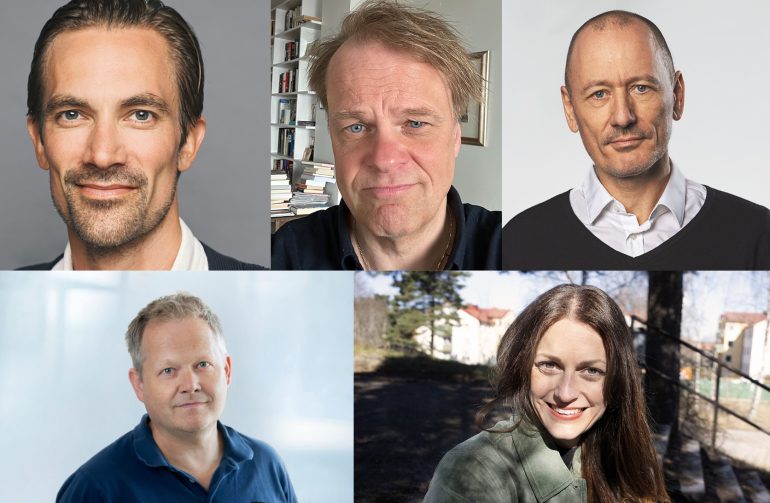
Is there an increasing difference between demands from big screen funders and broadcasters? Nordic experts analyse the current market and how its changes affect our storytelling.
For decades, an essential cornerstone in the Nordic documentary market has been that broadcasters, film funds and film institutes collaborated on the financing and distribution of creative documentaries. But recent changes in the funding and distribution landscape seems to have made this combination increasingly difficult. Are broadcasters now having other priorities for their smaller screens than the film funds have for the big screen financing?
Changes in the market
With a central position in the Nordic documentary market, Kim Christiansen, Executive Producer at DR Sales, has for decades been involved in raising money for Nordic documentary productions and selling completed films. “In my position it is essential to know ‘the temperature of the market’, and to always understand what works. At the moment it doesn't look very good. There are now budget cuts at many of the broadcasters which have been essential to funding and selling our documentaries.”
Finnish producer Kaarle Aho joins Christiansen in this evaluation of the status of the market. “It is increasingly difficult to figure out what broadcasters want. Some of them no longer want feature length documentaries, but expect producers to bring financing from film funds for more series-based documentaries, which the funds are not always willing to finance.”
Producer Emile Hertling Péronard from Greenland adds his perspective: “There have been many changes in the market lately, with suddenly a good amount of money being available from streamers, which then seems to mostly have disappeared again. I see a general change in the market where many documentary producers find it difficult to make a sustainable living”.
From Norway, Fredrik Færden, Head of Acquisitions at NRK, ads his point of view from working inside the public service broadcaster: “You could well say that the documentary market is moving in two directions. One is the development and financing of documentaries, with a strong focus on the single documentary from film funds, pitch forums, etc. The other is more streaming-friendly productions, often in a series format.”
Anna Weitz, who is at the end of her terms as Film Commissioner at the Swedish Film Institute, brings a slightly different perspective into the debate: “Actually, there have been no radical changes in 10 years. In Sweden, the most important partners for documentaries are still SVT and SFI. What has changed is, it has become more difficult to get projects funded, since the competition is fierce and there are more players on the market.”
From Anna Weitz’s perspective, many financing models for creative documentaries have stayed the same for many years, but as indicated by Christiansen, Aho, Péronard and Færden, there are shifts happening that go beyond the structures reflected in the financing plans.
The digital shift
Fredrik Færden indicates that many of the changes are happening due to the digital shift at broadcasters. “At NRK we now primarily work with digital platforms, as our traditional broadcast is only reaching a 60+ audience with news and sports. In the past, channels could be formatted for a specific audience. You could then put single documentaries and films into this channel and reach an audience. Now the public chooses in a different way. This has changed how we curate documentaries at NRK. The content must be made for streaming,” Færden concludes.
To the digital shift, Kim Christiansen ads: “The ‘digital first’ approach that most broadcasters now have, could indicate more freedom. But that has not proven to be true. The demands from viewers have become greater, and audiences have become more difficult to reach.”
SFI’s Anna Weitz sees that the shift to streaming has resulted in a difficult space for the more narrow titles: “It is very rare that broadcasters will buy them anymore.” But Anna also points out that the viewing habits are not only connected to the change from linear TV to streaming. “One change is how we share stories with each other. Before the influence of social media, it was important to share everyday life stories. That's no longer the case. This has also changed the role of documentary filmmaking.”
What changes does the market bring?
The digital transition has resulted in some broadcasters focusing more on documentaries in a series format. In opposition to this, some film institutes insist on documentary as an art form in feature length. These changes influence the stories we tell and how we tell them.
Kaarle Aho points out that: “Everything seems to be so topic-driven now. One change in the market is that it is increasingly difficult to get broadcasters on board, especially if you do not have these clear topical focuses.”
From his broadcast point of view, Fredrik Færden says: “Promotion and the pitch to the audience are becoming more important. To get a digital audience, you must be sharp with key art and promotion. In order to build an online audience, you have to focus on a few clear messages.”
Is the series format the answer to digital transitions?
According to Færden, the increased focus on the series format and on clearly defined pitch to the digital audiences is coming from their experiences with building their online viewership. “It is important to develop documentaries which can be used digitally and are primarily in a series format. Not considering this, is doing the industry a disservice.”
Kim Christiansen agrees on the perspective of doing more documentary series, and he and his colleagues at DR Sales are “trying to be at the forefront of meeting the demands for series formats”. But Kim also points out some of the challenges of this development, as he states: “There is not that much money in the market for docu-series. Focusing on the series format is not going to solve all problems. There needs to be a greater focus on the audience right from the development of new projects. This also includes broadcasters programming outside the normal boxes.” He brings up the recent example of DR programming Mr. Nobody Against Putin as a two times 45 minute current affairs programme. This brought three times the number of audiences to the film than the normal average feature documentary on DR.
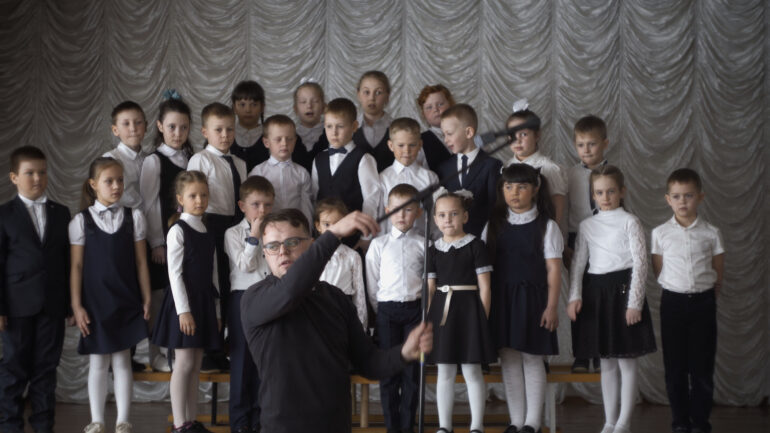
Kaarle Aho points to some of the same challenges as Christiansen. “I am very interested in developing and producing documentary series, but it is very difficult to get this funded. Often broadcasters will either do documentary series with inhouse resources or companies with a more journalistic approach.”
So the increased focus on documentaries in series format requires adaption and new approaches from everyone involved. But as pointed out by both Færden and Christiansen, it is not only about formats and making series. Perhaps there are also other elements in play?
Fewer titles with a bigger potential?
“We have changed strategy significantly over the past few years,” says Christiansen. “We now have fewer films and make them bigger. We see a market with more focus on the big films, and less space for the small titles.”
This tendency is also how NRK increasingly operates. “During the last 8-10 years, we have bought fewer titles”, says Færden. “We are now looking at a volume of 40-50 titles per year. This provides us with approximately 150 titles available simultaneously in NRK's player, which is more than enough documentaries for most viewers. We see that projects must be larger and more powerful to reach an audience.”
Emile Hertling Péronard points out a contradiction in this market demand for fewer films with bigger potential: “In my time as a producer, I have seen an increase in the number of documentaries that are being produced. There are just more and more films being made. This has of course influenced the market and how competitive it is”.
Is it now either-or for the funding of Nordic documentaries?
So, what are the consequences of these changes in the Nordic documentary market? Also seen in a larger perspective for the Nordic documentary culture. Will documentary makers in the future have to increasingly differentiate between funding for the small screens, coming from broadcasters, and funding for the larger screens, coming from film institutes and funds?
Anna Weitz states that: “There is a strong will among TV-stations and institutes to find solutions. SFI is looking positively at whether features have the opportunity to make a series version for broadcasting. Series are replacing TV-versions to some extent. But taking the current developments in the market into consideration, perhaps a special arrangement is needed for series.”
Emile Hertling Péronard brings up his work with the documentary Twice Colonized, which resulted in four different versions of the film with four different lengths. “This wouldn't have happened if I had produced the film four years earlier. ‘One size fits all’ no longer works for the documentary market, as so many things are constantly changing. It is becoming more important to look at each film, and make a specific market strategy for it.”
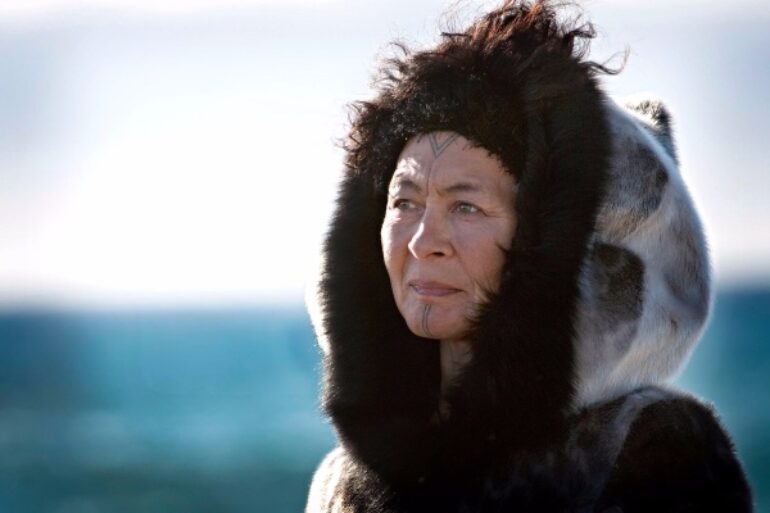
Kaarle Aho ends his reflections about the current situation with a dilemma that many documentary makers are currently facing: “It is difficult to bring international streamers to Finnish documentary series, because our projects do not fit their profile. At the same time national ones pay too little to make big series that will reach audiences.”
These developments in the Nordic market for creative documentaries leave us with an important number of questions to discuss. Where do these changes leave the traditional collaboration among broadcasters and funds for the funding and distribution of creative documentaries? To what extent will the market be divided into funding for big screens and funding for small screens? How will the digital shift influence the variety of stories we tell? And of the real life we choose to portray?
This spring, Nordisk Film & TV Fond, the five Nordic film institutes, and the five Nordic public service broadcasters launched a joint initiative, calling for documentary projects for broad audiences. To read more about this initiative and call: CLICK HERE.
RELATED POST TO :
DISTRIBUTION
/
NORDIC INDUSTRY NEWS
/
NORDICS