Written by: Mariana Hristova
20.10.26
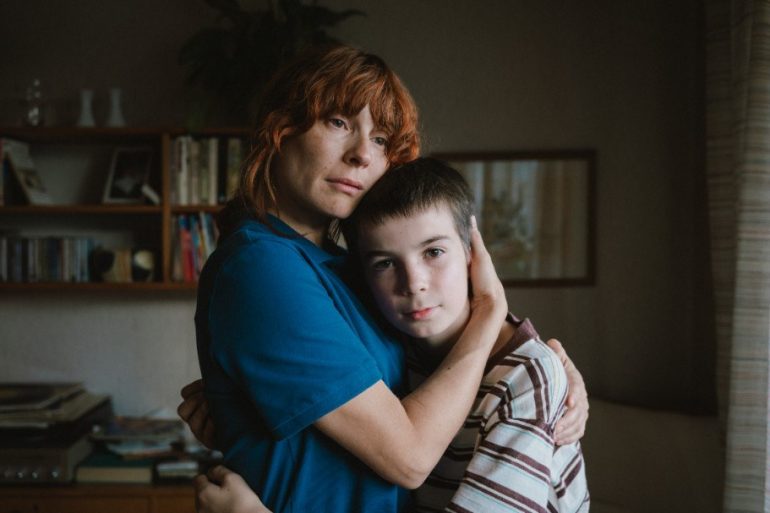
Set against another edition of strong Nordic presence, Jens Sjögren’s Swedish feature offers a dark, but ultimately hopeful portrait of a boy growing up among troubled adults.
The 42nd Warsaw Film Festival concluded on October 17, once again demonstrating a sustained interest in presenting Nordic cinema and its professionals, by screening ten feature-length productions and one short from the region, including co-productions, and inviting Icelandic director Jón E. Gústafsson, whose romantic drama Anorgasmia was included in last year’s selection, to serve on the 1-2 Competition jury. Competing in the same strand was the coming-of-age drama Hold Onto Me (Kráta Me), backed by Anders N. Berg for Fredo Pictures through the Danish Film Institute’s minority co-production scheme, shot by Danish cinematographer Lasse Ulvedal Tolbøll, and distributed in Denmark by Angel Films.
One of the two opening films was Growth of the Soul (Markens grøde), Hans Petter Moland’s epic drama based on the renowned novel by Knut Hamsun, produced by the Norwegian company 4 ½. Other Nordic productions across various non-competitive sections included Eivind Landsvik’s tender youth drama Low Expectations (Lave forventninger), co-produced by Norway’s Maipo Film and Denmark’s Snowglobe, and Finnish director Klaus Härö’s heartfelt motherhood drama Blue Baby (Hetki ennen valoa), backed by Finland’s Making Movies.
Furthermore, notable minority Nordic co-productions in the programme included Storm Films’ Elephants in the Fog (Les eléphants dans la brume), Motlys and Amerikafilm’s No Good Men (Kabul Jan), Second Land’s Salvation (Kurtulus), and Palme d’Or winner Fjord, supported by Norway’s Eye Eye Pictures, Denmark’s Snowglobe, and Sweden’s Filmgate and Garagefilm. The political satire How to Feed a Dictator, supported by the Norwegian Film Institute, competed in the Documentary Competition, and the short-film selection included Gaute Hesthagen’s animation Stolen Colors.
While the international jury, featuring Romanian-Belgian director Teodora Ana Mihai, Uruguayan-Mexican director Rodrigo Plá, American film producer Preston Lee, and Polish actress Weronika Książkiewicz, awarded the main prize to the Polish film What Belongs to Others (Cudze rzeczy) by Grzegorz Dębowski, it also highlighted Jens Sjögren’s Bloody Men (Jävla karlar) with a Special Mention for capturing “with remarkable authenticity the chaos caused by domestic violence and the challenges faced by children growing up with a single parent struggling with personal difficulties and making decisions that repeatedly put the entire family’s safety at risk. It is a story of coming of age, discovering one’s sexuality and trying to navigate an unstable reality in which children must face the consequences of adults’ choices.”
Adapted from Andrev Walden’s best-selling novel of the same name Bloody Men examines masculinity and the patterns of behaviour passed from one generation to the next, seen through the eyes of a young boy growing up around his single mother and the men who enter their lives. Rather than offering a clear moral conclusion, Sjögren builds an intimate, unsettling portrait of childhood, vulnerability, and the power adults can exert over a household.
In conversation with Nordisk Film & TV Fond, the director discusses the contemporary relevance of the story, his decision to make the adaptation darker than the source material, and the central relationship between mother and son. At the heart of the film is a question that remains unresolved: Why do the same problems return, even when each generation hopes to do better?
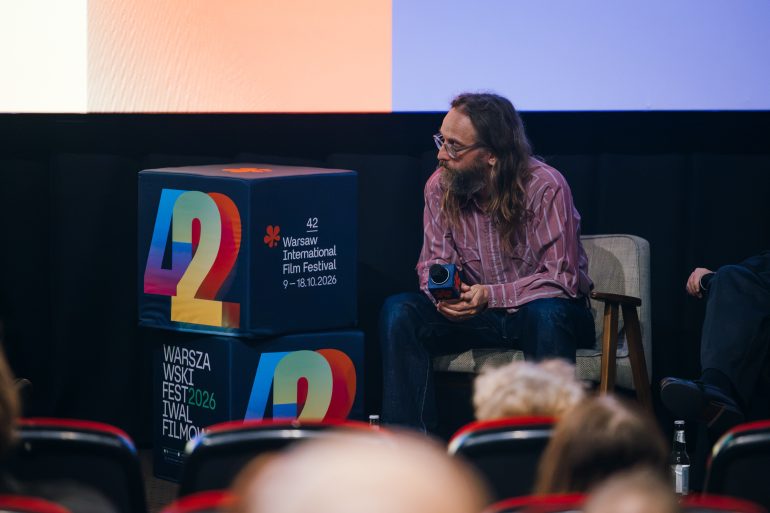
Sjögren sees the story’s contemporary relevance in the persistence of the same patterns of masculinity, despite the social changes that should have made them less entrenched. “What we see today is like society has gone back,” he says, describing a return to the idea that “masculinity and being a father should be kind of a brutalised person”. For him, the problem becomes particularly visible in the way a man can enter a room and change its atmosphere. During the making of the film, he recalls, even experienced crew members sometimes asked to leave the set during certain scenes, because “everyone has some kind of memory of scenes like this”. It did not necessarily have to involve violence itself, but rather “the fright that a man can put into a room just by entering”.
The film’s child-centred perspective makes this power especially unsettling. “What you see is what you learn,” Sjögren says, claiming that the first fifteen years of life shape us in ways we continue to struggle with as adults. He finds himself returning to the same question in his own life: “How come in everyday life I have discussions with my wife or my kids and I can’t wrap my head around it?” As a father, he tries to understand why it remains difficult to express the softer sides of his personality, even though, as a director, he considers himself “a really sensitive” person. “I think it’s what I see in my dad, and I try to do better and we try to do better and better and better. But how come it doesn’t get better?”
In adapting the novel, Sjögren wanted to push this contradiction further. The book, he explains, is “a little bit more forgiving towards the men”, while the film takes a darker dramatic line, bringing the relationship between the mother and her son to the foreground. He was particularly interested in the emotional bond between them, and in how it might help the boy avoid repeating the patterns he witnesses. “When I was a kid, I was really longing for having a close relation with my mum,” he says. Rather than explain everything, he chose to remain strictly within the child’s perspective: “What he sees, I see. What he hears, I hear. Nothing else.” The audience, he believes, should be allowed to piece together what remains unspoken.
This approach also meant resisting a more conventional, reassuring resolution. Sjögren instead wanted to arrive at something ordinary, almost fragile. “Sometimes you just want to end up sitting at a table, eating a dry sandwich, looking at each other. And it’s going to be like the ending. It might be okay.” For him, this is where the film’s hope resides – not in the promise that the boy will escape his childhood untouched, but in the possibility that the cycle might not have the final word. As Sjögren puts it, the question is ultimately: “How do you love someone in the end, after seeing what you’ve seen?”
The celebrated Nordic films Bloody Men, Growth of the Soul, Low Expectations and Baby Blue are top financed by NFTVF.
RELATED POST TO :
FESTIVALS
/
NORDIC INDUSTRY NEWS
/
INTERNATIONAL