Written by: Mariana Hristova
16.03.26
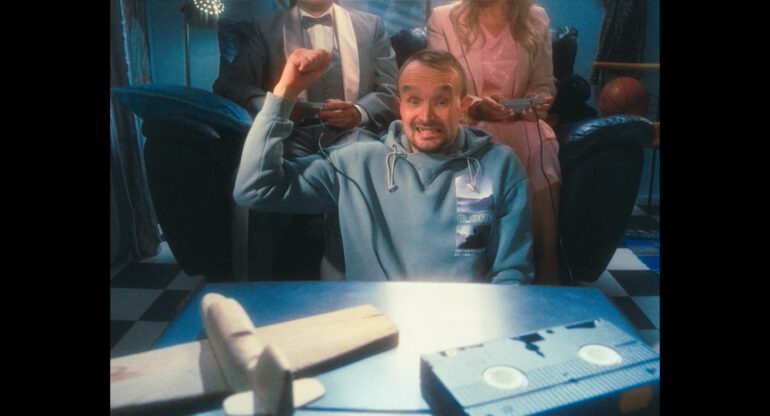
Among the 31 Nordic titles presented across different festival sections, we highlight Inka Achté’s feature that sheds light on a little-known part of Finnish history.
The Thessaloniki International Documentary Festival once again proved itself as a key platform for Nordic documentary cinema, with an impressive showcase spread across nearly all sections of its 28th edition. The 18 majority Nordic productions and co-productions, nine films with minority Nordic participation, and three short films, mark an overall presence that reflects the growing international reach of documentary filmmaking from the region.
Alongside the above-mentioned Soap Fever (Kaunarikuume, Finland/Sweden), by Inka Achté, the International Competition also included the contemplative portrait of everyday fragility The Beauty of Errors (Kappale kauneinta Suomea, Finland/Norway/Sweden), by Jukka Kärkkäinen, which received a Special Mention from the International Competition jury, praised for capturing “the love that lies in tiny moments, and in the hidden interstices of existential nothingness”.
The section also featured the human story of courage, forgiveness, and resistance The Golden Swan(Norway/Sweden/Denmark/Netherlands), by Anette Ostrø. International co-productions with Nordic participation were also recognised with awards: Bugboy (Greece/Denmark/France), by Lucas Paleocrassas, received the “City Stories” Municipality of Thessaloniki Award, and was named Best Greek Film in the official selection by the Greek Association of Film Critics, while La Pieta (Spain/Iceland/Lithuania), by Rafa Moles and Pepe Andreu, won the Human Values Award of the Hellenic Parliament.
Beyond the main competition, Nordic majority productions were present across several other sections of the festival. The Open Horizons programme included The Ground Beneath Our Feet (Jörðin undir fótum okkar, Iceland/Poland), by Yrsa Roca Fannberg, Lust for Life (Sweden/Germany), by Viktor Nordenskiöld, and Menopause Mystery (Mysteriet om menopausen, Denmark/Germany/Norway), by Louise Unmack Kjeldsen. Other Nordic productions were scattered across the programme, from The Curse of Kane (Forbannelsen Kane, Norway/Finland/Denmark), by August Baugstø Hanssen and Even G. Benestad, to Frost Without Snow and Ice (Frost uten Snø og Is, Norway/Germany), by Asgeir Helgestad, while internationally oriented projects such as Trillion (Norway/United States), by Victor Kossakovsky, and Time and Water (Iceland/United States), by Sara Dosa, reflected the increasingly transnational nature of Nordic documentary production. Last but not least, David Borenstein and Pavel "Pasha" Talankin’s timely documentary Mr. Nobody Against Putin (Denmark/Czech Republic), which just grabbed the Oscar 2026 for Best Documentary Feature, was also highlighted in a special screening.
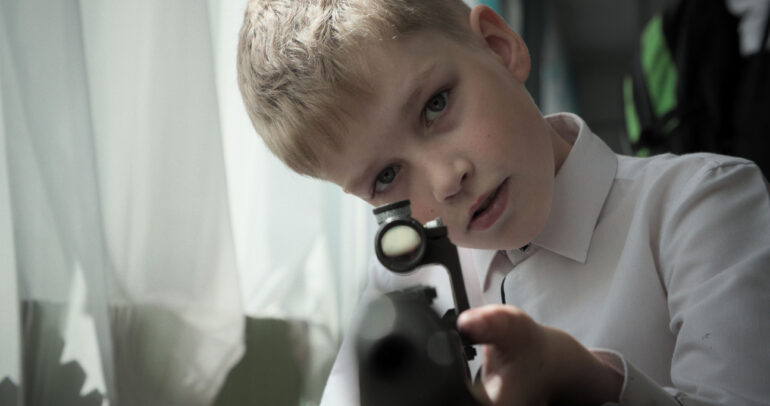
Emerging filmmakers were also well represented. The Newcomers Competition featured Hex (Norway) by Maja Holand, The Smuggler (Smugglaren, Sweden/ Finland/Norway) by Sylvelin Måkestad, and In Cod We Trust (Norway/Finland), by Guro Saniola Bjerk, while Denmark was represented by Jesper Dalgaard’s Mummy’s Boys (Mors drenge, Denmark) and Alexander Lind’s Trine on Fire (Denmark) in the Film Forward Competition. Norwegian director Silje Evensmo Jacobsen also appeared in the NextGen section for young audiences with The Mystery Package (Mysteriepakken, Norway).
Soap Fever, The Beauty of Errors, The Golden Swan, The Ground Beneath Our Feet, Menopause Mystery, The Curse of Kane, Frost Without Snow and Ice, The Smuggler, In Cod We Trust, The Mystery Package and Mr. Nobody Against Putin are top financed by NFTVF.
Alongside majority productions, minority Nordic co-productions continued to play a key role in the international documentary landscape. Among them was American Doctor (United States/Malaysia/Qatar/Denmark/Palestine), by Poh Si Teng, which won both the International Amnesty Award and the Peter Wintonick Audience Award for an international film over 50 minutes. Other titles included Mariinka (Belgium/Netherlands/Germany/Sweden), by Pieter-Jan De Pue, Amílcar (Spain/Portugal/France/Sweden/Cape Verde), by Miguel Eek, 80 Angry Journalists (80 dühös újságiró, Hungary/Germany/Czech Republic/Norway/Denmark), by András Földes and Anna Kis, and A Song Without Home (Simghera sakhlis gareshe, Georgia/United States/Denmark), by Rati Tsiteladze.
The Nordic presence extended to the short-film programme with three titles: BICH’EBI [boys] (Sweden) by Ellen Gustavsson and Nathalié Williamsdotter, Grandpa Has a Broken Eye and Mom Is an Adventure (Morfar har et ødelagt øye og Mamma er en adventure, Norway), by Marita Mayer, and the immersive project Reality Looks Back (Denmark), by Anne Jeppesen and Omid Zarei.
Among the Nordic filmmakers present in Thessaloniki, Finnish director Inka Achté offered a particularly personal perspective with Soap Fever (Kaunarikuume, Finland/Sweden), a film that revisits the extraordinary popularity of the American soap The Bold and the Beautiful in Finland during the early 1990s. Achté recalls that when she first approached the story, she had very little knowledge about its wider social implications, and initially imagined it as a fun exploration of a cultural moment: “I thought I would make a TV documentary for Finnish audiences about, hey, do you remember this time when we went crazy over The Bold and the Beautiful stars?”
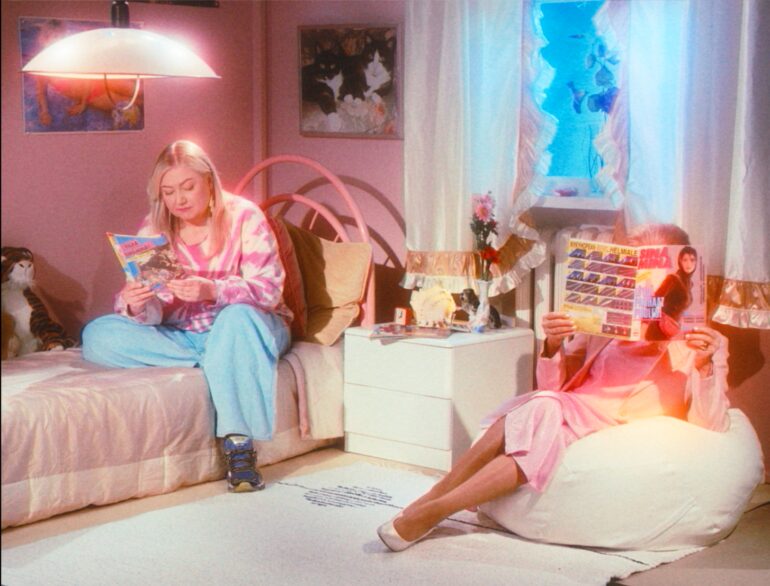
The project shifted direction after discussions with the commissioning editor, who challenged her to consider the historical context of the early 1990s economic crisis. “He asked me: ‘So for you, the recession was just easy because you come from a privileged family?’ And I was like: ‘No – it changed my life completely because of what happened to my dad.’” That conversation helped Achté see a connection between her personal struggle with her father’s mental condition, fostered by the recession, and the collective experience of Finns during the period. “Through that conversation, the theme of longing for connection started to emerge. I felt like the Finns found a common ground around the soap opera, and at the same time, I had lost the connection to a primary carer, which was my father. It ended my childhood very drastically.”
Finding her characters was a quick but revealing process. “We did a casting call on the production company’s website and in a The Bold and the Beautiful fan group on Facebook. I picked the ones who sounded interesting,” she explains. While initially expecting surface-level anecdotes, Achté discovered unexpected depth. One fan, for example, had used the soap as an escape from loneliness: “For her it was a very clear escape.” Another reflected on beauty standards and societal pressures, which the series had subtly influenced.
The film also examines Finnish identity and its shifting place in Europe after the Cold War and the collapse of the Soviet Union, with which Finland maintained an economic relationship. “For such a long time Finland had been the middleman between the East and the West. And suddenly, the East as we knew it didn’t exist anymore. There was this awareness of – what the hell are we now?” Achté recalls. She also notes her nostalgia for the mid- to late-nineties, when joining the European Union opened new possibilities: “I’m quite nostalgic about the era of this feeling of unity in Europe; the ability to travel everywhere with a passport and somehow feel that we are together.”
Finally, Achté emphasises the social importance of popular culture. She frames the soap’s fandom as a collective experience, particularly for women, often dismissed as trivial. “A lot of women’s fandom is ridiculed and considered frivolous or silly. But I think that’s not fair. What happened around that series in some way kept the nation together. As silly as it sounds, people came together around something that didn’t cost any money.”
RELATED POST TO :
FESTIVALS
/
NORDIC INDUSTRY NEWS
/
INTERNATIONAL