Written by: Moa Aulanko
16.09.26
“A home is a very subjective thing,” says writer-director Joachim Trier, while writer Eskil Vogt reflects on how the father’s role changed from being absent to a main character. The producers talk about bringing the film to an international audience.
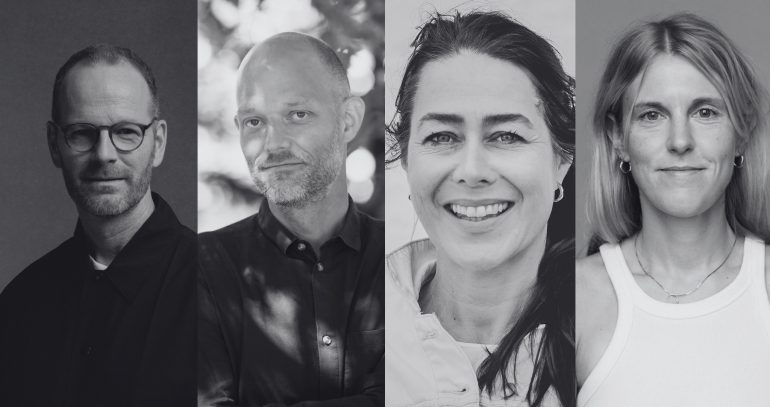
Writer-director Joachim Trier, writer Eskil Vogt and the producers Maria Ekerhovd and Andrea Berentsen Ottmar are nominated by the Norwegian jury for the Nordic Council Film Prize 2026 for the feature film Sentimental Value (Affeksjonsverdi).
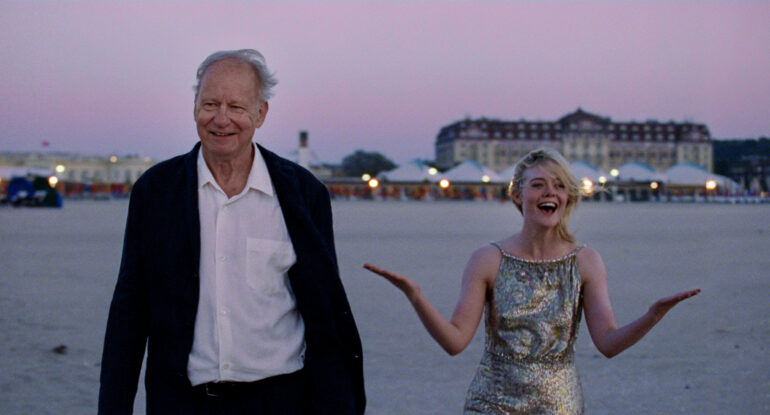
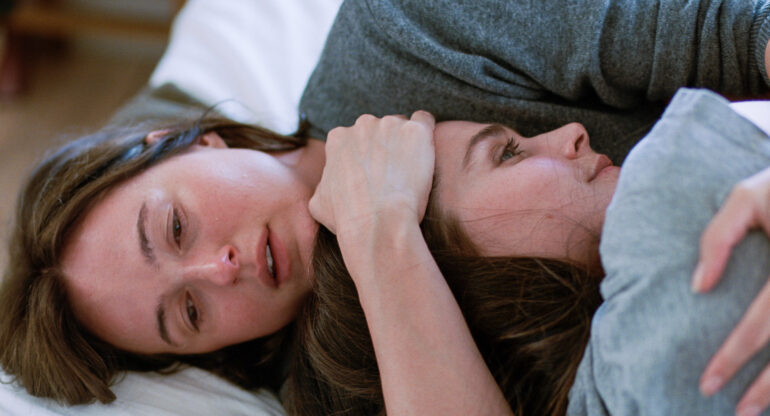
In the film, sisters Nora and Agnes reunite with their estranged father, the charismatic Gustav, a once renowned director who offers stage actress Nora a role in what he hopes will be his comeback film. When Nora turns it down, she soon discovers he has given her part to an eager young Hollywood star. Suddenly, the two sisters must navigate their complicated relationship with their father and deal with an American star dropped right into the middle of their complex family dynamics.
Trier’s films have been nominated for several Oscars, and most recently bagging Norway’s first ever Academy Award for a fiction feature film for the nominated film Sentimental Value. The film has also won a BAFTA, a Golden Globe and the Cannes Grand Prix. Trier’s film Louder Than Bombs won the Nordic Council Film Prize in 2016. All of his films have been nominated for the prize: Reprise, Oslo, August 31st (Oslo 31. august), Thelma, and The Worst Person in the World (Verdens verste menneske), in addition to Louder Than Bombs and Sentimental Value.
Nordisk Film & TV Fond (NFTVF) publishes interviews with the nominated directors, writers and producers. For all nominees: CLICK HERE.
Writer-director Joachim Trier:
The house in the film is a character in itself. What inspired you and Eskil to focus the film around the family home?
My family happened to have a generational home on the market while Eskil and I were writing, and we started thinking about the concept of home. I thought about what my parents and grandparents went through in life, but then I started thinking in the realm of a young person, a child’s reflection upon the house they lived in. A home is a very subjective thing, and the house became a starting point to enter a more complex adult story of life and expectations.
Writer Eskil Vogt:
Eskil Vogt is a two-time Oscar-nominated filmmaker. He is a directing graduate from La Fémin, the French national film school. His debut Blind won the Screenwriting Award at the Sundance Film Festival when it premiered in 2014. Vogt collaborates closely with Trier, and has co-written all of Trier’s features since Reprise from 2006.
How did you work together with Trier building this family story and the relationships between the characters?
The starting point was about the sisters and the idea of growing up in the same family with the same parents, but having completely different childhoods. Maybe because of age difference, your parents might be going through something different when you’re young than when your sibling was a child. And you also have your unique personality that brings out something completely different in your parents. We also knew that we wanted to work with Renate Reinsve again. So from the start she was going to be one of those sisters, which is a wonderful thing to know when you’re writing. So that was how it started.
In the beginning we thought the father would be absent, but as we worked we thought it would be interesting if he made an appearance, maybe late in the film. And as we opened the door on that character, he barged into the writing room, a huge personality, threatening to take over the film. We had to kind of rein him in to keep the emotional focus on the sisters.
Producers Maria Ekerhovd and Andrea Berentsen Ottmar:
The film’s two nominated producers are Maria Ekerhovd and Andrea Berentsen Ottmar. Ekerhovd is the founder and owner of the Norwegian production and distribution company Mer Film. In addition to the Oscar-nominated and winning Sentimental Value, Ekerhovd also produced this year’s Norway’s other Oscar-nominated feature The Ugly Stepsister (Den stygge stesøsteren). She has produced several critically acclaimed films, and has been nominated producer for the Nordic Council Film Prize for Out Of Nature (Mot naturen) in 2015 and War Sailor (Krigsseilerne) in 2022. Berentsen Ottmar is a partner and producer in Norwegian Eye Eye Pictures. She has a background in shorts, music videos and documentaries, before The Worst Person in the World, marking her first feature in 2021. The film won the award for Best Actress in Cannes and was nominated for two Oscars and two BAFTAs. Most recently, she was one of the producers of Fjord by Cristian Mungiu, which won the 2026 Palme d’Or in Cannes.
Sentimental Value is deeply Norwegian, but it resonates far beyond the national borders and has reached enormous international success. When and how did you know it would work internationally too?
Given the success of The Worst Person in The World and the very first draft we read, we knew Sentimental Value had potential to cross borders. Joachim is a world class filmmaker, and with an international cast tied to the project from early on, our aim was definitely to reach global audiences. You can never predict with precision of course, but we focused our job on maximising the potential of the project and giving Joachim the best possible conditions to realise his vision.
What were the biggest challenges and moments of joy when producing this film with an interesting meta level?
There were so many moments of joy — from welcoming everyone on the first day of the shoot to receiving the Oscar with 100 people who had worked on the film in the room with us. It was also an incredible privilege to shoot in Norway for 64 days with such a top-level cast and crew.
Of course, a shoot of that length brings its own challenges. Halfway through, the whole team was understandably tired, just as we were preparing to fill Oslo’s prestigious National Theatre with hundreds of extras for a technically complex sequence under intense time pressure. To make matters harder, many crew members had caught colds after the night shoot in Deauville. But thanks to everyone’s tremendous dedication, it all went incredibly well — and gave us all a much-needed boost. In the end, that extraordinary team effort was the greatest joy of all.
What is life as a producer like after the Oscar buzz?
Our day-to-day work as producers looks quite the same; we are both surrounded by great colleagues, as before, and are always focusing on the next project. But our network has grown wider and our experience is strengthened, and we both really want to use any advantage this has given us to bring more great films into the world.
How would you describe the current state of the film industry in Norway?
The current state of the Norwegian film industry is marked by a striking contradiction. In recent years, Norwegian films and filmmakers have achieved remarkable international success, yet the backbone of our industry is struggling. Production companies, post-production houses and film crews have all faced extremely difficult years.
We hope to see meaningful political action this year — action that strengthens the industry and enables Norwegian cinema to continue its extraordinary trajectory. Independent filmmaking and culture are vital to our society, especially in times like these, and we hope our politicians recognise their importance and act accordingly.
Official trailer:
RELATED POST TO :
AWARDS
/
NORDIC INDUSTRY NEWS
/
NORWAY