Written by: Ulrik Bolt Jørgensen
11.06.26
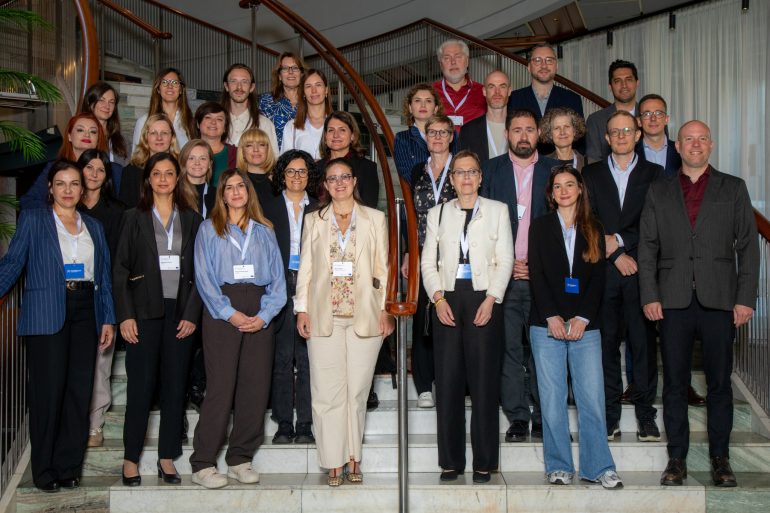
The conference “Protecting young people from online harm in an open and safe public sphere” laid bare a startling reality: The very tools we use to connect are increasingly being used to "trap" the next generation.
On June 10th, hosted by the Norwegian Media Authority and The European Audiovisual Observatory, The Norwegian Film Institute’s Cinematheque framed a critical conversation regarding the digital future of our youth.
The strength of collaboration
Throughout the conference, the theme of unity was paramount. Mari Velsand, Director General of the Norwegian Media Authority, praised the deep Nordic and international collaboration, stating: "We face the same challenges, and we cannot find the solutions in only one country." She emphasised that “while Norway and other Nordic nations are exploring national measures like raising age limits to 16, these tools only work if they are part of a harmonised, holistic European approach.”
This sentiment was reinforced by Julie Inman Grant, Australia’s eSafety Commissioner, who has been a trailblazer in implementing social media minimum age legislation. In a video address to the European partners, she shared a lesson that has become a mantra for the movement: "We can go faster alone, but we can go further together."
A cry for help: the youth perspective
The urgency of the situation was perhaps most poignantly summarised by Skúli Bragi Geirdal, Head of the Icelandic Safer Internet Centre. Drawing on recent Nordic research (see links below), Geirdal issued a stark warning to the adults in the room: “Children and young people are not just passive victims of social media; they are actively urging us to intervene.”
"They think we are moving very slowly when it comes to regulation and updating materials," Geirdal noted, echoing a sentiment gathered directly from his work with over 10,000 children annually. According to Geirdal, the youth are essentially telling policymakers and the industry: "You talk too much and you do too little." They are asking for help to navigate - and avoid - the addictive features designed by tech giants whose business model often treats "sleep" as their greatest competitive threat.
The decline of basic reading skills
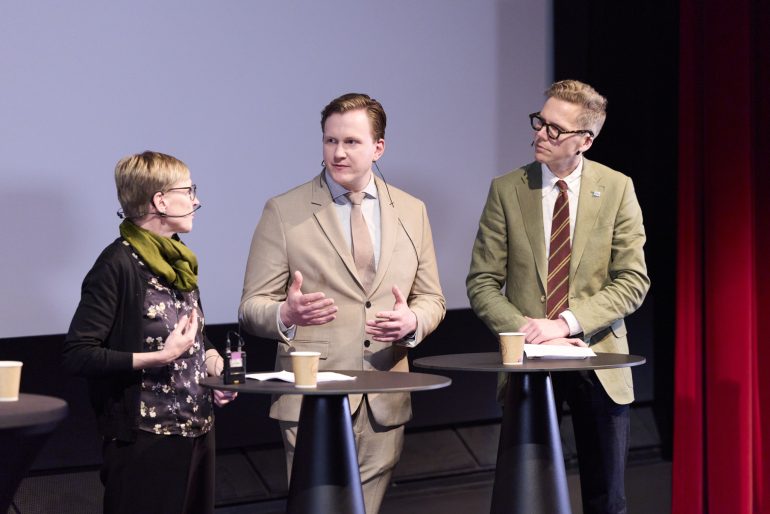
Laura Mäkelä, Senior Ministerial Advisor at the Finnish Ministry of Education and Culture, expressed profound concern regarding the decline of basic reading skills among the younger generation. She attributes this trend to the sheer amount of time youth spend on platforms like TikTok, stating that many children are now looking at these TikTok videos for so many hours a day that they simply "don't have time to read". Mäkelä notes that this has become a significant hurdle even for parents, who find it increasingly difficult to encourage their children to pick up a book. To address this, she emphasises the need to focus on foundational reading capabilities from the very beginning, as a lack of these basic skills makes further media literacy efforts nearly impossible.
The holistic European approach
To combat these challenges, Finland has implemented a framework for digital competence, which provides specific descriptions of media literacy skills required for different age groups. This framework is integrated into the national core curricula, defining what a child of 10 or 12 years of age should understand about the media they consume. However, Mäkelä acknowledges that as technology evolves rapidly, a new challenge has emerged: ensuring that teachers possess the necessary skills to implement these criteria effectively in a changing digital landscape.
On the regulatory front, Anna Herold, Head of the Audiovisual and Media Services Policy Unit at the European Commission (DG CNECT), advocates for a comprehensive and holistic European approach to big tech. Rather than viewing various strategies as alternatives, she argues that Europe must simultaneously better enforce current regulations, strengthen existing frameworks, and consider new measures like age limits (social media delay).
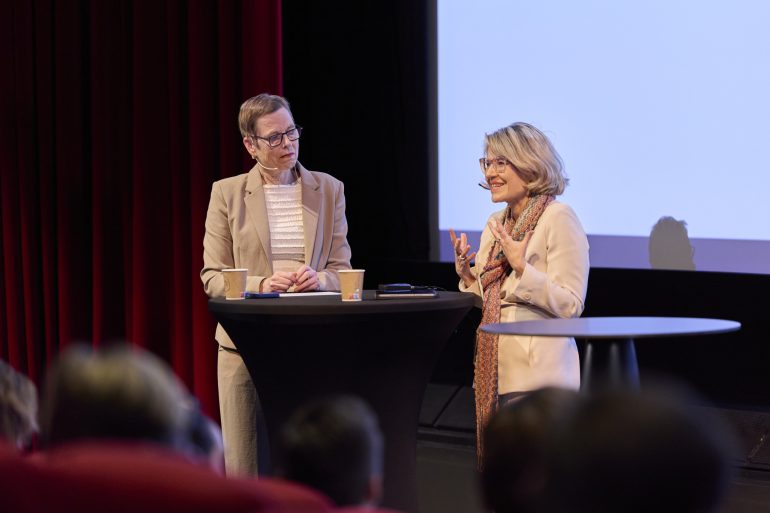
This strategy is aimed at challenging the core business models of social media giants, which Herold suggests are currently designed to "trap" users and maximise engagement at the expense of minors’ well-being.
Herold also highlights the need for European regulation to be "future-proof", to catch emerging trends like AI chatbots and companions. Furthermore, she points toward a planned revision of the Audiovisual Media Services Directive (AVMSD) to better define harmful content - such as the promotion of eating disorders or self-harm - and to more strictly regulate influencers. A key part of this future strategy involves interrupting the "money flow" or monetisation for malicious actors and influencers who repeatedly violate safety rules, forcing platforms to take greater systemic responsibility.
The Nostradamus paradox: IPs as 360-degree content
While regulators grapple with age limits and other "social media delays”, the Nordic film and TV industry faces its own existential challenge. As presented in the 2026 Nostradamus Report during the Cannes Film Festival, the "new content economy" demands a radical shift in how we define Intellectual Property (IP).
The report argues that we must move away from viewing a film or series as a static object, and instead embrace "IP brands". To remain relevant and profitable, Nordic creators must meet their users where they already live: on social media and gaming platforms like Roblox, which now sees 80% usage among Norwegian 9-12-year-olds. This is not merely about marketing; it is about owning audience relationships directly and diversifying monetisation across digital and physical experiences.
Navigating to a safe haven
This creates an undeniable paradox. How can the industry justify expanding its presence on platforms that regulators are simultaneously trying to restrict for young citizens? The answer may lie in a fundamental reimagining of what Nordic content can be in the digital space.
Instead of ceding the digital floor to the "manosphere”, online criminals, and "scary adult content”, Nordic storytellers have the opportunity to provide a "safe haven". By bringing high-quality, ethically produced storytelling to social video and gaming, the industry can offer a protective shield against the "predatory addictive algorithms" that characterise the current big tech landscape.
As noted in the Nostradamus Report, our prime task is building, through cinema, a "shield of imaginary, ideological, and economic power". Nordic content, rooted in regional values and transparency, can serve as an antidote to the manipulative design features - like endless scrolls and "streaks" - that currently keep 14-year-olds checking their phones every 8 to 12 minutes.
A call to action for Nordic makers
The path forward for Nordic producers and broadcasters is clear: We must be "future-proof". This means embracing AI literacy, understanding the power of influencers as content creators, and ensuring that our regulation and our content development go hand-in-hand.
The goal is to ensure that when children pick up their phones - as 90% of Norwegian 10-year-olds already have - they find a digital space that respects their rights to participate and be protected, rather than a feed designed to exploit them. By focusing on 360-degree IP brands that prioritise "safety by design”, the Nordic film and TV sector can move beyond the "talk" and into the "action" that our young citizens are so clearly demanding.
Key research reports and surveys
Trapped in the Feed
Provider: Norwegian Media Authority (Medietilsynet).
Source/Availability: Presented by Maria Grande, Head of Department for Media Literacy at the Norwegian Media Authority this report addresses how social media design and functions (such as algorithms and "streaks") affect the user habits of young Norwegians and create addictive patterns.
Nordic Media Literacy Survey
Provider: Nordic Council of Ministers (Funding/Responsibility).
Contributors: Experts from Sweden, Norway, Denmark, Finland, and Iceland.
Source/Availability: The survey includes data on media habits, attitudes, and literacy tests for both adults and children aged 9–15: CLICK HERE.
Children’s Online Experiences (Ofcom Research)
Provider: Ofcom (UK Media Authority).
Source/Availability: Recent research publications (released a few weeks prior to the June 2026 conference) detailing children's online habits, including the finding that 98% of UK children aged 8–17 go online and 56% have used AI: CLICK HERE.
Finnish Social Media and Safety Survey
Provider: Finnish Ministry of Education and Culture.
Source/Availability: A large-scale survey of 60,000 young people conducted through schools; the findings were published on June 10, 2026. It highlighted concerns regarding sexual violence, bullying, and harassment online.
Australian eSafety Compliance Research
Provider: eSafety Commissioner (Australia).
Source/Availability: Internal regulatory research and data collection following the implementation of the "social media delay" legislation, showing a 37% reduction in under-16s holding accounts.
Young consumers and social media, February 2025 Danish Competition and Consumer Authority on how social media affect young consumers’ behaviour, exposure to marketing, and decision-making.
The Nostradamus Report 2026 is an annual media analysis commissioned by the Göteborg Film Festival that explores the near future of the screen industries through data research and interviews with media and entertainment experts: CLICK HERE.
Forthcoming Reports The European Audiovisual Observatory announced it will produce two new reports in the second half of 2026, based on the conference discussions: "Report on Social Media Bans: Taking stock of the legal exchanges regarding age-based restrictions" and "Report on Empowerment: Produced in collaboration with the European Institute for Media Law, focusing on the various layers of digital harm to minors."
RELATED POST TO :
DISTRIBUTION
/
NORDIC INDUSTRY NEWS
/
NORDICS