Written by: Ulrik Bolt Jørgensen
08.10.26
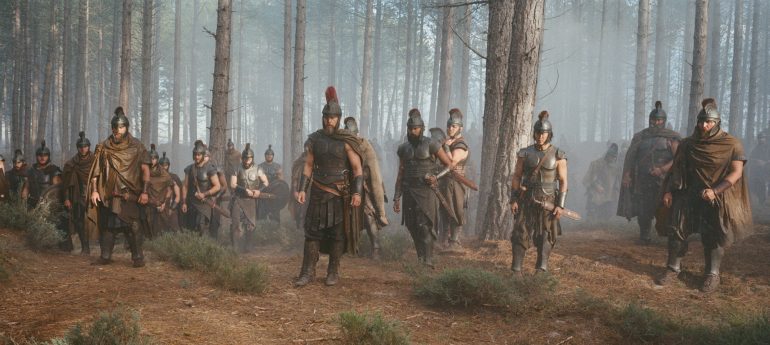
Sune Thomsen, Cinema Director of Gentofte Kino, discusses the necessity of premium branding, technical curation, and how Christopher Nolan’s The Odyssey demonstrated the box office power of event-status cinema.
Nordisk Film & TV Fond: How do you approach positioning the theatrical visit as an unmissable, premium experience?
Sune Thomsen: The Danish exhibition sector maintains a very high baseline standard in terms of seating, foyer areas, and acoustics, meaning audiences expect a superior physical experience when they step through the doors.
For a single-screen theatre like Gentofte Kino, our capacity is inherently limited — we cannot show every release. Our curation philosophy is simple: "We can't play all the good films, but we can try not to play the bad ones." Beyond film selection, we focus on the unique environment the cinema provides. It is one of the last remaining spaces where people voluntarily put away their mobile phones and share a focused, collective experience in the dark.
Furthermore, today's filmgoers are increasingly selective. Since a cinema ticket cannot be exchanged if the experience disappoints, audiences tend to gravitate toward trusted brands, strong reviews, and distinctive event screenings. Since taking over Gentofte Kino in 2020, our strategy has been to build a "destination cinema" — a venue people will travel long distances to visit because they trust both the film selection and the technical presentation.
What investments have you made to turn Gentofte Kino into a destination theatre?
We upgraded our auditorium significantly by enlarging the screen in both width and height, and expanding our sound setup from 17 to 43 speakers using a Dolby Atmos system. Gentofte Kino has a 35 metre long hall, and the new setup tames the room's natural reverberation to ensure equal sound pressure across every single row.
Architecturally, Gentofte Kino retains its original, spacious projection booth. Unlike modern multiplexes where projectors sit in small suspended boxes, our booth has the physical room to operate a 70mm film projector right alongside digital equipment.
Watching a film projected in 70mm is like listening to a vinyl record on a high-end stereo — it offers a tactile, organic depth that digital projection struggles to replicate. To complement this, we regularly screen 16mm archival prints (such as an original 50 year old print of Star Wars), and host an annual three-day 70mm Festival every February, showing a mix of classic titles and modern large-format releases.
How did Christopher Nolan’s The Odyssey 70mm focus perform?
The Odyssey surpassed every previous attendance record in Gentofte Kino dating back 27 years.
To put it in perspective: Our previous best-selling titles were James Bond at 8,600 tickets and Oppenheimer at 9,600 tickets. The Odyssey blew past both, surpassing 15,000 guests.
Globally, large-format 70mm screenings created intense, concentrated demand. During its opening weekend, only 41 theatres worldwide presented the film in IMAX 70mm, generating an extraordinary average of ~$153,000 per screen ($6.1–6.3 million total from IMAX 70mm out of $51.8 million across all global IMAX screens).
Christopher Nolan's commitment to practical effects — such as filming 1,200 real extras running across a beach rather than relying on computer generation —delivers an authenticity that audiences immediately recognise on the big screen.What are the logistical and financial realities of running 70mm screenings? Could we ever see local Nordic productions released on 70mm?
Large-format film projection is a heavy logistical and financial commitment. A single 70mm film reel weighs approximately 130 kg, spans 6 kilometers of film strip, and costs around 15,000 EUR to manufacture at specialised laboratories.
It also requires a dedicated, "old-school" projectionist stationed in the booth for the entire duration of the film to oversee projection, rather than automated digital systems that run at the press of a button.
Because of these steep print manufacturing costs and the scale required to recoup them, it is unlikely we will ever see local Nordic films produced on 70mm. However, showing major international 70mm titles elevates the entire story of the cinema as a premium destination.
Looking forward, what is necessary to sustain audience interest and reinforce the cultural value of the theatrical experience?
We need to constantly remind audiences that cinema represents "grand culture" on par with the theatre or art museums. Watching a visual epic or a classic film on a massive screen triggers emotional responses that home viewing simply cannot match.
At the same time, local cinemas act as vital community culture hubs across towns nationwide. Having accessible local theatres ensures that new releases become a shared national conversation, strengthening the cultural ties of the entire film industry.
RELATED POST TO :
DISTRIBUTION
/
NORDIC INDUSTRY NEWS
/
DENMARK
& INTERNATIONAL