Written by: Davide Abbatescianni
24.11.26

Three Danish competition awards and an honour for producer Piv Bernth framed a wider debate about the trust, creative continuity and audience relationships needed to sustain Nordic storytelling.
Danish cinema supplied one of the clearest Nordic success stories at the 30th Tallinn Black Nights Film Festival. Nagieb Khaja won Best Director in the First Feature Competition for Lionheart (Løvehjerte), Kaspar Astrup Schröder’s The War We Carry (Myanmar mareridt) took Best Film in Doc@PÖFF International, and Father’s House (Faderhuset), directed by Adam Nielsen, Andreas Koefoed and Eva Mulvad, received the section’s Special Award. TV Beats also honoured Danish producer Piv Bernth for her contribution to European television drama.
Lionheart and Father’s House are **top-financed by Nordisk Film & TV Fond.
The results recognised different forms of filmmaking, rather than a single export formula. Read alongside the industry discussions, they suggest a more useful question than what the next Nordic trend might be: Which conditions allow distinctive work to emerge and keep its makers in business?
Specificity as an industrial asset
Lionheart (Løvehjerte) provides a concrete starting point. Khaja’s fiction feature debut follows a young man trying to leave Copenhagen’s gang environment, with Besir Zeciri’s performance and taut dialogue giving the story its emotional force. Its persuasive qualities come from familiarity with a particular world. The international recognition rewards that specificity, although a festival prize alone cannot establish commercial reach.
Its production structure also matters. Toolbox Film worked with Iceland’s Zik Zak Filmworks, while TrustNordisk handles international sales. A locally grounded story already rests on a regional network capable of supporting its journey abroad.

Joachim Trier made the broader argument in a video conversation with Bill Anderson, screened during the fair-pay panel. “The possibility of cinema is really a possibility of empathy,” he said. For Trier, the cultural particularity of his Norwegian films enables recognition elsewhere: “Because of its specificity, it means something to someone else in a different context.”
He linked that artistic principle to employment, explaining that international financing attracted by his films helps employ several hundred people in Norway. His contribution challenges the assumption that cultural ambition and industrial value pull in different directions. Sustaining an individual voice can attract resources into a small national industry.
Trust needs a working structure
The discussion of showrunning translated that principle into production practice. At One Vision, Many Traditions, moderated by Nordisk Film’s Marike Muselaers, Norwegian writer Johan Fasting recalled how NRK entrusted him with creative leadership when he was young and inexperienced.
“They sort of put a lot of faith in me,” said the writer behind Home Ground (Heimebane) and Power Play (Makta). His experience points to an institutional responsibility: Writers acquire leadership skills when broadcasters and producers give them opportunities to exercise them.
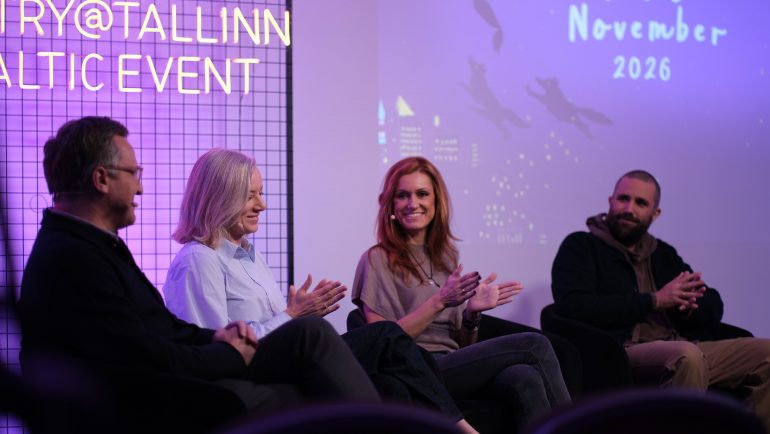
Fasting also argued that the person making the final creative decisions on scripts should retain that responsibility in editing. Otherwise, “you’re already fragmenting the process, you’re fragmenting the signature of the artistic aspect.”
The lesson is practical. Calls for originality carry little weight if production structures repeatedly dilute the decisions that give a series its identity. Creative leadership needs an agreed scope and continuity across the process. Bernth’s honorary award added a historical perspective, recognising a career spent helping Danish television reach viewers beyond its domestic market.
Audience knowledge belongs upstream
Protecting a voice still leaves the question of how audiences encounter it. At Just Film Industry Days, Swedish distributor Nils Andersson of Smorgasbord Picture House joined industry expert Alasdair Satchel for a session examining the consequences of labels such as “family”, “youth” and “coming-of-age”. Its focus on mislabelling identified a crucial distribution issue: A film’s positioning shapes the expectations with which viewers approach it.
The implication is that audience awareness belongs in development and release planning. It can help articulate what makes a project particular and who might respond to it.
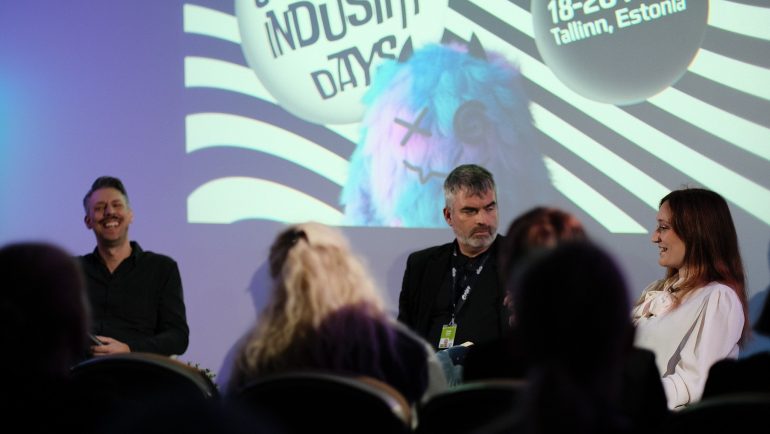
Finnish executive Maria Kivinen described a related approach in an interview during the festival period. Norse Key combines sales with financing and co-production, bringing market knowledge into projects early. Conversations with buyers provide knowledge of commissioning priorities, demand and trends, she explained. “This knowledge is invaluable when assessing projects at development stage.”
Her warning that “the market has become extremely selective” places the emphasis on patient relationships and credible packaging. Early commercial input is useful when it helps identify suitable partners and a viable route to viewers while creative choices remain open.
Investing beyond the premiere
Tallinn’s Nordic links also extended into practical training. Discovery Campus head Dhanushka Gunathilake explained that cinematography and production design participants would continue their programme with five days at Finland’s Aalto University, building sets, shooting sequences, and reviewing the results with mentors. The arrangement connects festival encounters with time to test skills and collaboration.
These examples suggest three priorities for Nordic producers, broadcasters and funders: Sustain the people behind distinctive work, preserve coherent creative responsibility, and connect development with audience understanding. The Danish awards demonstrate artistic achievement; Trier’s intervention and Fasting’s experience help explain why the conditions behind it deserve equal attention. The longer-term test is whether those conditions allow talent to progress from one project to the next.
RELATED POST TO :
AWARDS
& FESTIVALS
/
NORDIC INDUSTRY NEWS
/
NORDICS
& INTERNATIONAL