Written by: Davide Abbatescianni
07.04.26
The Reykjavík-based festival reinforced its role as a regional industry hub while hosting a frank debate on the fragile state of local filmmaking.
Held from 19-29 March, the Stockfish Film Festival underscored its growing importance as both a meeting point for Nordic and North Atlantic filmmakers and a forum for discussing structural challenges facing Iceland’s audiovisual sector.
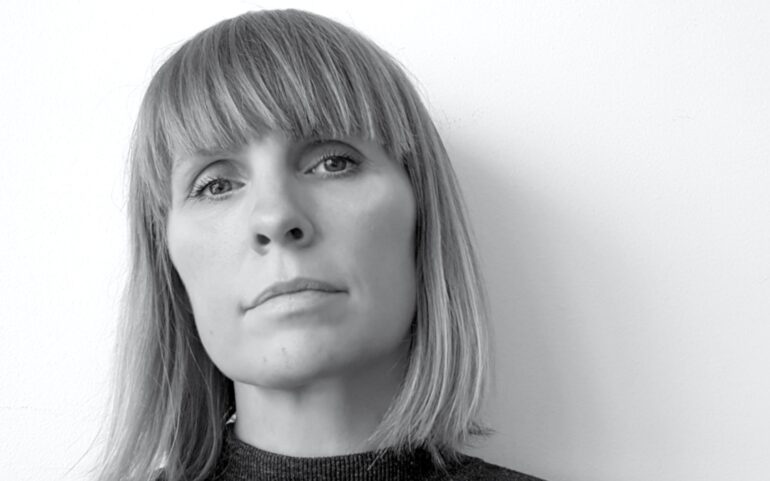
Now in her second year as Managing Director, Dögg Mósesdóttir has focused on strengthening the event’s industry dimension while deepening its connection to the national filmmaking community. Reflecting on last year’s edition — which she had only a few months to prepare — she stressed that Stockfish’s core strength lies in its roots within the local industry.
“What I’ve learned is that the true strength of Stockfish lies in its deep connection to the Icelandic film industry,” she said, noting that the festival is organised in close collaboration with the country’s filmmakers’ associations and aims to serve professionals, while opening conversations about cinema to broader audiences.
Among the initiatives introduced or expanded this year was the North Atlantic Story Circle, designed to connect filmmakers from Iceland, Greenland and the Faroe Islands. Participants included Ísold Uggadóttir, Alberte Parnuuna, Rakul Ró Steintórsdóttir, and Niels Jóhan Sigurðsson. The initiative aims to build an ongoing creative network encouraging co-productions and knowledge exchange across small but culturally distinct industries.
At the same time, the festival continued investing in talent development through The Whale, its international Writers’ Lab, led by BAFTA-winning Tina Gharavi. According to Mósesdóttir, such initiatives position Stockfish not only as a showcase, but as a platform for development and collaboration.
“Our approach to curating guests and industry programming is very intentional,” she said. “We aim to bring together voices that reflect both the realities and the potential of filmmaking in small nations, particularly within the North Atlantic region.” Conversations with filmmakers from Greenland and the Faroe Islands, as well as representatives of the newly established Film Institute of Greenland, highlighted the creative vitality of these industries despite their limited scale.
The festival also expanded its industry programme across the entire schedule rather than concentrating it into a few days, creating more opportunities for dialogue and informal networking. Despite severe weather causing some flight disruptions and guest cancellations, Mósesdóttir said the industry side of Stockfish is clearly growing.
“Our goal is to establish Stockfish as a key cross-Atlantic meeting point — a place where industry professionals can discover new talent from across the North Atlantic and initiate future collaborations,” she said.
Nordic projects in development
This year’s New Nordic Work-in-Progress, presented on 28 March at Reykjavík’s Nordic House, showcased a slate of emerging projects aimed at encouraging regional collaboration.
Among the docs were Katla Gunnlaugsdóttir’s Beautiful Silence (Dýrðar Þögn), inspired by a glacier expedition with her grandfather; Teitur Magnússon’s The Step (Skrefið); and Mr. Grimsson, a four-part documentary series directed by Eiríkur Ingi Böðvarsson. Milla Ósk Magnúsdóttir also presented ERRÓ, a three-part series exploring the life and work of the Icelandic artist through a long-standing relationship with him and his family.
Also featured was Truth Withheld, directed by Klaus Georg Hansen and Inuk Jørgensen, which investigates the unresolved 1973 helicopter crash that remains Greenland’s deadliest aviation disaster.
The programme extended beyond documentary to include fiction and hybrid projects such as Dóra Jóhannsdóttir’s dystopian sci-fi dark-comedy musical Leg / Uterus and the drama Sisterland, helmed by Parnuuna and Mósesdóttir.
Complementing the project presentations, the festival’s industry programme included a discussion on casting practices with Vigfús Þormar and Guðmundur Ingi, as well as a presentation of Massif, a forthcoming platform designed to streamline location scouting and production planning through AI-indexed databases and collaborative tools.
A sector under pressure
Yet beyond development and networking, the most urgent discussions focused on the current state of Icelandic cinema.
A panel moderated by Wendy Mitchell offered a stark diagnosis: While Iceland continues to produce internationally recognised filmmakers and strong storytelling, the industry increasingly sees itself facing a structural crisis rather than a temporary slowdown.
Speakers emphasised that the problem is not talent, but funding. Iceland’s creative workforce remains strong, but the domestic financing base — particularly the Icelandic Film Fund — was described as insufficient to sustain the scale of local production needed to maintain international visibility.
Another key concern was the imbalance between Iceland’s successful incentive scheme for foreign shoots and the limited support available for domestic projects. While the rebate has strengthened infrastructure and attracted international productions, panellists argued that its current structure tends to favour incoming projects more than Icelandic features and co-productions.
The broader fear is that Iceland could gradually shift from being a filmmaking nation to primarily a service territory for foreign productions. Irregular production cycles are already pushing some professionals to leave the sector, raising concerns about a potential loss of skilled crew.
At the same time, the panel stressed that Icelandic cinema still rests on solid foundations. The country continues to produce distinctive voices and internationally recognised work, but speakers argued that stronger policy support will be needed if the industry is to sustain its momentum.
For Mósesdóttir, this tension underscores the role of the festival itself. By bringing together local and international professionals, Stockfish can both reflect the realities of Icelandic filmmaking and help shape its future.
“Stockfish acts as both a mirror and a catalyst,” she said, emphasising that stronger collaboration across the Nordic and North Atlantic regions will be key to sustaining the industry in the years ahead.
RELATED POST TO :
FESTIVALS
/
NORDIC INDUSTRY NEWS
/
ICELAND