Written by: Davide Abbatescianni
10.02.26

Despite a strong Nordic delegation on the ground, only one Nordic project was presented at CineMart, the Dutch gathering’s industry sidebar.
The 2026 edition of the International Film Festival Rotterdam (29 January-7 February) confirmed its role as a key launchpad for formally adventurous cinema, with the Tiger Competition and Big Screen Awards foregrounding personal, politically engaged and aesthetically bold works.
The Tiger Special Jury Awards were handed out ex aequo to Swedish-Norwegian doc La belle année by Angelica Ruffierand Supporting Role (მეორეხარისხოვანი როლი) by Ana Urushadze. The main Tiger Award went to Variations on a Theme (Variasies op 'n tema) by Jason Jacobs and Devon Delmar, whilst Master (মাস্টার) by Rezwan Shahriar Sumit claimed the Big Screen Award.
La belle année: autofiction as reconciliation
In La belle année, Ruffier turns inward to craft an intimate, layered exploration of grief, memory and desire. As she empties her late estranged father’s home, the filmmaker uncovers her teenage diaries, rekindling the memory of a secret first love in a work that blurs documentary and fiction with striking emotional precision. “Where do we find meaning in life’s most tumultuous moments, like when a parent dies or when we struggle with the confusion of teenage years?” Ruffier asks herself. “What stories do we tell ourselves to survive? To feel less alone?”
The film traces two parallel journeys: the clearing of the childhood home, heavy with unresolved violence and absence, and a long-delayed encounter with Miss B., Ruffier’s high-school teacher and object of a formative teenage infatuation. Ruffier says: “As a 16-year-old, my love for her became a lifeline amidst a turbulent family life marked by my father’s violence.” After her father’s death in 2021, cinema itself becomes a coping mechanism: “Alone in the house, with grief and anger as constant companions, I began to do what I always did when reality became too much: I viewed my life as a film.”
Positioning her work as autofiction, Ruffier argues that “you can go further and say more – more honestly, more precisely, more directly – when using yourself”. Inspired by authors such as Annie Ernaux, Maggie Nelson and Alison Bechdel, the pic seeks the universal through the specific, embracing emotional ambiguity rather than resolution. Produced by Brynhildur Þórarinsdóttir and Marta Dauliūtė (MDEMC, Sweden) with Aldeles AS (Norway), the project reflects a sustained development journey through key platforms including Nordic Talent, Cannes Docs, and Nordisk Panorama Forum.
The pic will open the upcoming Tempo Docfest on 2 March.
Other standouts: a Renate Reinsve-led dramedy, a Yugoslavian-Danish story of displacement
In the Big Screen Competition, Butterfly by Itonje Søimer Guttormsen (Norway/Sweden/UK/Germany) marked a return to feature filmmaking shaped by an unusually long and collaborative process, kicked off in 2008. Rejecting a traditional script-based approach, she spent years returning to Gran Canaria, integrating real people and locations into the fabric of the film. Butterfly is supported by Nordisk Film & TV Fond.
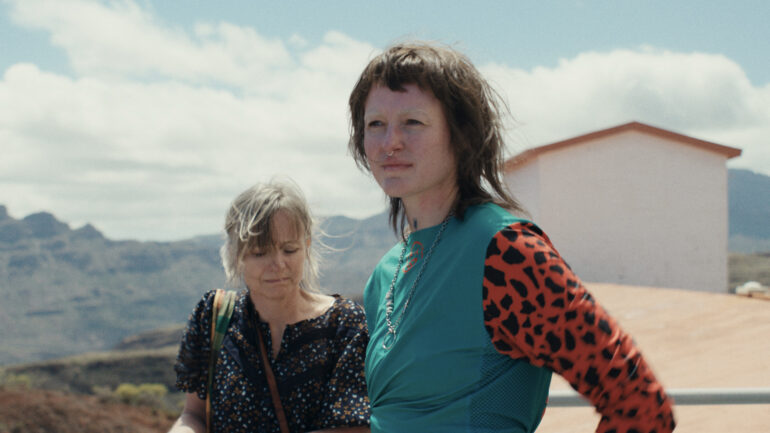
In detail, Butterfly centres on estranged half-sisters Lily (Renate Reinsve) and Diana (Helene Bjørneby), who reunite after their mother’s death to deal with an unfinished resort tied to her younger lover (Numan Acar). The encounter becomes a catalyst for exploring grief, control and the possibility of transformation.
Picking Reinsve as the lead has been probably one of the hardest decisions. “She was suggested by my producer. I was hesitant at first, because I’d seen her in theatre and thought she was brilliant, and also in The Worst Person in the World (Verdens verste menneske), but she felt too soft and charming,” she recalls. “But she read the script, and connected instantly with the character. We connected too. I still took her through three rounds of rehearsals, because I was hesitant – also because I wasn’t sure I wanted to work with someone so famous. When Renate and Helene met, it was immediately clear. They were sisters/half-sisters. That’s when I made the final decision.”
Also in Big Screen, Marijana Janković’s debut Home (Hjem), offered a more classical dramatic structure, while addressing migration, belonging and intergenerational sacrifice. Drawing on a deeply personal story, the film follows a family’s emigration from Yugoslavia to Denmark, exploring the emotional fractures left by displacement, memory and loss. Anchored by a high-profile cast including Trine Dyrholm, Zlatko Burić and Claes Bang, and staged by Nordisk Film Production, Home underlined the continued strength of Danish-backed prestige drama within IFFR’s more experimental ecosystem.
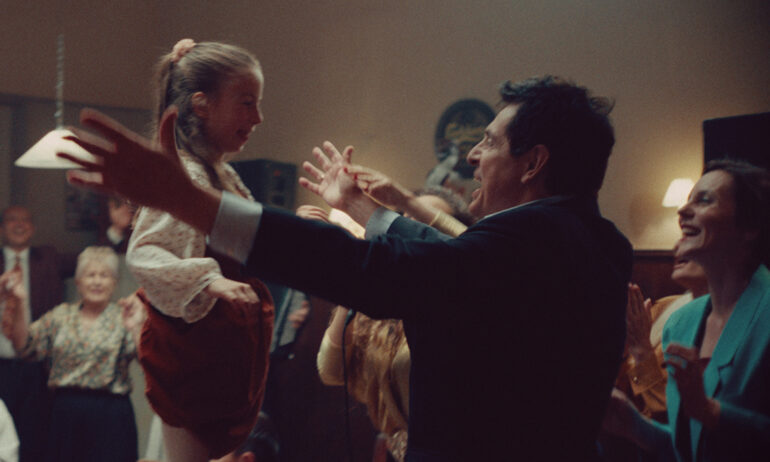
Lux, the only Nordic project in town
Helmed by Thomas Elley and set in provincial Denmark, the film follows Leni, a blind woman in her late twenties who hires a state-appointed companion, gradually navigating blurred boundaries between professionalism and intimacy. Developed with non-professional actors and a strong sensory approach to sound and image, Lux reflects a growing interest in rethinking cinematic perception and representation. Backed by the Danish Film Institute and Film Fyn, and seeking Nordic and European partners, the project highlighted CineMart’s continued role as a space for risk-taking narratives grounded in social experience.
Nordic takeaways, key international signals
Across both the festival and its industry platforms, Nordic cinema at IFFR 2026 was marked by a strong turn towards autofiction and hybridity, with some room left for more traditional, generalist productions. Personal narratives were not treated as confessional endpoints, but as gateways to broader reflections on violence, memory, belonging and care. Collaboration across borders – particularly between Sweden, Norway and Denmark – remained central, while filmmakers embraced aesthetic risk and emotional exposure as defining creative tools.
IFFR also reflected wider global shifts. US indie filmmakers increasingly looked to Rotterdam as a space of refuge and creative freedom, while Brazil emerged as a major presence through HBF-backed initiatives. New industry platforms such as Safe Harbour and Cinemart x HBF underscored the event’s agility in responding to displacement and geopolitical pressure, reaffirming its role as a critical hub where artistic urgency and structural support continue to intersect.
RELATED POST TO :
FESTIVALS
/
NORDIC INDUSTRY NEWS
/
NORWAY
& SWEDEN
& INTERNATIONAL