Written by: Davide Abbatescianni
05.10.26
The Icelandic festival’s Arctic Script Lab pairs close creative mentoring with Industry Days that connect local projects to Nordic and international partners.
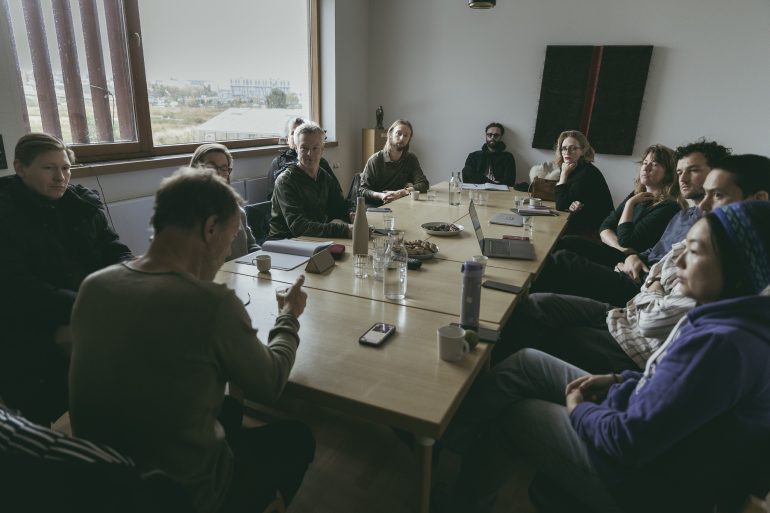
Reykjavík International Film Festival’s (RIFF, September 24-October 4) first Arctic Script Lab brought ten emerging screenwriters together around eight projects rooted in Nordic and Arctic experience. The programme began online in August and moved into the Icelandic capital from September 30 to October 3, where participants could take their treatments into an industry setting. Developed with Nuuk International Film Festival and backed by the Nordic Culture Fund, the pilot aims to create a route from early creative development to the partnerships that can carry a project forward. Nordisk Film & TV Fond (NFTVF) supported RIFF Industry Days 2026.
The gathering’s top prizes went to Marine Atlan’s La Gradiva, winner of the Golden Puffin, Yannis Karpouzis’s Left Behind, winner of the Golden Egg, and to Camille Bildsøe’s, NFTVF supported, documentary If Luck Will Come (Hvis lykken vender) winner of A Different Tomorrow Award. Chronovisor received a New Visions special mention.
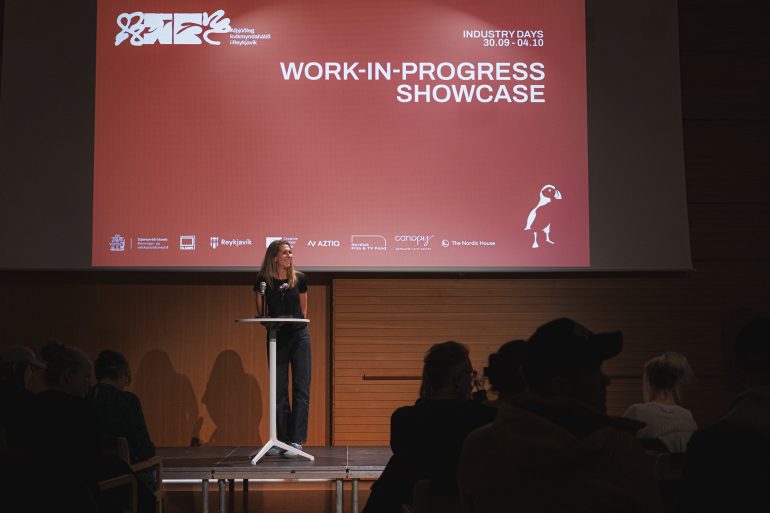
“We increasingly think about Industry Days as an ecosystem rather than a collection of separate events,” says Maja Jankowska, RIFF’s Industry Days coordinator and the Lab’s main coordinator. “The different strands meet projects and filmmakers at different stages.” The Arctic Script Lab supports writers at treatment stage through development, peer exchange and mentorship. The Work-in-Progress Showcase connects more advanced projects with potential co-production partners, financiers, distributors and festivals. Panels and initiatives such as Nordic Voices add discussion about the practice and conditions of filmmaking.
Jankowska says the Lab grew from a desire to create a development space for emerging filmmakers across the Arctic and Nordic region. It was not designed to impose a single definition of an Arctic story. “What connects them is not a prescribed theme, but the fact that they emerge from the experiences, concerns and contexts of the filmmakers themselves,” she says. The Arctic is a lived place, shaped by language, cultural heritage, Indigenous perspectives, relationships with nature, and the realities of remote communities, but its stories can also be intimate, funny, personal or genre driven.
For mentor Dagur Kári, the work begins with the story rather than the label. “To me personally, character is most important and story comes second. Working with themes is a delicate balance; it's good to have it, but it mustn't overshadow the narrative, but rather hit the audience almost on a subconscious level, a bit like a bass element in a song.” The Icelandic director’s films include Noi the Albino (Nói albínói), Dark Horse (Voksne mennesker), and Virgin Mountain (Fúsi).
That exchange is visible in the work of Icelandic filmmaker Andrea Björk Andrésdóttir, whose project Dog Days (Hundadagar) is a historical dramedy set during the Napoleonic Wars. It follows Danish captain Jørgen Jørgensen, who sails to Iceland amid famine and becomes entangled in an attempt to free the island from Danish rule. Told in Icelandic, Danish and English, the project explores colonialism, masculinity, capitalism and class.
“The lab has helped me focus on how I want to present this story in a more tangible way than before, and the feedback from fellow Lab participants definitely helped me identify some blind spots in the narrative,” Andrésdóttir says. Her approach is shaped by a decade of performing comedy. “I've been performing comedy on stage regularly for the last 10 years, so it's very natural for me to process the world through a comedic lens.” She says the story’s absurdity helps bring the past closer, and hopes audiences can laugh at Iceland’s history with Denmark without repeating its mistakes.
The project also shows why development and industry cannot be treated as separate stages. Andrésdóttir says it needs Danish and English counterparts as she moves from treatment to script. “I've always known that for this project to be successful, it needs to be developed together with Danish and English counterparts.” She hopes the Industry Days will help her find a producer and other collaborators to shape its development and production.
For Jankowska, this is the connective purpose of RIFF’s programme. Its international focus on Portugal is intended to put professionals and filmmakers into conversation and identify possible points of connection with Iceland, rather than simply present a national showcase. Smaller territories share limited domestic markets and professional communities, along with the need to work internationally, while protecting cultural and linguistic specificity. Their links need not produce an immediate co-production deal to matter. A meeting might lead to a producer finding a future collaborator, a project gaining a festival or development partner, or institutions sharing ways to support local talent.
The test for the Lab will be whether those encounters help projects continue to grow after the festival. Jankowska points to earlier RIFF initiatives whose participants returned with completed films and whose Work in Progress projects later came back as finished works. She wants the Arctic Script Lab to create similar paths and a lasting professional network, while keeping Industry Days intimate enough for people to form meaningful relationships.

Kári sees the pressure point in the transition from a protected development space to conversations with producers, financiers and distributors. “This is one of the trickiest parts; how to protect your vision once external opinions and pressures start pouring in from producers, financiers, distributors etc.” His advice is not to impose a mentor’s taste. “I always assume the author knows best what is right for his/her script. In my view it is a good idea not to try to impose your personal opinions or taste upon the material, but to be more suggestive, curious and inquisitive in your approach when it comes to commenting on other people's material.”
That tension defines the pilot’s larger promise. RIFF is trying to connect creative development with international relationships that can help projects travel, without prescribing what an Arctic story should look like or asking its makers to dilute their voice. Whether the Lab can turn the first edition’s exchange into sustained collaboration will be the more meaningful measure of its success.
RELATED POST TO :
FESTIVALS
/
NORDIC INDUSTRY NEWS
/
ICELAND