Written by: Davide Abbatescianni
05.02.26
From an audience-awarded Cypriot–Danish debut to Nordic-linked documentaries and NEXT titles, the Utah-based gathering offered a low-key yet telling snapshot of the region’s evolving footprint.
As the Sundance Film Festival wrapped its 2026 edition (22 January–1 February) - the final one to unfold in Park City and Salt Lake City - Nordic cinema confirmed its discreet but structurally significant role within one of the world’s most influential independent showcases. While the festival’s top prizes leaned strongly European across both fiction and documentary, the Nordic footprint emerged less through headline domination than through embedded co-productions, creative partnerships, and one emotionally resonant audience win that stood as the region’s sole official accolade.
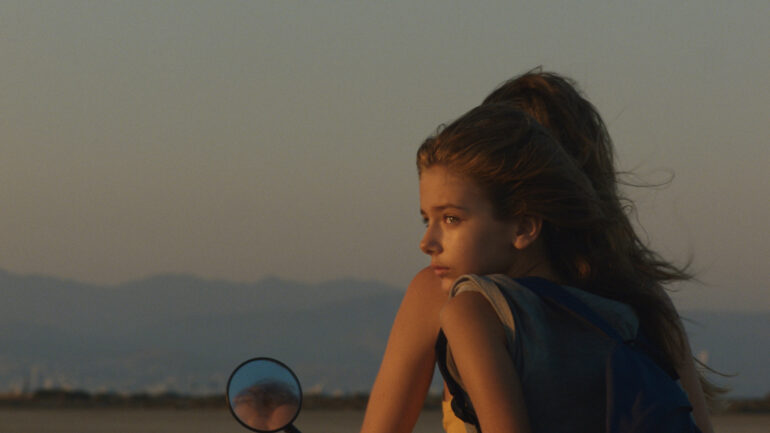
That distinction went to Cyprus–Denmark–Greece co-production Hold Onto Me (Κράτα Με), which claimed the World Cinema Dramatic Audience Award, emerging as the only Nordic-linked winner of Sundance 2026. The prize capped a broader presence in which Nordic producers and creatives appeared across several sidebars, reflecting a pattern of international collaboration rather than a regionally defined showcase.
Hold Onto Me: intimacy, place and Danish partnership
Helmed by Myrsini Aristidou, the pic premiered in the World Cinema Dramatic Competition. It centres on Iris, an 11-year-old girl searching for her estranged father, who lives in isolation in an abandoned shipyard following a family funeral. Shot entirely in Cyprus, the film completes a thematic trilogy begun with Aristidou’s short films Semeli and Aria, each exploring different phases of the father–daughter relationship.
Aristidou has described the feature as tracing “the quiet, often unspoken longing born from a father’s absence”, grounding the emotional journey in weathered coastal landscapes and what she calls “the undercurrents of emotion that continue to shape us”. For the filmmaker, Iris also reflects Cyprus itself - “small, often overlooked, marked by absences, yet determined to reconnect and stand on its own again”.
Denmark’s role proved decisive. The film is co-produced by Fredo Pictures with support from the Danish Film Institute, and Danish co-producer Anders N.U. Berg recalls being immediately convinced. “The short and direct answer is that the creative package consisting of a script and a visual pitch deck that I received in the spring of 2023 simply was of such high quality that I couldn’t refuse it,” he explains. “I cried at my first readthrough, and cried again at the same passage at the world premiere at Sundance.”
Berg also points to his long-standing relationship with Aristidou from their time at NYU’s Tisch School of the Arts and to her earlier shorts, which he says “displayed tremendous potential”. That trust led him to support the project beyond financing. “I gave script notes on early drafts, and generally made myself available for creative sparring,” he notes, while also proposing key Danish heads of department, including cinematographer Lasse Ulvedal Tølbøll, editor Jenna Mangulad, and costume designer Sasia Paludan. He also travelled to Cyprus during pre-production, bringing specialised Zeiss lenses that helped define the film’s visual texture.
For Berg, the film’s distinctiveness lies in its emotional clarity and socio-visual specificity. He highlights “the portrayal of a sun-soaked lower-class Cyprus” as rarely seen on screen, adding that it “almost becomes a character in the story”. Strategically, he situates Hold Onto Me within a broader shift in Danish co-production culture. “The language of film is universal, and good stories deserve to be told - regardless of origin,” he argues, pointing to increasingly international career paths among Danish filmmakers.
Nordic voices across documentary and innovation
Beyond Hold Onto Me, Nordic participation also surfaced within Sundance’s documentary landscape. Time and Water, directed by Academy Award-nominated filmmaker Sara Dosa, is an Iceland–US production built around the writings and voice of Icelandic author Andri Snær Magnason. Dosa frames the film within her practice of making “films about how humans seek meaning with the more than human natural world - often through explorations of allegory, metaphor, and myth”, with a focus on time: “Cultural temporalities, geologic scales, and seasonal rhythms that entangle human lives within the living systems around us.”
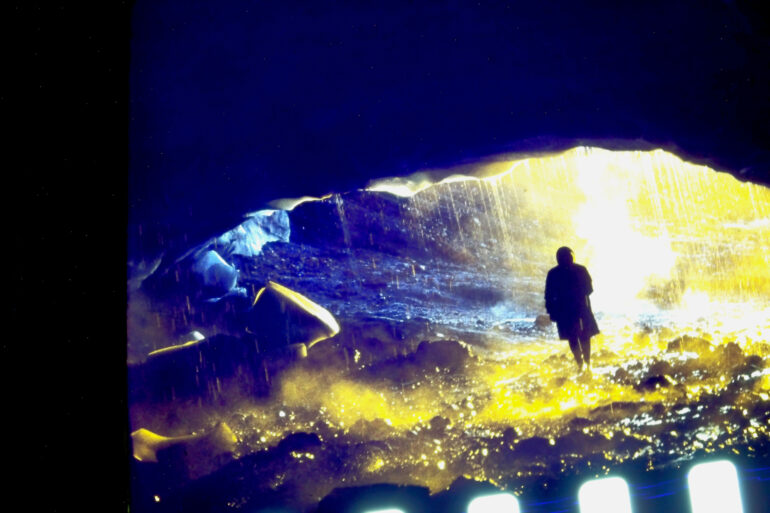
Conceived as a cinematic time capsule, the film braids Magnason’s family history with Iceland’s disappearing glaciers through what Dosa calls a “polytemporal” structure existing “across multiple timescales at once”. Collaged archival materials sit alongside newly shot digital and 16mm footage, designed to “bend and fold time”, echoing “how glaciers themselves hold the frozen layered imprints of planetary history”. While the narrative parallels memory loss and environmental erosion, Dosa stresses that “dementia’s devastations defy literary symmetry”, aiming instead for “a note of agentive uncertainty”: “The future is unwritten, and what we do now matters.”
Nordic links extended into Sundance’s innovation-driven sections through shared colonial debates rather than formal co-production alone. In NEXT, Adam and Zack Khalil’s Aanikoobijigan (USA/Denmark) follows Indigenous repatriation specialists working to return human remains from museum archives to their communities. Although not developed through an official Danish partnership, the film was shaped by a transatlantic working process, with editing split between New York and Copenhagen, where its rhythm, tone and structure took form. Living in the Nordic region, the filmmakers note, made it harder to treat repatriation as solely an “American issue,” revealing how the same extractive systems operate across Turtle Island, Kalaallit Nunaat and Sápmi.
While Aanikoobijigan remains grounded in Anishinaabe responsibilities, it was never conceived as a purely local work. From an Indigenous perspective, the filmmakers argue, “the USA aren’t separate from Europe. They’re an extension of it,” shaped by shared colonial logics that remove human remains and cultural patrimony while asserting institutional authority over them—processes still often framed as policy rather than “an enactment of sovereignty, and the upholding of human rights.”
Meanwhile, Denmark also surfaced in episodic non-fiction through The Oligarch and the Art Dealer, directed by Andreas Dalsgaard. Chronicling the decade-long conflict between art dealer Yves Bouvier and Russian oligarch Dmitry Rybolovlev, the project reflects a Nordic documentary sensibility attuned to global power structures and financial opacity within a transatlantic framework.
Taken together, Sundance 2026 did not deliver a sweeping Nordic awards haul, but it offered a portrait of relevance through collaboration and strategic positioning. As Sundance prepares to close its Park City chapter and reimagine its future in Boulder, Colorado, the 2026 edition serves as a reminder of how variable Nordic visibility can be from year to year - particularly when set against the 2025 line-up, which saw Nordic-led titles play a far more central role, from Mathias Broe’s festival favourite Sauna to the Oscar-nominated documentary Mr. Nobody Against Putin by David Borenstein, and Emilie Blichfeldt’s Norwegian global hit The Ugly Stepsister (Den Stygge Stesøsteren).
RELATED POST TO :
FESTIVALS
/
NORDIC INDUSTRY NEWS
/
INTERNATIONAL