Written by: Davide Abbatescianni
11.06.26
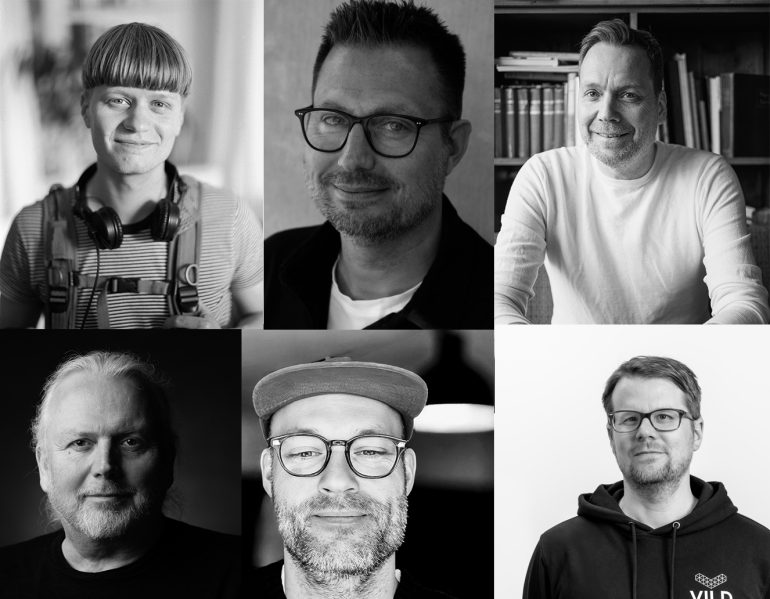
Budgets remain tight, and sound enters too late, but Nordic sound designers across the region see a growing respect for its power to shape emotion, rhythm and story. Is there a specific Nordic approach to sound?
For Nordic sound designers, the job is still too often treated as a late-stage technical fix. Yet the picture across the region is of a craft becoming more central, expressive and tightly woven into storytelling.
Many came to sound through music, cinema and a desire to listen differently. Danish supervising sound editor and sound designer Claus Lynge says stamina remains key: “If you’re willing to make the necessary sacrifices and not give up, I believe you will find your way eventually.” Finnish senior sound designer Mikko Roisko says formal education still matters, not only for technique, but for “the collaborative aspect and the connections you make in film school”. Norwegian supervising sound editor Gisle Tveito adds that education helps, but taste, talent and dedication still count.
Across the region, the central challenge is familiar: Ambition is high, but time and money rarely match it. Danish sound designer Andreas Kongsgaard points to “the gap between ambition and available time and budget”, while Roisko says too little planning before shooting leaves problems to be solved in post-production. Icelandic sound designer Atli Arnarsson puts it bluntly: “Sound is usually the last step. There is often a hard deadline, but the time for sound may have been squeezed because other parts of the process took longer than planned.”
For Norwegian re-recording mixer and sound supervisor Tormod Ringnes, the issue is not only budget, but timing. “Sound is frequently brought into the process too late,” he says. By then, many creative decisions have already been made. Tveito is wary of blaming money alone, arguing that poor production planning can make things “more complicated down the line”, sometimes in an attempt to save money that ultimately proves costly.
Earlier in, stronger out
The strongest plea from all sides is for earlier involvement. Lynge likes to come in at script stage, during dailies or in the edit, so ideas can “simmer”. He sees directors, editors, composers and sound teams as “an orchestra”, all interpreting the same vision rather than passing work down a chain. Ringnes breaks great sound design into four stages: script, pre-production, production, and picture editing. “The earlier sound becomes part of the creative conversation, the stronger the final result usually becomes,” he says.
Early collaboration can also prevent what Roisko calls “temp-love” issues, when editors become attached to placeholder sounds. He likes to provide ambiences or specific sonic elements before sound post formally begins. Arnarsson agrees that working before picture lock is becoming more common, helping solve issues early and inspire decisions in the edit.
Unsurprisingly, the most demanding work is not always the loudest. Action, fantasy, science fiction and animation offer obvious world-building opportunities, but several interviewees point instead to subjective experience, silence and emotional ambiguity. Kongsgaard is drawn to psychological drama, where sound can express “inner states – tension, memory, distortion”. Tveito says emotions are harder than explosions: “Explaining the inner emotions of a person staring at a wall in an understandable and unexpected way without the use of music is a challenge.”
Kongsgaard describes sound as a “middle layer” between music and realism. On one TV series, he recorded an old worn harp with bows and metal objects, creating material that was tonal, scraping and resonant. Processed and layered, it became an organic library for scenes between light and darkness, carrying “grey tones and emotional ambiguity”.
Nordic sound work is often associated with restraint, and the respondents partly confirm this. Kongsgaard sees a regional tendency towards space, silence and small details, while Roisko says nature is a powerful emotional trigger. “The sounds of a summer night, for example, can evoke many emotions in us through the viewer’s own experiences,” he says. Arnarsson notes that Iceland has “no trains or crickets”, but plenty of wind, rain, snow and ocean. These local realities shape the palette.
At the same time, Lynge resists the idea of a single Nordic approach. Storytelling, he says, is universal. What is specific is the scale: Smaller budgets and language limitations have pushed filmmakers to focus less on spectacle and more on originality. “Instead of competing on scale, we focus on originality,” he says.
New tools, same ears
Technology is reshaping the job, but not replacing its fundamentals. AI-assisted dialogue restoration and sound separation can help, but several interviewees warn against over-reliance. Roisko notes that better noise separation may encourage filmmakers to shoot more freely, assuming sound problems can be fixed later. Tveito worries about younger practitioners relying on “tech and presets” rather than listening. “These new tools are great,” he says, “but you need to listen to your result.”
Ringnes sees immersive formats, remote collaboration and AI-assisted workflows expanding possibilities, but insists that “storytelling, emotion and creative intent are still far more important than technology itself”. Kongsgaard agrees that sound design remains “deeply human”, rooted in perception, taste and emotional intuition.
Learning to listen
Their advice to newcomers is practical: Film schools matter, as do internships, networks, recording your own sounds, and becoming easy to work with. Roisko says young sound designers should do each job so well that collaborators “don’t want to do the next project without you”. Arnarsson stresses collaboration, noting that working with others is both useful and more fun than working alone.
For Lynge, persistence remains the real entry ticket: “If it’s truly your calling, you won’t be able to avoid it.” Tveito’s advice is equally direct: Take on challenges, because “you only learn if you do something that you don’t really master”. In a Nordic industry where sound is still fighting for time and earlier recognition, that willingness to keep listening may be the craft’s greatest strength.
RELATED POST TO :
PRODUCTION
/
NORDIC INDUSTRY NEWS
/
NORDICS