Nordic Film Talks: Hanna Bergholm
After her global hit Hatching, the Finnish writer/director comes to Berlinale Competition with her English-language debut, Nightborn, offering a twisted take on parenthood.
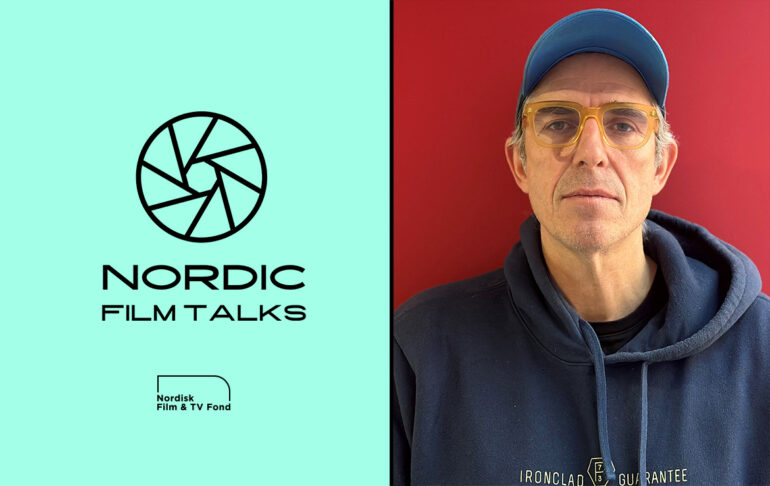
The Danish Oscar nominee explores complex family and farming dynamics in his first TV show, Harvest, and convinced his starry cast to drive tractors for authenticity.
After decades of making successful (and Oscar-nominated) films, Danish writer/director Martin Zandvliet knew he wanted to go deep with complicated characters in his first TV show. He says: “Of course, like anyone else, I watch a lot of TV, and it's fascinating when you can stay with the characters for a long time, and you can develop their journeys.”
The result is Harvest (Høst), an eight-episode family drama about a patriarch, Gorm, who shockingly hands down the family farm to his daughter Astrid, instead of her two brothers Erik and Thomas, who are already deeply involved in the farm.
“I knew I wanted to do a show that was more character driven. No guns, no car chases, no sickness,” Zandvliet says in the latest episode of the Nordic Film Talks podcast series. He adds that he wanted to delve into “normal people, problems that I could relate to, and use my own experience as a person and my family to write storylines for these characters.”
Harvest premieres at Canneseries on April 24, and DR will broadcast starting in the autumn. The series is also sold by DR - and is part of the collaborative New8 selection, which means it will get wider distribution across Europe. Rikke Tørholm Kofoed, whose credits include Prisoner (Huset), produces for for DR Drama; the show’s backers include Nordisk Film & TV Fond (NFTVF).
Zandvliet himself isn’t a farm boy, but says he has “always been very fond of the Danish nature”. He did a lot of research with contemporary farmers to “hear what a struggle it is”, as well as learning the mechanics of a modern harvest.
Zandvliet wrote and directed all eight episodes, no small feat. He tried not to be too formulaic or restrictive in the writing process - “I didn't have the storylines for the characters. I just started from page one and let the characters develop themselves,” he says.
Even more remarkably, he cast the series in a similar way. He hired actors like Elliott Crosset Hove, Simon Bennebjerg and Joachim Fjelstrup, let them get to know the project and story, and only later suggested which character they would play. “I let them find their own way in. Mostly because I didn't want people to do what I said. I wanted them to be invested.”
He continues: “It was important for me that it didn't feel like a TV show. I just try to make real people.”
He had a full script for each episode, but also encouraged the actors to improvise. “If you listen to what people say and what they bring to the table, the scene can change in an instant,” he adds.
Katrine Greis-Rosenthal was cast as Astrid, and she also had some freedoms. “I didn't have a vision of how Astrid actually should be. So it was her job to bring in an Astrid that would fit this family.” The actors and crew lived in the Danish countryside where they shot, and became like a family themselves for the 121-day shoot. The director explains: “This show is very analogue. The actors learned how to be farmers, they wrangle the cattle, they drive the tractors.”
Zandvliet, Oscar-nominated for Land of Mine (Under sandet, 2016), also has cinematic credits including The Outsider, The Marco Effect (Marco Effekten), Applause (Applaus), A Funny Man (Dirch), and Tove’s Room (Toves værelse).
On paper, his past characters sound very different: young German prisoners of war; a distraught actress; a famous novelist navigating a crisis; beleaguered detectives investigating a cold case. Zandvliet can see a commonality: “Every film I've done, or even in this TV show, it's about the relationship between parents and their children, who pays the price, how do we see ourselves, and what do we sacrifice to get where we want… All of them are different, but basically they're the same story.”
In the full podcast episode, Zandvliet also talks about the natural light he chased for Harvest; why the production had to plow at the correct time of the farming season; and developing a creative shorthand with his wife, cinematographer Camilla Hjelm.
Listen to the podcast here:
All Nordic Film Talks episodes are available on NFTVF’s website in the Industry Insights section (CLICK HERE), and on Spotify and Apple Podcasts.