Written by: Eva Novrup Redvall
05.02.26
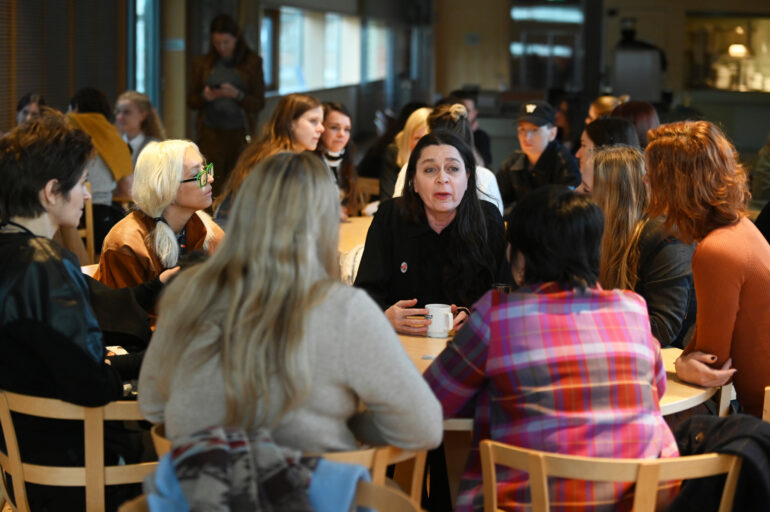
The Nordic Film Music Days next week in Berlin spotlights several female film composers through this year’s nominations for the HARPA Nordic Film Composers Award.
When the acclaimed Icelandic composer Hildur Guðnadóttir won an Academy Award for best original score for Joker in 2020, she ended her acceptance speech by encouraging the girls, women, mothers and daughters who “hear the music bubbling within” to speak up, since their voices are needed. Guðnadóttir was the first female composer to win the award in 23 years, and it was only the fourth time in the history of the Oscars that a woman got the prize.
Current numbers from the Nordic countries document how there are still few female composers making music for the screen industries. In Denmark, the initiative Nye Toner (”New Tones”) was launched in 2024 to help make female composers in the Danish Film & Media Composers association (DFMC) more visible. According to data from the initiative, only 10% of Danish film composers are women, and they earn around 5% of the residuals for film music. While several other professions have seen gender diversity increase in recent years, there is still ample room for improvement in the field of film composing.
Nordic film music and awards in Berlin
The Nordic Film Music Days (NFMD), organised by the composer associations of the five Nordic countries in Berlin on February 13-16, offers a platform for putting this issue on the agenda and increasing the visibility of Nordic film composers. Since 2010, NFMD has been a meeting point for composers, musicians and film professionals around a varied programme of film screenings and curated events during the Berlinale.
The Nordic Film Music Days also hosts the HARPA Nordic Film Composers Award, which is handed out to a Nordic composer for outstanding work on a feature film, documentary or TV series. For the first time, this year’s nominations have an equal gender balance, with Anna Berg from Norway for Dag Johan Haugerud’s Dreams (Drømmer), Jonas Colstrup from Denmark for Erik Poppe’s Quisling: The Final Days (Quislings siste dager), Norwegian Rebekka Karijord as the Swedish nominee for Jon Blåhed’s Raptures (Rörelser), Panu Aaltio from Finland for Dome Karukoski’s Little Siberia (Pikku Siperia), and a joint nomination for Viktor Orri Árnason and Álfheiður Erla Guðmundsdóttir from Iceland for Robin Thomson’s Poems: A Journey Through Icelandic Poetry. In Berlin, there will be the opportunity to watch and listen to the films with some of the composers present.

Creating connections between Nordic and international peers
The Nordic Music Days also hosts a network meeting for female composers. The meeting was initiated by film composer Anna Rosenkilde three years ago, based on the wish to facilitate opportunities to get a sense of being part of a community and meet fellow female composers. As part of her board membership of DFMC, Rosenkilde previously launched the Danish initiative Polyphonia to showcase the work of female composers, and felt it was valuable to also create a venue for building bridges across the Nordic countries and meeting international peers.
“It’s great to see this year’s HARPA nominations,” says Rosenkilde, who also points to how four of the six nominations for best score at the Danish Robert Awards this year went to women composers (Astrid Fabrin, Frederikke Hoffmeyer, Jenny Rossander and Josefine Skov). “However, this does not mean that all is well and balanced. Nominations and awards are crucial for ensuring visibility, similar to initiatives like Nye Toner and Polyphonia. But there’s still a lot of work to be done to create a better gender balance in the field of film composing, where change seems to be happening somewhat slowly.”
Networks, mentors and role models are crucial
Rosenkilde mentions issues like unconscious bias and a fear of risk-taking as some of the many reasons why few female composers get the opportunity to work on major feature films and series. Moreover, female composers need mentors and a strong network to break into the screen industries and establish themselves.
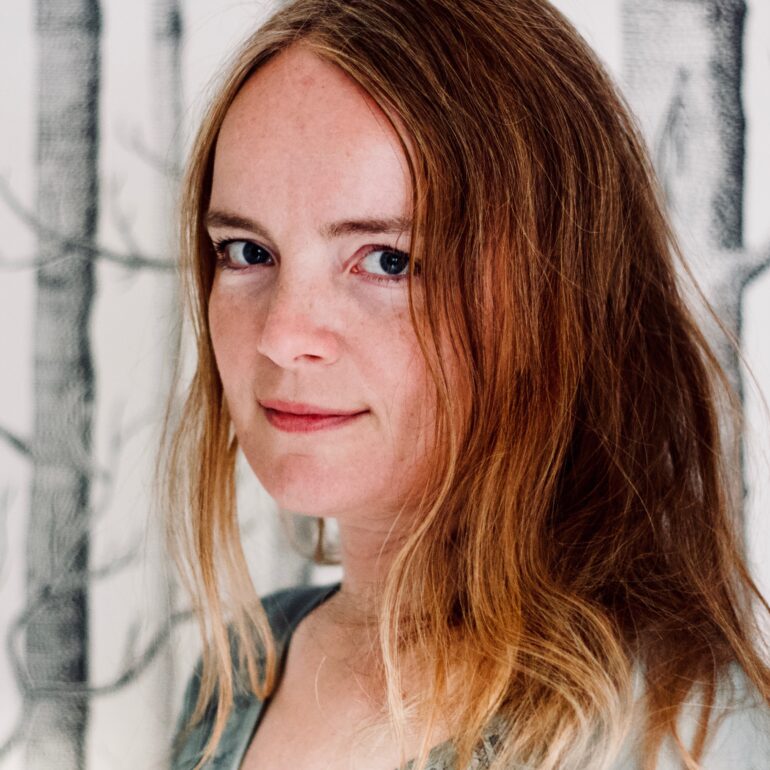
“The network meeting in Berlin, co-organised with the international Alliance for Women Film Composers , is important for creating a space for networking as well as sharing experiences across genres and borders. It is also a place to meet inspiring colleagues and role models in an industry that is often very challenging, not least if one wants to move from scoring short films and low budget productions to the next level.”
Film composing as close collaborations
To demystify the process of making film music and highlight the importance of having strong film director/composer collaborations, Rosenkilde is part of the workshop “Music and film” at the Danish Film Workshop in Copenhagen on February 28. At this open event, case studies of the process of scoring three new films: A Place in the Ring (En plads i manegen), with a score by Astrid Fabrin; Lucky, with a score by Rosenkilde; and Transfer Window (Transfervindue), with a score by Louise Alenius Boserup, will be used to explore different approaches to working with film music.
The workshop is the first initiative coming from a new collaboration between Nye Toner, DFMC, New Danish Screen and the Film Workshop. Rosenkilde hopes to see a wide range of directors, composers, producers, and other film professionals there, as well as in Berlin.
“At the moment, there is a need for events like these, focusing on the art of film composing as such, as well as questions about diversity. Maybe initiatives like Nye Toner and Polyphonia will make themselves redundant in the future – but I don’t see that happening any time soon…”
The HARPA Nordic Film Music Award Event takes place on Saturday 14.
To the full programme for the Nordic Film Music Days Berlin: CLICK HERE.
The workshop “Når film og musik mødes” (”When film and music meet”), conducted in Danish, will take place on Saturday February 28 at the Film Workshop in Copenhagen.
RELATED POST TO :
AWARDS
/
NORDIC INDUSTRY NEWS
/
NORDICS
& INTERNATIONAL