Written by: Davide Abbatescianni
13.08.26
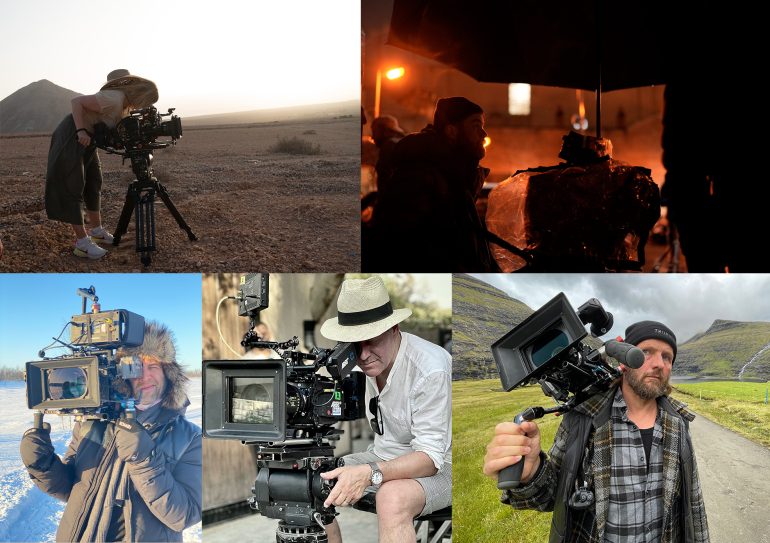
Five leading cinematographers discuss shrinking schedules, stagnating pay and AI – and why human judgement remains the craft’s strongest defence.
Behind the visual confidence of Nordic cinematography lies a sizeable but unsettled workforce. The latest figures do not form a neat regional total, yet they trace the scale of the industry: nearly 2,900 full-time equivalents in Denmark, just over 1,000 in Iceland, and around 3,000 active film workers in Norway. Swedish business statistics record 10,889 employees across film, video, television-programme and sound-recording companies, while a VTT-backed study places Finland’s broader audiovisual workforce at close to 10,000. These categories cannot be added together, but the pressure running through them is unmistakable. Norway offers the starkest documented example: The number of film jobs fell by 40% in 2023, while 62% of workers reported serious financial strain caused by irregular employment. [1] For cinematographers, that pressure is felt inside productions too – in shorter schedules, reduced crews, and preparation increasingly carried out between contracts.
The struggle to sustain a career runs through the testimony of five cinematographers. Swedish DoP Linda Wassberg (Mira, Tove, Empire (Viften)) is the bluntest. “The cinematography salary has been the same for the last 20 years and projects get shorter, which also makes the economy difficult for cinematographers,” she says. “We work more hours for less.” Covid-19, she argues, exhausted smaller companies, while commercialisation has pushed artists towards mainstream TV to remain employed.
The first thing being cut is time. Icelandic DoP Árni Filippusson, known for The Assassin, Operation Napoleon (Napóleonsskjölin), and The Lazarus Project, calls it “the greatest casualty”: Productions still demand the same value, but with fewer shooting and preparation days. His solution is earlier alignment with the director, designer and locations team, enabling a stripped-back method using natural and practical light. “The camera has become less about showing what it can do, and more about serving the emotional truth of a scene.”

Danish cinematographer Sebastian Winterø, who shot The Chestnut Man: Hide and Seek (Kastanjemanden: Tælle til en, tælle til to), Bullshit, and Opponent (Motståndaren), sees the cuts across the entire camera department. “Prep time is cut short, shooting days are reduced, and the DIT is more often than not cut from the crew. In Denmark, it is not uncommon to negotiate having a grip, or more than a two- or three-person lighting crew.” Efficiency can trigger invention, he says, but it can equally make cost the first filter applied to an idea. Streamer series may offer more money, yet bring notes demanding brighter images and over-explained narrative information for a presumed mainstream audience.
Winterø’s Bullshit became a test of that tension. One 45-minute episode was designed as a single continuous take, matching the intensity of its 1980s Copenhagen biker milieu. Producers and the streamer worried it was “too much”, and wanted editorial insurance; the plan survived because director Milad Alami held the line. Winterø also designed a LUT replicating 16mm’s limited exposure latitude, not to imitate film cosmetically, but to force decisions on set rather than preserve infinite options for post-production. Courage, in this case, meant accepting irreversibility.
Technology can recover some of the lost time. Tómas Örn Tómasson, known for Stranger Things 5, True Detective: Night Country, and Quake (Skjálfti), shot an entire feature using LED lights and portable power stations rather than generators, reducing cabling. On another, technically complex project requiring four Sony Venice 2 cameras to create a 220-degree field of view, he used AI to recalculate the rig as lens choices changed, then asked it to show its workings. For him, its present value lies squarely in previsualisation.
Others are cautiously receptive. Filippusson uses AI for moodboards, locations and composition tests, but insists that it cannot replace the empathy connecting director, actors and cinematographer. Bergsteinn Björgúlfsson, the cinematographer of The Danish Woman (Danska konan), The Mountain (Fjallið), and Touch (Snerting), calls it a money-saving tool whose overuse could make images “generic and tasteless”. Winterø’s concern is market-specific: Publicly supported European cinema may preserve an appetite for human authorship, whereas commercially led US “content” is more likely to automate any process that becomes cheaper.
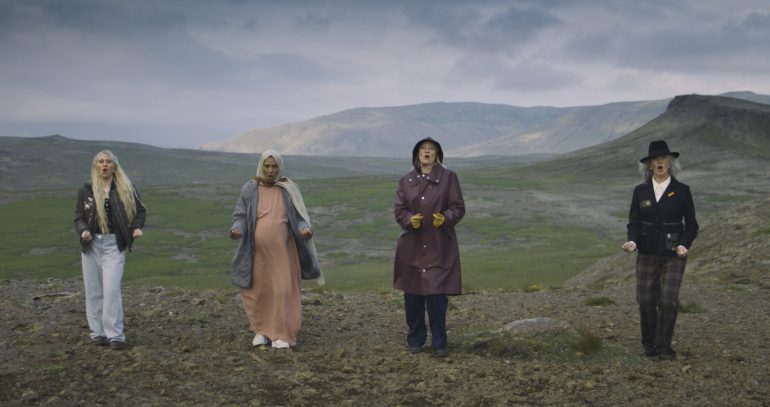
The economic divide is also aesthetic. Wassberg believes only a diminishing group retains the freedom to execute a Nordic visual identity, with personal work squeezed by commercial imperatives. Björgúlfsson, by contrast, says Nordic cinema still enjoys “a big advantage in original thinking”. Filippusson locates the common grammar less in a fixed look than in restraint, silence, imperfection, natural light, and an honest way of photographing people and places. Tómasson adds a material source: Filmmakers raised with the North’s unusual sun path and unstable weather acquire instincts that travel with them.
Winterø is more sceptical of a signature style. He identifies respect for the script and room for actors, but warns that a default combination of handheld camera and minimal lighting can neglect planned movement and purposeful illumination. Global access has dissolved borders around influence; the compelling idea, rather than budget or nationality, now travels fastest.
Their accounts diverge most sharply by national context and career stage. Björgúlfsson says Iceland’s business has been “practically dead for the last two years because of funding problems”. Winterø, already established, still sees healthy Danish funding, active streamers and strong schools, but admits he would be anxious if starting again. Wassberg says cinematographers are hired later than before, leaving visual development to unpaid conversations between contracts.
That makes resilience necessary, though not sufficient. Tómasson advises newcomers to shoot, edit, identify what failed, and repeat the cycle for life. Winterø pairs adaptability with a personal “creative centre of gravity” strong enough to resist hype and social-media envy. Filippusson’s counsel is simpler: Observe people before cameras, and light in the real world, not specification sheets. Across five careers, the technology keeps accelerating; the scarce resources are time, trust and the freedom to choose.
[1] Employment figures for Denmark, Iceland and Norway are drawn from Nordisk Film & TV Fond’s 2025 comparative snapshot. Sweden’s 2023 figure comes from the Swedish Agency for Economic and Regional Growth, while the Finnish estimate derives from a 2023 VTT sector mapping cited by Creative Finland. The figures are the latest available, but are not directly comparable, as they variously measure full-time equivalents, active film workers, company employees, and the broader audiovisual workforce.
RELATED POST TO :
PRODUCTION
/
NORDIC INDUSTRY NEWS
/
NORDICS