Written by: Marta Balaga
09.11.26
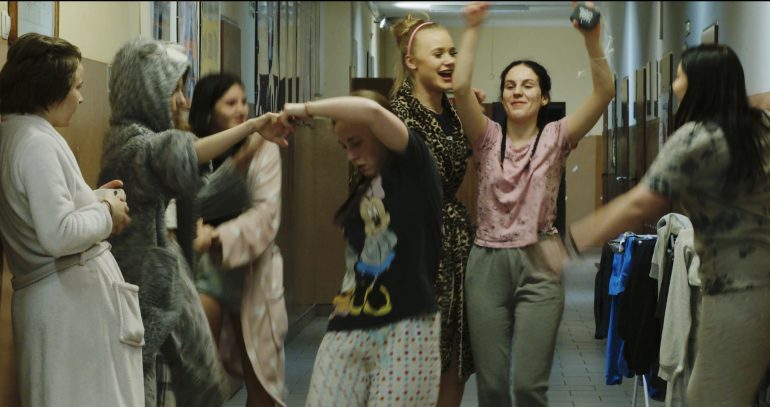
Director Ania Winiarska and producer Melissa Lindgren discuss their documentary Good Girls, awarded at Ji.hlava International Documentary Film Festival.
Awarded for Best Cinematography at the 30th Czech Ji.hlava International Documentary Film Festival – which went to its director and cinematographer Ania Winiarska – Good Girls takes a closer look at a reformatory for teenage girls in Poland. The documentary is top-financed by Nordisk Film & TV Fond.
“It’s such a vivid space, with so much happening around the girls, that I wanted the camera itself to stay still. This way, it feels like we are simply spending time with them,” she says.
“I mostly filmed in long, often wide shots from one spot, and let the girls come and go as they wished. Good Girls is a mosaic of many stories, and following one girl around would have broken that. Working within these limits was also liberating.”
The corridor quickly became “the heart of the film”.
“It’s where the girls gathered in their free time, called their loved ones or waited for a call from home. They talked about their problems, cried, and finally breathed after the strict routine of the day. I placed the camera to one side and simply observed. Soon they grew bored and forgot it was there. That was when the genuine moments came, charged with energy and emotion.”
Winiarska always shoots her own films.
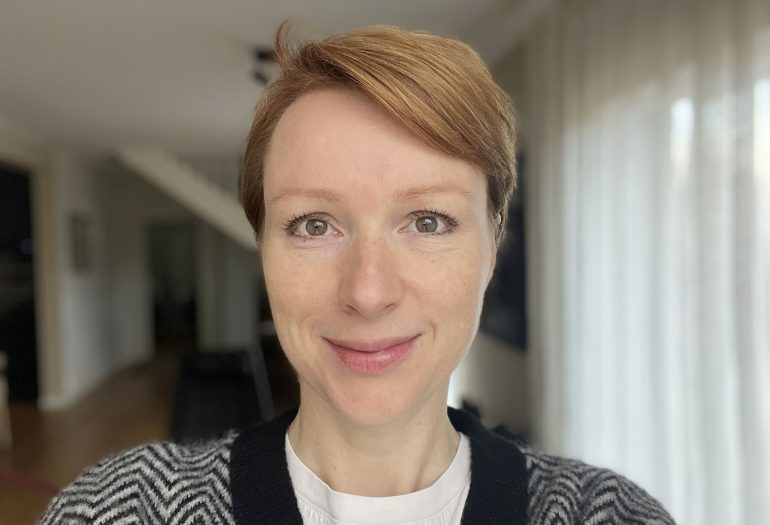
“It suits me. The camera lets me linger on a moment without having to explain why I’m looking. Being there alone, without a crew, made it possible to build trust with the girls. That trust was something I tried hard to protect.”
After the first screenings at Ji.hlava, it was a relief to notice that the international audience understood the film.
“I could hear people reacting not only to the obvious scenes, but also to the subtle moments – a laugh here, a sigh there. Many were surprised they kept such a sharp sense of humour in such a difficult place. That mattered to me. It meant people saw the girls as full of life and wit, not as ‘cases’.”
Others were struck by the dated methods of resocialisation.
“Many wanted to know who decides that a girl ends up in a centre like this, and how long she stays. In Poland, it’s a family court, and the placement has no fixed end date. Some end up in places that cannot give them the help they need,” she says.
“The question I heard the most was: ‘How are they doing now?’ Many are doing their best, but being a young adult on your own is hard. It isn’t rare for girls to become pregnant soon after leaving. I carry their stories with me, and I hope the film allows others to do the same.”
Winiarska is Polish, but based in Sweden, where she found a collaborator in producer Melissa Lindgren.
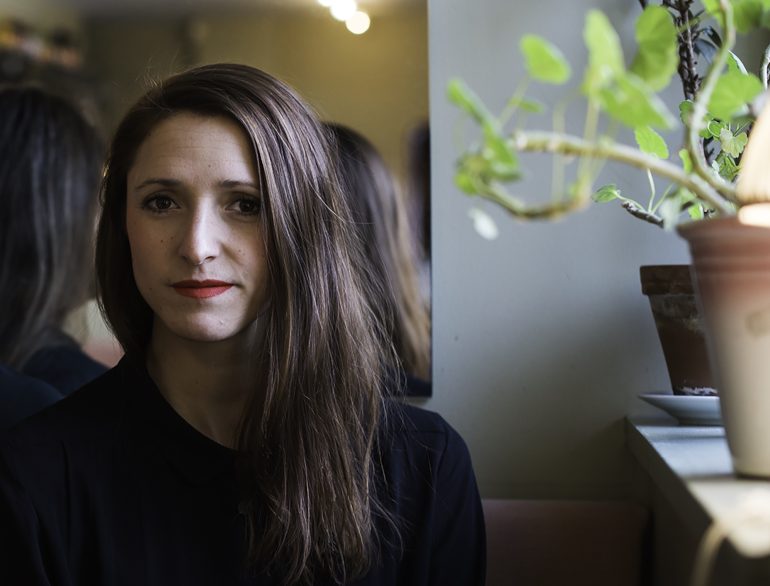
“I’ve known Ania for many years, and I really love her short films. It was a no-brainer to get on board. The development period was long, but I think it benefitted the project. We were patient, and let the film grow,” says Lindgren.
It’s a Swedish-Finnish co-production, with Story AB (led by Lindgren and Tobias Janson) taking the lead. Film i Väst and Finland’s Tekele Productions co-produce.
“Living in Sweden, it felt natural to look for funding here. I’m grateful to have made the film with Story. They are documentary filmmakers and producers with a strong social conscience and a deeply humanistic approach. Our Finnish co-producer, Tekele Productions, is also drawn to daring stories that challenge and move audiences,” says Winiarska.
Sweden has its own version of the system she explores in the film: the SiS youth homes.
“The two are strikingly similar. Young people are placed in closed state institutions after a court decision, with no fixed date for leaving. Both are also heavily criticised. My Nordic collaborators recognised much of it. It isn’t only a Polish story; it’s a story about how societies treat their most vulnerable citizens.”
However, religion was harder to explain.
“In Poland, Catholicism is not only a faith, but also part of our national identity. It lives in how we behave, in what makes us feel guilty, and above all in what is expected of girls: to be modest, quiet and ‘good’.”
Lindgren agrees: The problems shown in the film aren’t just Polish; they’re international.
“In Sweden, we have only recently started recognising how mental health and neurodiversity affect young people who can’t cope with our school structures. We may not be as influenced by religion, but our views on discipline and hard work are quite similar.”
She supported Winiarska throughout a challenging shoot.
“Ania was alone in there, doing both sound and camera herself. We tried bringing in a sound person once, but it really didn’t work with the trust she had built with the girls. Being a one-woman team is not only challenging technically, but also emotionally.”
Working with teenagers can be hard, but “the joys outweigh the challenges”.
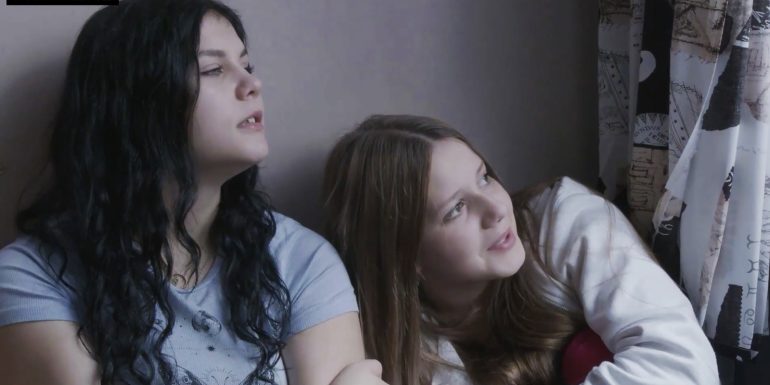
“They are the most sincere and open-minded people I have worked with. It’s such a privilege to be able to document their coming of age. We don’t take it lightly,” she observes, also mentioning her previous film.
“We would never want to release something they are uncomfortable with. Almost Forever (Nästan Forever) by Lia Heitala and Hannah Reinikainen is a good example of that. The teenagers were given cameras to film themselves, and were invited to look at materials together throughout the six-year production. This made them really invested in the film, and ensured they owned their stories. Ania did a similar thing in Good Girls.”
“The girls weren’t allowed to have their own cameras, but she recorded small plays with them while she was there. They all approved the film before we released it. Still, a release form doesn’t matter if somebody changes their mind,” says Lindgren.
“Mutual trust is much more important.”
RELATED POST TO :
AWARDS
/
NORDIC INDUSTRY NEWS
/
SWEDEN
& NORDICS