Subscribe to newsletter

Get the latest film & TV news from the Nordics, interviews and industry reports. You will also receive information about our events, funded projects and new initiatives.

Haugesund 2026 Diaries: what makes Nordic films travel in a tougher market

Romanian distribution of Sentimental Value / Photo: NFTVF
×
NEWS

Haugesund 2026 Diaries: what makes Nordic films travel in a tougher market

Romanian distribution of Sentimental Value / Photo: NFTVF

Prestige still opens doors, but New Nordic Films showed that local positioning, flexible financing and patient partnerships decide how far Nordic cinema can travel.

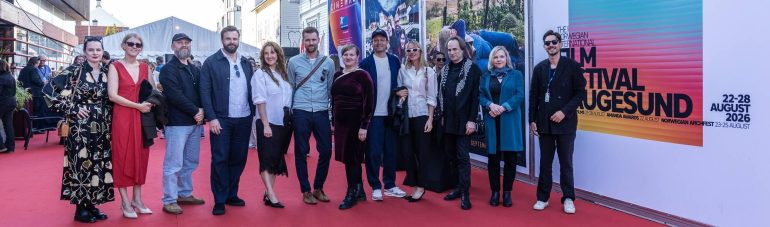
At New Nordic Films in Haugesund, the most useful questions were not whether Nordic cinema enjoys international visibility, but how projects with visibility are created and how the visibility converts into admissions, deals and durable audience relationships.

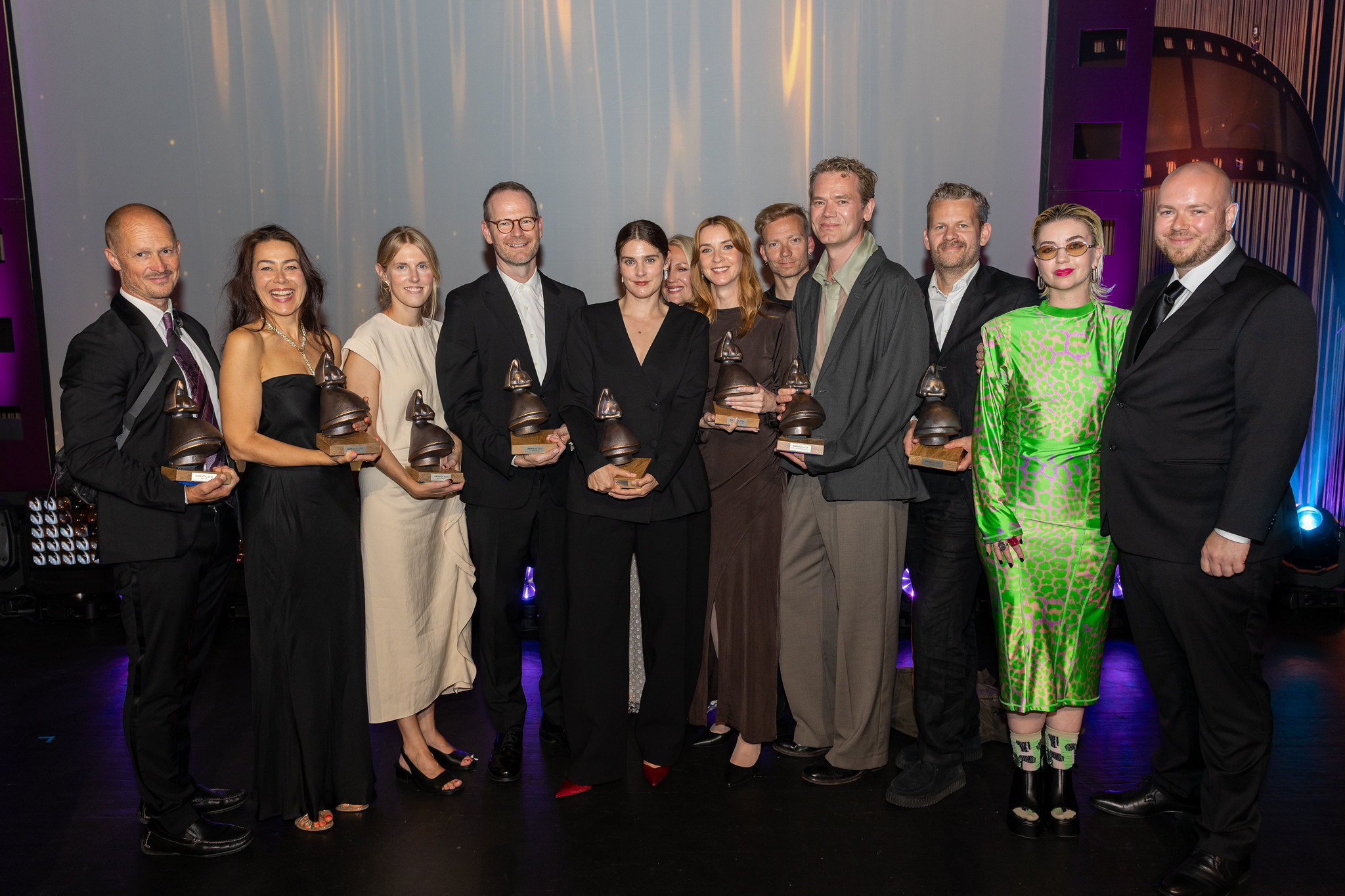
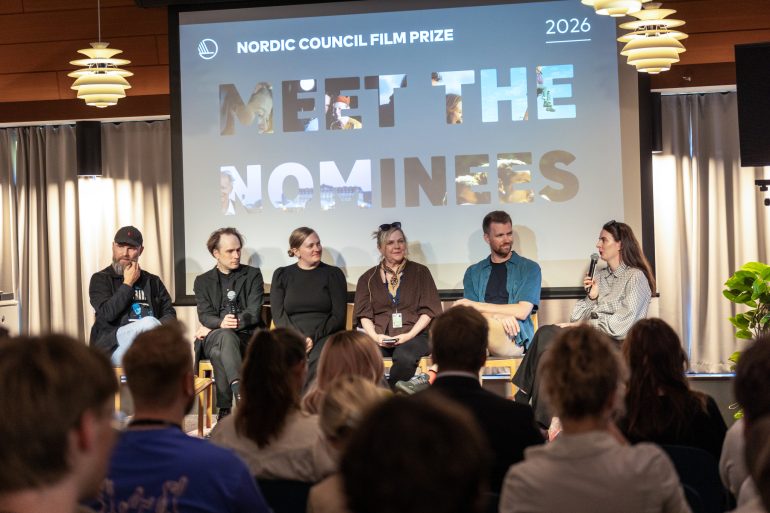
Nordisk FIlm & TV Fond not only presented this year’s nominees on stage (info on nominees: CLICK HERE): August 25, but also arranged meetings between nominees and panel and other talks on Nordic collaboration along the festival, while the pitches of the Nordic Co-production market showed a great variety of new crossover formats.

×
NEWS

Haugesund 2026 Diaries: what makes Nordic films travel in a tougher market

NCFP Nominees in Haugesund / Photo: Grethe Nygaard

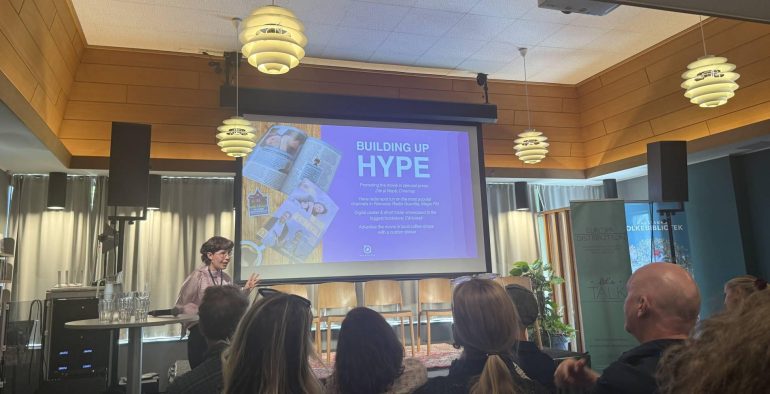
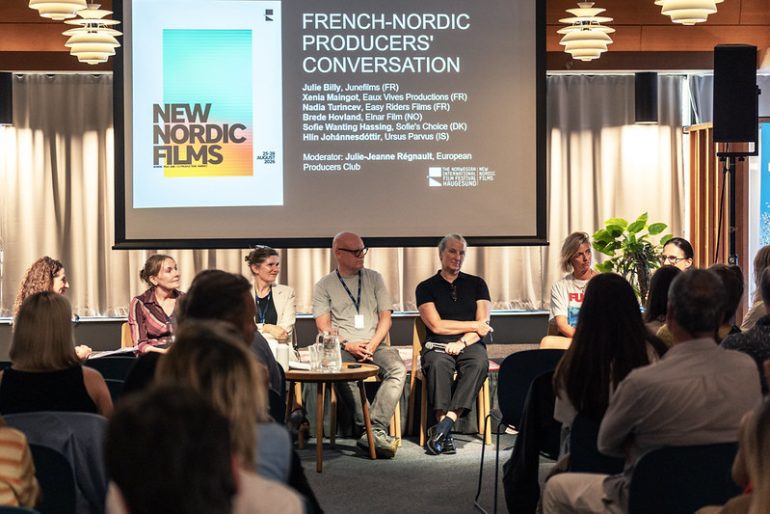
The August 27 Europa Distribution session, built around Joachim Trier’s Sentimental Value (Affeksjonsverdi) and Hlynur Pálmason’s The Love That Remains (Ástin sem eftir er), exposed the gap between prestige and conversion. A French–Nordic producers’ conversation around Morten Tyldum’s Ibelin then shifted the same debate upstream: Before a film can travel with audiences, its financing, rights and production architecture increasingly need to travel too.

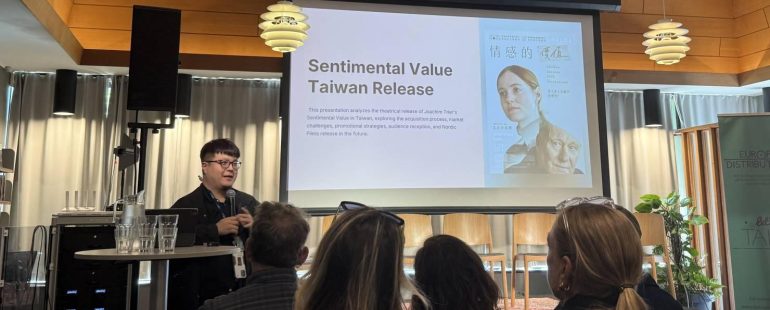
The contrast between Trier and Pálmason was particularly revealing. Sentimental Value arrived with a formidable stack of assets — Cannes recognition, awards momentum, returning audiences for Trier and increasingly recognisable actors — but its distributors still treated each territory as a separate problem. Taiwan’s Swallow Wings used limited-edition posters and collectibles to keep the theatrical conversation alive over several weeks. In the Czech Republic, Aerofilms built events and partnerships around a distinct Scandinavian identity, from design to food, and benefited from cinemas willing to sustain the film beyond opening week. It reached around 36,000 Czech admissions, whilst Taiwan delivered about 22,000.

×
NEWS

Haugesund 2026 Diaries: what makes Nordic films travel in a tougher market

Sentimental Value Taiwan release / Photo: NFTVF

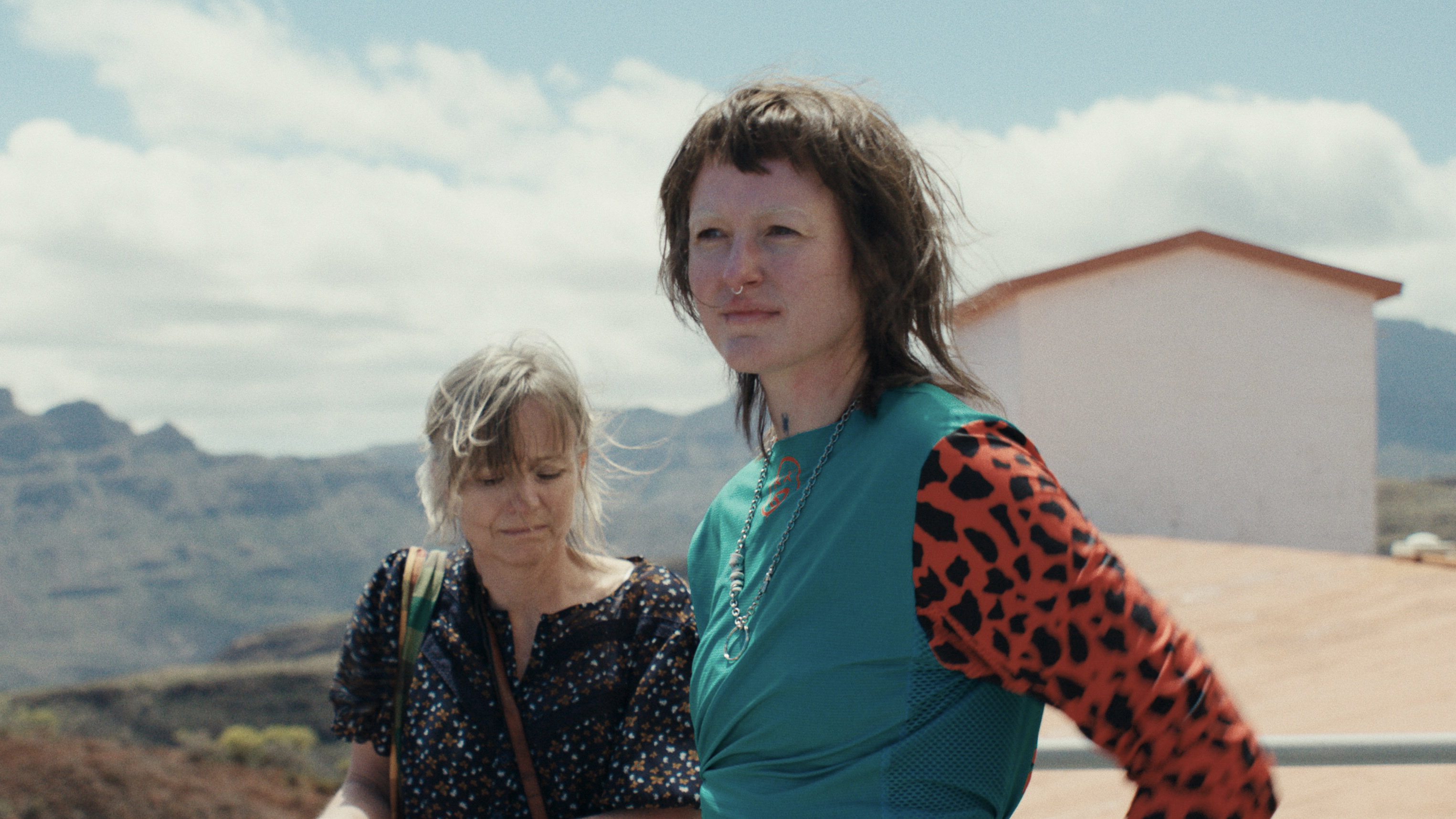
The Love That Remains had auteur prestige but fewer immediately legible hooks. Jour2Fête had already released Pálmason’s Godland (Vanskabte Land) in France, and acquired his follow-up at a very early stage. “We’re following this guy, and we’re following your partners wherever you’re going next,” acquisitions executive Johanna Mayer recalled. That particular sentence captures one of independent distribution’s less visible logics: Buyers are not simply selecting isolated films, but investing in filmmakers, producers and sales relationships over time. Yet continuity of partnership does not mean continuity of audience. Aerofilms tried dog-friendly screenings, a therapist Q&A and Icelandic-themed collaborations around The Love That Remains, but recorded fewer than 7,000 Czech admissions. The same distributor that could turn the “Scandinavian vibe” into a strong selling point for Sentimental Value could not manufacture a mass audience for a more radical film.

Ibelin offered the production-side equivalent of that lesson. Einar Film’s Brede Hovland described the task less as finding one decisive financier than managing a “quite extensive puzzle of money coming in”. The production combines partners, incentives and work across several European territories. More interesting than its scale is the underlying flexibility: The French–Nordic discussion repeatedly returned to cash flow, territorial spending rules, minority co-production and the ability to place elements of a production where they make creative and financial sense. In other words, international reach is no longer something bolted onto a Nordic film at sales stage. It can be engineered into the project from development onwards.

×
NEWS

Haugesund 2026 Diaries: what makes Nordic films travel in a tougher market

French Nordic Producers Conversation / Photo: Grethe Nygaard

That puts the two distribution case studies in a different light. Sentimental Value succeeded not because “Nordic” was a self-executing brand, but because recognition could be translated into local rituals, release timing and audience familiarity. The Love That Remains showed the limits of the same label: Even an admired director and established distributor relationship cannot erase the difficulty of positioning a demanding work. Mayer observed that Nordic cinema carries something of a “quality stamp” in France; Hungarian distributor Zsolt Almásy similarly argued that local audiences respond to a recognisable Nordic sensibility, but major prizes, familiar actors or festival exposure are often still needed to break through. What travels, then, is not a fixed Nordic identity, but a bundle of signals that distributors must rearrange for each market.

This is also where the role of institutions and long-term infrastructure becomes visible. Nordisk Film & TV Fond, a supporter of New Nordic Films, top-financed both Sentimental Value and The Love That Remains, while the Haugesund platform itself puts producers, sales agents, distributors and festival programmers into the same pipeline well before release. The point is not that support guarantees export success — the two films demonstrate the opposite — but that it gives ambitious work more routes towards audiences. The commercial burden then shifts to positioning, timing, partnerships and persistence.

That infrastructure also extends to talent and collaboration beyond individual projects. The Next Nordic Generation strand showcased graduation films from Nordic film schools, with Clara Vida’s Groupies taking the main award and André Vaara’s Sister of Mine (Syster min) receiving an honourable mention. Nordisk Film & TV Fond also used Haugesund to bring together the filmmakers behind this year’s Nordic Council Film Prize nominees through presentations, meetings and a panel exploring their markedly individual creative processes. Filmmakers including Búi Dam, Lauri-Matti Parppei and Maria Eriksson-Hecht, alongside producers Anton Máni Svansson and Ilona Tolmunen, stressed that Nordic co-production is not simply an economic mechanism: Finding the right talent across the region can strengthen a film artistically and seed future collaborations. In a relatively small production ecosystem, that circulation of people and ideas may be as important to international reach as the circulation of financing itself.

×
NEWS

Haugesund 2026 Diaries: what makes Nordic films travel in a tougher market

Meet the NCFP Nominees 2026 / Photo: Grethe Nygaard

Moreover, the projects on offer suggested that the next Nordic wave is responding with breadth rather than safety. Among the bolder genre-facing propositions were the automation comedy Joe’s Assignment (Oppdraget), Finnish gaming tale Elektra, zombie family drama Anathema, Nataša Urban’s motherhood horror Vagina Dentata, and Vegard Dahle’s zombie comedy Grandmonster (Bestemorder), which won the Nordic Co-Production Market’s Best Pitch Award. Animation was similarly varied, from the more idiosyncratic All the Softness in the World (Toute la douceur du monde), Bear Park (Karhupuisto) and Mum is in Puberty (Mamma är i puberteten) to more overtly commercial family propositions such as ViQueens and Millie and the Secret of the Crocodile (Millie och krokodilens hemlighet). That mix may be the clearest answer Haugesund offered to the export question: not one Nordic formula, but multiple entry points for buyers and audiences, combining auteur identity, genre hooks and accessible storytelling.

RELATED POST TO : FESTIVALS / NORDIC INDUSTRY NEWS / NORWAY & NORDICS