Written by: Ninna Bengtsson
23.02.26
As YouTube and AI are surging while the traditional film and TV-industry is in turmoil, new approaches are crucial - but what if big platforms will spread unwanted ideological or cultural bias in the future?
“YouTube is no longer ‘another place to show content’ – it is the infrastructure,” says media analyst and columnist at the Danish newspaper Politiken, Timme Bisgaard Munk, adding:
“The traditional film industry still thinks in terms of ‘adapting upwards’: take something cheap from the Internet, give it a budget, turn it into a proper film. But the YouTube viewer’s relationship to content is fundamentally different from that of the cinema audience. They expect authenticity over production value. Parasocial intimacy over narrative arcs. Continuity over closure.”
The entertainment industry is facing a paradigm shift, and the numbers speak for themselves. Around 2.5 billion users access YouTube every month, and one billion hours of video are streamed daily on traditional TV sets. Among Americans aged 18–34, 90 per cent watch YouTube every month – a far greater reach than any TV network has ever achieved. And one in five American teenagers say they are almost constantly on YouTube and TikTok, according to a study by Pew Research Center conducted among 1,458 young people aged 13–17.
The development looks similar in the Nordic countries. In for instance Sweden, 8 out of 10 persons use YouTube.
“The creator economy is changing from being driven by young creators who grew up with YouTube to becoming mainstream TV. In Scandinavia, the same thing is happening as in the US, where most YouTube viewing now takes place on big-screen TV sets and other devices. The fastest-growing demographic on YouTube is actually people aged 65 and over,” says Danish producer, writer and media adviser Keld Reinicke, adding:
“What we will probably see in the next couple of years is that public service broadcasters in Scandinavia will need to move their content onto YouTube. I don’t think they have a choice.”
London-based analyst Guy Bisson at Ampere Analysis clearly diagnoses a split and a fundamental shift in the global entertainment system: Traditional business areas such as linear TV and cinema are struggling to compete, while emerging sectors – streaming and online video platforms like YouTube and TikTok – are flourishing.
“It is a dramatically altered landscape,” says Timme Bisgaard Munk.
He points to several examples of formats in what he describes as the new ecosystem. For instance hybrid formats where the platform shapes the narrative from the outset. One example is a Danish true-crime series that began on YouTube Shorts, built an audience through snackable episodes, and was then pitched to traditional platforms.
At the same time, interest in microdrama has exploded. These are films with episodes shorter than two minutes, designed for binge consumption. A study by Media Partners estimates that short-form video generated revenues of nine billion dollars in China last year. Outside China, revenues already reached 1.4 billion dollars in 2024. And with AI as a tool behind the scenes, an entirely new world is opening up. So what does the industry think?
“Publicly: ‘We embrace digital transformation and the creator economy.’ Privately: panic. Film funds don’t know how to evaluate applications where half the budget goes to a YouTuber with 500,000 subscribers and zero film experience. Distributors don’t know what to do with content that’s already free on YouTube. Cinemas don’t know how to compete with the screen in your pocket. But the smartest players – A24, Neon, Nordic boutiques like Nordisk Film – are experimenting. They’re not buying finished content; they’re buying access to audiences and perspectives film school can’t teach,” says Timme Bisgaard Munk.
Many in the industry understand that change is necessary. Marianne Furevold is Head of Drama at Norwegian public service broadcaster NRK and was a producer on Skam, the teen drama series that aired from 2015 to 2017.
If a creator on YouTube approached you with something they had made that was very popular, would you be interested in picking it up for NRK?
“If a storyteller comes to us with something that has been developed on other platforms, such as YouTube or TikTok, and it is of high quality and has the potential to become something bigger, then I’m absolutely open to that.”
YouTube is now the undisputed star – but Facebook, TikTok and Instagram, which is preparing to test TV formats along with gaming platform Roblox, are rapidly gaining ground. Several stakeholders interviewed by Nordisk Film & TV Fond agree that a new mindset and greater adaptability are required. Keld Reinicke argues that the traditional way of funding must change to enable young creators and talent on non-traditional platforms to get financing for their projects.
Could one imagine a different form of ”film funding”, focused on developing cross-media business models as a launchpad for primetime TV drama and/or theatrical releases?
“Absolutely. I think the core issue is understanding that Nordic audiences have moved. What complicates matters is that the old audience hasn’t. So we need to decide: Are we making films for older viewers, or are we taking half the money and saying, ‘this is for younger audiences’? And by younger, I mean under 50. We need to rethink distribution,” says Keld Reinicke.
According to Reinicke, the solution is not to stop funding traditional platforms, but to divide resources between both.
“We need to give people who release a film on YouTube the same level of funding as if it were premiering on SVT or elsewhere. We need to be far more open to the platforms where Scandinavians will be in five or ten years. We have money for cultural audiovisual production in Scandinavia, but we are using them in the wrong way compared to where the audiences actually are,” Reinicke says.
“If you think you’re going to shift 20 per cent of your budget in this direction, I tell the companies I speak to: Double it. Because things are moving so fast.”
At the same time this “new world” is not without problematic grey zones. YouTube holds a dominant position, and belongs to American high tech-giant Google. Google places its own advertising, but also acts as an intermediary between advertisers and those offering advertising space online. The discoverability and ranking of content are driven solely by user interest, according to the company, but this cannot currently be independently verified.
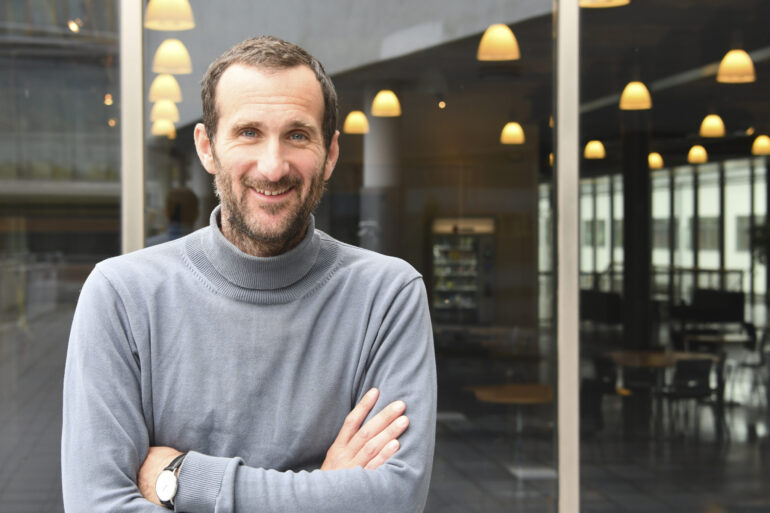
”The owner of the platform ultimately dictates the conditions for what happens there. It could mean that content that should have gained traction, content that is important in a particular country, does not get the visibility it deserves. We also do not fully understand how social media algorithms function or what agendas may influence them,” says Fredrik Stiernstedt, Professor of Media and Communication Studies at Södertörn University, Stockholm, adding:
”There has been considerable attention around Elon Musk, for example, and the broader network around him that promotes a radically right-wing political agenda. These high-tech companies are interconnected in various ways. YouTube may not operate in that way right now, but there is no guarantee that it will not prioritise content with a certain political, ideological or cultural bias in the future. That naturally creates concerns”.
He also points to geopolitical and security-policy risks involved in moving for instance public service content to external platforms.
”One key advantage of public service is control over its own infrastructure, including digital distribution. No external actor can simply shut it down. That autonomy is lost if public service becomes overly dependent on external platforms. There is a geopolitical risk, particularly in times of crisis or conflict. Finally, there is a democratic dimension. Public service operates at arm’s length from politics, but funding and overarching mandates are determined through democratic processes. Citizens ultimately influence its scope through elected representatives. That democratic control does not exist when it comes to privately owned global platforms such as YouTube.”
AI is of course the biggest elephant in the room. Alongside microdrama, Japanese manga and anime have also exploded in popularity in the Nordics.
“This gives Scandinavia a unique opportunity. If you provide the right AI funding now, anime is where you can move fastest and save the most money. You can retain Scandinavian storytelling while doing things that were impossible to fund just a few years ago because animation was so expensive.”
Both Keld Reinicke and Timme Bisgaard Munk are sceptical that AI-generated films with AI actors will transfer to cinemas and television on any significant scale. Instead, AI is seen as a development tool – for instance for storyboarding, concept art, and dialogue punch-ups.
“YouTube is already flooded with AI-generated content: faceless channels, text-to-speech narration, automated compilations, AI avatars. Many rack up millions of views. But can this become ‘real’ film? No – and that’s a good thing. AI content on TikTok and YouTube is optimised for watch time and algorithms. It has no author, no vision, no lived human experience. It’s information slop designed to fill feeds,” says Timme Bisgaard Munk.
People still want premium storytelling, locally produced content and high quality productions. The opportunity lies in adapting for the audience and understanding when to use which platform during development, according to Timme Bisgaard Munk.
“Nordic noir series could start as YouTube true-crime reconstructions. Danish comedians could test sketches on TikTok before pitching a TV series. But the industry must accept that development no longer happens behind closed doors.”
RELATED POST TO :
DISTRIBUTION
/
NORDIC INDUSTRY NEWS
/
NORDICS