Written by: Marta Balaga
07.04.26
Finnish and Norwegian film makers discuss the dilemmas and the future of Nordic genre.
In Finland, there are “extremely interesting things cooking at the moment,” says Night Visions’ director Mikko Aromaa: from Hanna Bergholm’s Nightborn (Yön lapsi) to Markus Lehmusruusu’s sci-fi dramedy The Squirrel (Orava), Ilja Rautsi’s Red Snow, and Elin Grönblom’s killer mosquitos thriller Bloodsuckers.
“At the same time, the international success of The Twin and Hatching (Pahanhautoja) did not result in a flood of genre-related features with a financing element from the Finnish Film Foundation. But again, 2026 is an exceptional year,” he says.
“On top of all that, there is also some vibrant movement on the short films front. As we so well know, they are often sowing the seeds of features.”
Jussi Rautaniemi, an editor turned director, got the funding for Strive – shown at the Helsinki-based festival – just before budget cuts. Starring Laura Birn, it was produced by Bufo.
“It was already challenging at that point, and I imagine it has become significantly more difficult now.”
He got the idea for the film, about people escaping reality, during the pandemic.
“I guess that time made me reflect on my life. I had done smaller indie projects before, but this is my first professionally produced film. It took some years to get it together – partly because we didn’t get financing at first, and partly because I was fortunate enough to work as an editor all the time.”
The story is inspired by his youth, mixed with his love for sci-fi.
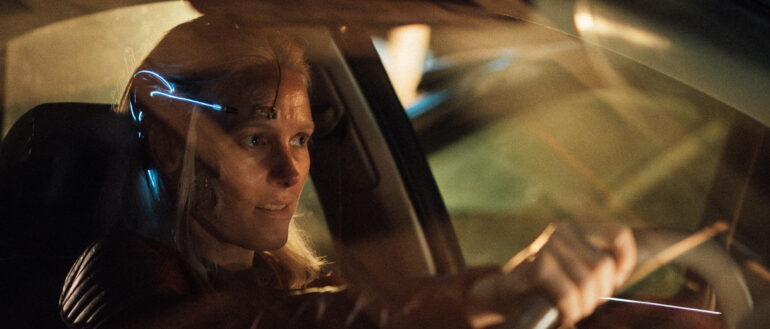
“By young people joyriding, which still happens and often ends badly, and the endless trucks heading towards the Russian border in my hometown. After editing so many Finnish films and series, it felt good to try to do something a bit different. Somehow, that turned into a sci-fi racing film, which was a bit of a surprise – even to me.”
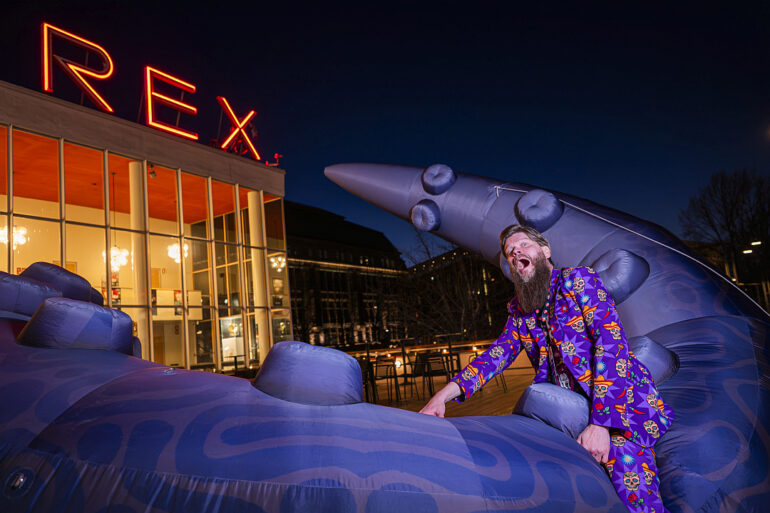
Night Visions also unleashed Kraken onto the audience, literally and metaphorically, with massive tentacles spreading out of the screen into the cinema. Directed by Pål Øie, Kraken was produced by Einar Loftesnes of Handmade Films in Norwegian Woods.
“The situation for Nordic genre films right now is honestly quite complex, and, as a producer, I think about it a lot. In Norway, it has become increasingly difficult since the NFI restructured its support system in 2021. Previously, genre films could be financed without upfront support, relying instead on automatic box-office bonuses after release. That door is more or less closed now, and many of the genre directors are working abroad. That’s talent and culture leaving the country,” says Loftesnes.
“The frustrating part is that genre is actually performing. The appetite is real – our films travel the world in the Norwegian language, rooted in Norwegian nature and Norwegian stories. That, to me, is proof that local is global. The commercial argument for genre is right there. The support structures just need to catch up.”
If Kraken – a commercially minded genre film rooted in Norwegian folklore and delivered in Dolby Atmos, Dolby Vision and 4DX – performs abroad, it can prove that “Nordic genre can be a commercial proposition, not just a festival curiosity. That’s the argument investors and distributors need to see made in numbers, not just in ambition.”
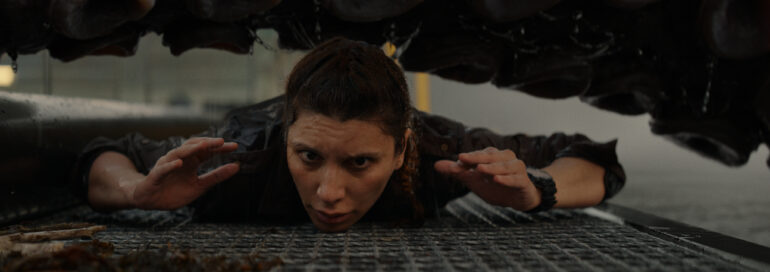
Animator and illustrator Tomi Malkki, who brought Honey, I’m Home!, has been struggling to get the money to make genre-related animation. “When the script goes too deep and dark, in Finland the grants go in a different direction,” he says. But that didn’t stop him.
“I made my last three short animations without any money. I had to do everything myself, which tells you a lot about the genre film situation in Finland.” Still, at Night Visions, he showed his film in a sold-out room.
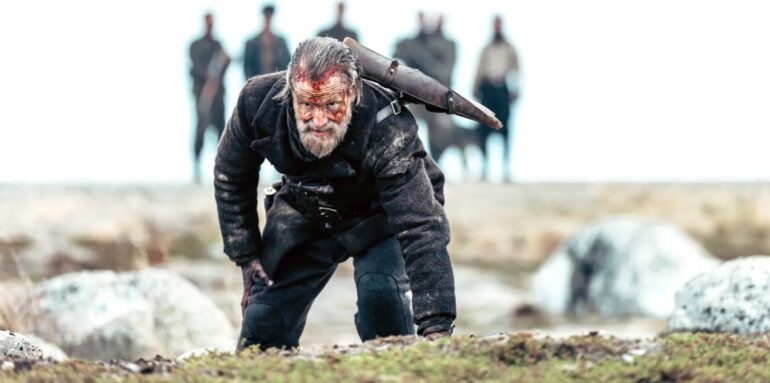
Antti Tuominen, who directed Timo – The Lord of Potato, insists: the situation in Finland is improving when it comes to genre.
“We have Finnish horror and action films that attract mainstream audiences, even internationally. Ideas from genre films are being implemented in modern dramas as well. I’m feeling hopeful for the years to come.”
His film was self-funded, however, and shot…in his family’s old potato pit.
“I used the location as a starting point, and created the whole story around it. It’s a horror comedy where local farmers want to sacrifice a young woman in order to secure a good crop. I love playing with different genres, and try to add absurdity in everything I create.”
With Finland going back and forth about culture cuts, genre filmmakers are worried as well.
“It’s a relevant fear. When times are tough, financiers want to avoid risks, and play it safe. It’s the same in every industry. Genre could be seen as a risk compared to basic dramas and comedies, but the real risk is to play it too safe – in the long run, we can lose the audience completely. Cinema should be all about spectacle. People want to see something new.”
The Sisu films by Jalmari Helander “are the best thing to happen in the Finnish film industry for some time”.
“It’s a perfect combination of brutal action, captivating storytelling and dark humour. They are born from Finnish mentality, but work for international viewers. That’s a winning formula right there!”
Is there still a genre community? Yes, but it can usually be found on the festival circuit, says Loftesnes.
“Events like Night Visions, Nordic Genre Invasion, Ramaskrik, Blodig Weekend, and Monsters of Film are what holds the Nordic genre world together. These are the spaces where real conversations happen, where co-productions begin, and where audiences who love genre get to celebrate it. The community is real and passionate – it’s the institutional support that’s lagging behind.”
Tuominen felt “warmly welcomed” at Night Visions.
“Industry veterans gave me positive feedback on my work, and were genuinely interested. And it’s just plain lovely to talk about life and films in the company of fellow film lovers.”
Rautaniemi adds: “Events like Night Visions provide a space for films that sit outside the mainstream. At the same time, I wouldn’t say there’s a strong, clearly defined genre film community in Finland. The overall film scene is quite small, and genre films tend to remain marginal.”
Having the festival twice a year in Helsinki and branded screenings associated with the event help keeping the community active, says Aromaa.
“The brand is constantly out there in some shape or form, which of course not only serves the existing, fairly active community base, but also helps growing it.”
He adds: “I do like to think that horror, fantasy, sci-fi, action, and thriller are the genres that travel and cross geographical boundaries the best. Currently, it’s still the grim reality that they are perceived as the underdog genres.”
“Kraken’s box office success in Norway is fantastic news for all of us genre supporters in the Nordic region,” he observes.
“It’s great that such a straightforward genre film got financed on the scale it did, without a need to pretend it would have the ‘elevated’ approach to the subject. It’s folk horror meets monster film tradition, with a little bit of disaster film aesthetics thrown in, full stop.”
“It would be great to see the independent approach to filmmaking have its footprint grow in every Nordic country, have people not overlook the importance of short films, and have the funding entities increase the support of genre related content. That’s what the audiences from Asia to North America are looking forward to getting from us. Nordic genre content is a brand in itself, so the international audiences should not be let down.”
Night Visions Film Festival wrapped on 29 March, 2026.
RELATED POST TO :
FESTIVALS
/
NORDIC INDUSTRY NEWS
/
FINLAND