Written by: Geoffrey Macnab
10.04.26
Different generations of Nordic filmmakers have wrestled with the same dilemma: Should they be making local films in local languages for local audiences, or be thinking about cinema in international terms? What, if anything, has changed now?
At a panel last November at an EU Culture meeting in Copenhagen, Tine Fischer, CEO of the Danish Film Institute, noted that Europe was producing around 2500 films a year, and “that 70% are only screened in their national territories”. She painted a picture of an industry making many films on small budgets “that do not meet audiences”.
“We are at a moment in time, in Europe and elsewhere, when collaboration and exchange is not only a possibility, but a true necessity,” Fischer comments. “Europe and the Nordics must strengthen our global as well as national positions, and a part of that process has to do with how we collaborate, not only financially, but more so artistically.”
The DFI CEO believes it is only natural for the best talent in any sector to explore opportunities beyond home borders.
“We would never ask scientists, top elite sports performers, restaurant chefs, or leading voices in any other sector to stay strictly at home.”
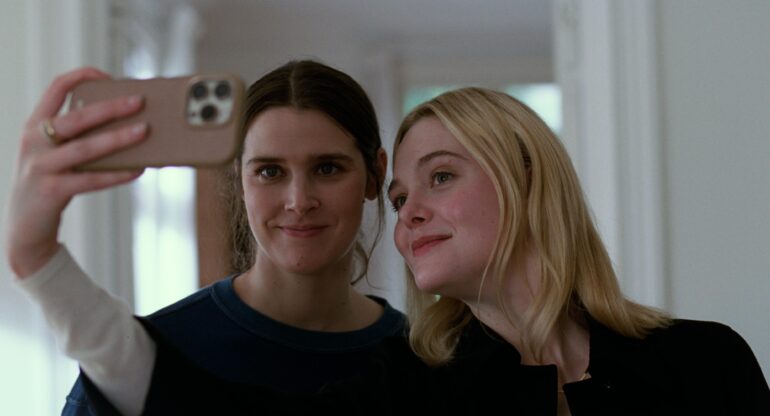
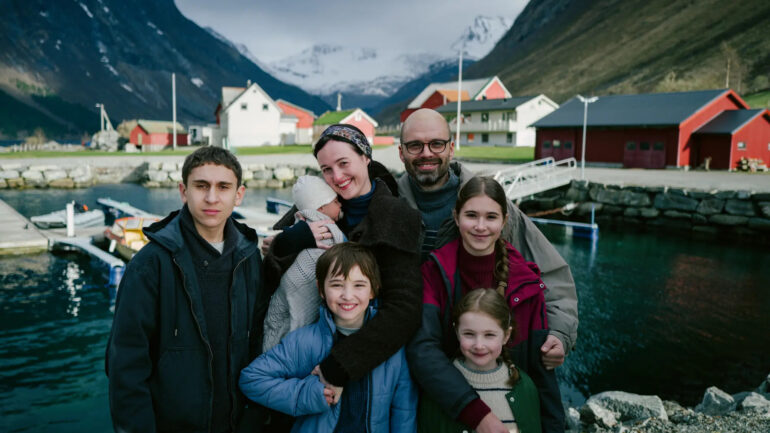
Nordic cinema’s new international flavour is already apparent. Joachim Trier’s Oscar winner Sentimental Value (Affeksjonsverdi) co-starred Hollywood’s Elle Fanning. Swedish double Palme d’Or winner Ruben Östlund’s latest feature The Entertainment System Is Down has a cast led by Keanu Reeves and Kirsten Dunst. At the Berlinale earlier his year, Norwegian-based director Dara Van Dusen was in the official selection with her western A Prayer For The Dying starring John C. Reilly. Another of the most anticipated new Nordic films this year is directed by a Romanian: Cristian Mungiu’s Fjord co-stars Sebastian Stan from Captain America.
Some warn, though, that a policy of “fewer but bigger” risks straining out the local flavour and compromising true Nordic identity. They point to the success of the Dogme95 movement in the late 1990s, when low budget, intensely local films from Lars Von Trier, Thomas Vinterberg, and Lone Scherfig sold all over the world - and they warn that Vinterberg came a cropper when he made his big budget English language epic It’s All About Love, (2003), which cost a reported $10mn and earned less than $500,000 worldwide.
“I am old enough to remember when it totally didn’t work, and when someone coined the phrase ‘Europudding’, Kim Foss, CEO of Camera Film in Copenhagen, says of previous attempts at Nordic blockbusters. However, he also cites Swedish director Jan Troell’s 1996 biopic Hamsun, starring Max Von Sydow, as an example that clicked. “The actors were Danish, Swedish and Norwegian, but somehow it felt completely right. It worked, and you didn’t sit there alienated by the language.”
Foss believes that “what was really bad in the early years, works excellently now”, but also notes that “these English language titles with Nordic actors don’t necessarily have an advantage in the Nordics. It still depends on the films as a whole – not just star wattage.”
Leading Swedish exhibitor Peter Fornstam, owner of Svenska Bio, argues: “There has been a change in culture due to the streamers - and the anxiety about something which is non-English and non-local has lowered, because people are much more used to seeing content in other languages.”
Fornstam agrees with the assumption that there are too many films being made, and that more money should be spent on fewer films. He also thinks that Nordic films can co-exist in the market with those from Hollywood. “My sense is that you are not competing with the majors. There is room for everyone now, especially as we have had a lack of American films. For me, it’s not either or - it is both."
Fischer herself believes that lower budget projects remain a crucial means for “fast track, risk willingness and a true innovative approach towards artistic processes”.
“Young directors also need experience. You cannot count on the first or second film being a blockbuster - but you have to make the first or second film in order to make the third film, which will become a blockbuster, hopefully,” Foss states.
One figure well placed to comment on both sides of the debate is Norwegian producer Dyveke Bjørkly Graver, who co-founded Oslo-based Eye Eye Pictures with Andrea Berentsen Ottmar in 2022, and whose credits include Sentimental Value, A Prayer For The Dying, Fjord, and The Entertainment System Is Down.
As Graver points out, for a western like A Prayer For The Dying, there was little choice but to think internationally.
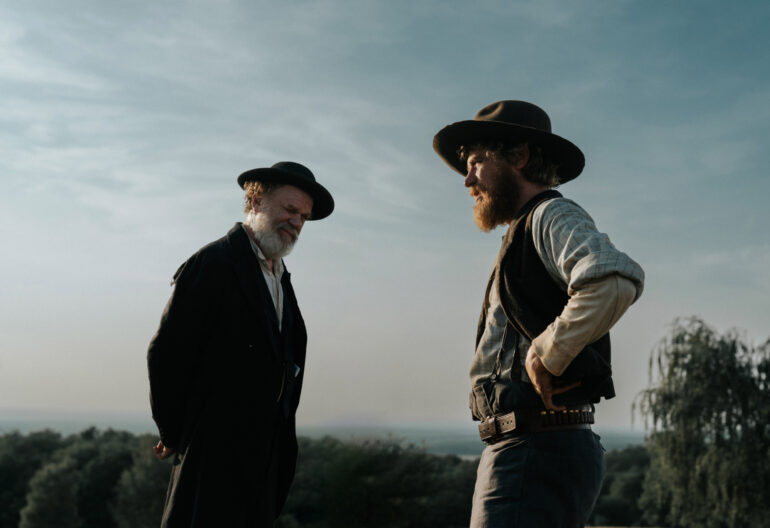
“I recognised from the get-go, when I read the script, that it would be really, really hard to finance out of Norway because it’s in the English language, and I don’t think the [Norwegian Film] Institute is that keen on doing a lot foreign language films. They tend to want to support more local stories. But I just couldn’t say no…”
Graver’s motivation for supporting the project was simply that she believed so strongly in Van Dusen’s vision.
“This is how we built Eye Eye. Andrea and I are connected to a lot of great talent that wants to do feature films for cinema for an international audience, not only Norwegian stories, but also local stories that can travel,” the producer says. “We also saw that we needed to look into having projects that could attract international financing, so that we would be able to compete in the market.”
A Prayer For The Dying had a budget of around €5mn. “And when you reach €5m and above, it is very difficult to do the film without any names attached.”
This turned out becoming a five country co-production, shot in Slovakia with the tax incentive there, and soft funding from several other territories, including Greece, Norway and the UK.
Graver doesn’t feel that making it in the English language will make it an easier sell for local audiences. However, outside Norway, in Sweden, Denmark, Finland, and Iceland, it is hoped A Prayer For The Dying will be regarded by audiences in the same light as any other English language “film of its calibre”, and will cut through in a way that other Nordic films often simply don’t.
Debates about whether Nordic filmmaking should be locally or internationally focused are bound to continue. The DFI’s Fischer concludes that both approaches have their place. “We try to make sure that there are projects made on very different budgets, from a very low budget to major international ones,” she says. “We need to build and develop a system that takes our talents to the highest level possible – and for some this level of excellence has to be reached by way of international collaboration.”
That’s why the DFI supports everything from Dogme25 to Nikolaj Arcel’s Hans Christian Andersen project, My Fairytale Life, which, Fischer says, “is ambitious in artistic approach, and in a Danish context one of the highest budgets we have seen – and supported.”
RELATED POST TO :
DISTRIBUTION
/
NORDIC INDUSTRY NEWS
/
INTERNATIONAL