Written by: Moa Aulanko
15.01.26
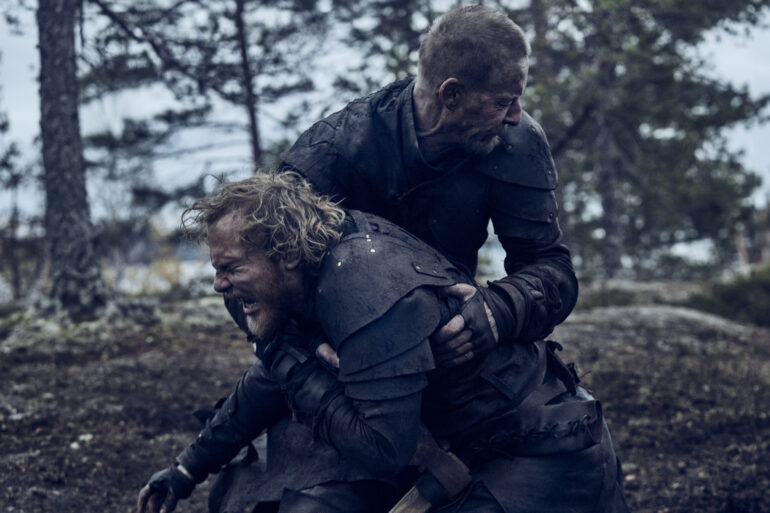
Director Antti J. Jokinen and lead actor Elias Salonen talk about the process and their relationship to the national epic’s cursed anti-hero Kullervo.
The Finnish national epic Kalevala inspired J.R.R. Tolkien in his creation of The Lord of the Rings, and he even published a work on Kalevala’s young anti-hero Kullervo. The same story now comes to life from a national perspective, as director and writer Antti J. Jokinen’s adaptation of Kullervo’s story finds its way to the silver screen.
Son of Revenge – The Story of Kalevala (Kalevala – Kullervon tarina) is Jokinen’s sixth feature. The script was developed by Jokinen together with Jorma Tommila. The film’s themes deal with revenge, the painful relationship between a father and a son, and how hate can destroy a person.
Jokinen has previously adapted films from novels, including Purge (Puhdistus, 2012) based on Sofi Oksanen’s award-winning book, and The Midwife (Kätilö, 2015), adapted from Katja Kettu’s bestselling work. The national epic of Kalevala dates back to times before Christianity reached Finland. The epic poems were published in 1835 by author and linguist Elias Lönnrot, who had compiled the material from oral sources.
“I think that it was less of a challenge to adapt a national epic to a film, compared to a novel, because it’s less concrete – Kalevala just feeds your imagination, so it’s easier to take liberties.”
A main theme in Son of Revenge – The Story of Kalevala is, naturally, revenge:
“It’s probably one of the oldest and most used themes in films, but it works. It was important for me to also study the father-son relationship. How important is it to us who our biological father is, who's the father who has raised us, and did he raise us with love? And from there, throw the characters into a grey zone where the motives for your revenge or your actions are not very clear, you could go either way. And to me, that can create an interesting film.”
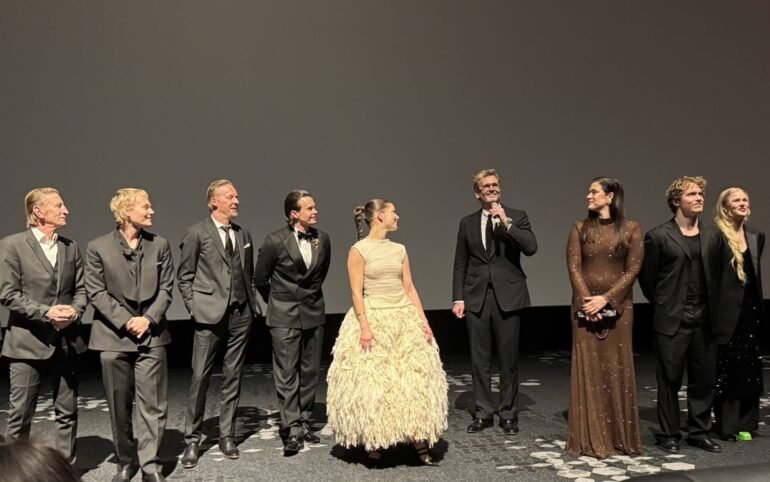
Jokinen did extensive work with the casting, and in the film, he combines old and new faces from his earlier projects. Eero Aho, who plays the father Untamo, and Krista Kosonen, who plays the wife of blacksmith Ilmarinen (Olli Rahkonen), are both familiar actors from Jokinen’s previous works. But for the lead role Kullervo, he wanted someone new, and ultimately cast Elias Salonen:
“Elias had a unique sensibility to him that I was drawn to. When creating a character who is very angry, I really wanted to find someone that you would still feel for and understand.”
Before making final casting decisions, Jokinen works with actors for up to an hour to evaluate how they respond to his directing, and interpret their characters, and conducts additional sessions to assess the chemistry between the actors. Salonen submitted a self-tape and participated in four casting sessions, resulting in his first lead role in a feature film:
“I’ve never done a character that has so big emotions in almost every scene, and I realised that my workday starts the second I open my eyes in the morning. It’s a very well written character and things happen to him, and as an actor you love that you have things to act – Kullervo is silent, dark, and has a lot of trauma.”
Extensive preparations went into the character building. Salonen started working out with a personal trainer a year before the shootings started, and went on a diet, all to look as much as possible like a Finnish man in the 1100s. He also had to learn sword-fighting and practise difficult fighting choreographies. To him, that was much harder than learning the text, and required a lot of patience.
“It means a lot that Kullervo is my first lead role. It is our national epic, and I must say that I felt quite a lot of pressure doing the role, so I needed to do some extra work to be able to focus on the right things and not the outside expectations.”
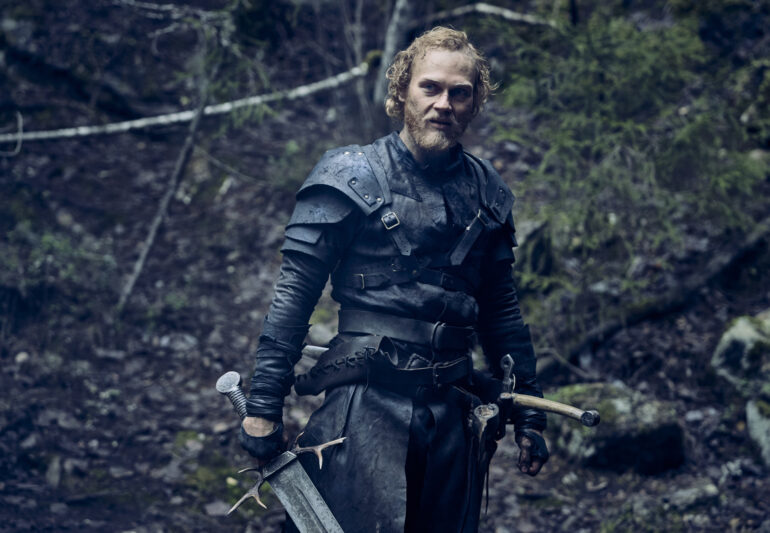
Kullervo is one of the most tragic and conflicting characters in Kalevala, and the community calls him “the cursed son”. One of the things that Jokinen and Tommila changed from the original story was the longing to belong.
“I saw a connection to today’s youth and how somebody can fall off the wagon after maybe making some bad decisions. In the film, Kullervo really wanted to belong, he wanted to be good and to do what was right, but things just didn’t go well,” Jokinen says.
He has always been drawn to characters that are kind of anti-heroes.
“In these epic stories, when you have heroes, they usually start in the wrong place, but then they learn and use their powers and become better persons. This doesn’t happen in our film. Kullervo doesn’t learn, and he just gets crazier and more out of control. Instead of bringing him enlightenment, it just feeds his aggression.”
Nature as a character
Jokinen wanted to keep the unique mythology and the magic of Kalevala, but didn’t want to make a fantasy film:
“I always have a very strong vision of what I want to do. I wanted to create a world that had a very strict colour palette and an atmosphere where you can almost smell the film in the cinema and feel the heat of what is happening.”
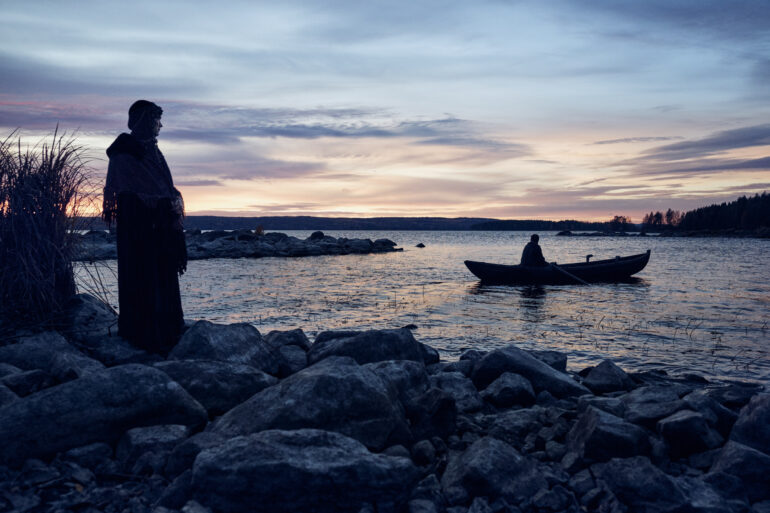
Nature was something that Jokinen really wanted to bring forth, and the filming has been done in places where no one has shot before; in primal forests in Northern Karelia, untouched by humans. The crew had to wake up at dawn, drive far, and then walk deep into the forests, sometimes for an hour, to reach the shooting locations:
“These long walks helped me get into character. I was able to go into that world and just suck in all that fresh air and the atmosphere,” Salonen says.
To the lead actor, it also meant a lot that the houses the characters live in were built into the forest. Shooting on location helped him get into character.
To the director, nature became a character of its own.
“I wanted nature to be its own character, and to illustrate the relationship that the Kalevala-people had with it. They believed that if you make the wrong choices and you don’t appreciate nature, it will strike back. They realised that they were part of nature, which is something we should also remember today,” Jokinen relates.
Wanted to make the film in Finnish
The budget for Son of Revenge – The Story of Kalevala is around 5 million euros, which is high compared to the Finnish feature average of 2.4 million euros (2024) and it is so far the most expensive feature done in Finnish in the 2020s.
The title is the first feature film based on Kalevala that is a fully Finnish production. In 1959 a Soviet Finnish co-production feature, Sampo, was loosely based on Kalevala, and an edited version of the film was later released in the United States as The Day the Earth Froze. Yle produced the drama series The Age of Iron (Rauta-aika) in 1982, based on Kalevala.
Jokinen wanted to make the film already 15 years ago, but it was important to him that it was made in Finnish, and back then the financiers wanted it to be in English:
“The streaming services have done us a great favour regarding language. They have taught audiences to watch films in different languages, and it’s a big benefit for all Nordic films that we don’t have to think about doing things that don’t work in English.”
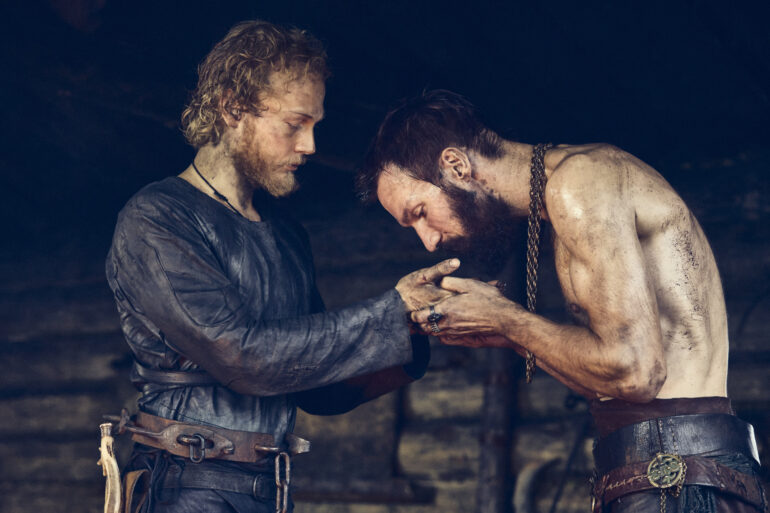
Norse mythology in turn has inspired popular culture through different adaptations and games worldwide, and characters such as Thor, the God of Thunder and his brother Loke are well-known internationally thanks to the Marvel universe. Norse mythology has also inspired the Canadian-Irish series Vikings, the Netflix series Ragnarok (created by Danish Adam Price), and characters in Game of Thrones. Apart from Kalevala, Tolkien was inspired both by Kalevala and Norse mythology, and themes can be traced back to both mythologies.
“I think that the connection between Kalevala and Tolkien might have helped with the financing, because people are familiar with Kalevala outside of the Nordics, and might partly be because of Tolkien’s work,” Jokinen says.
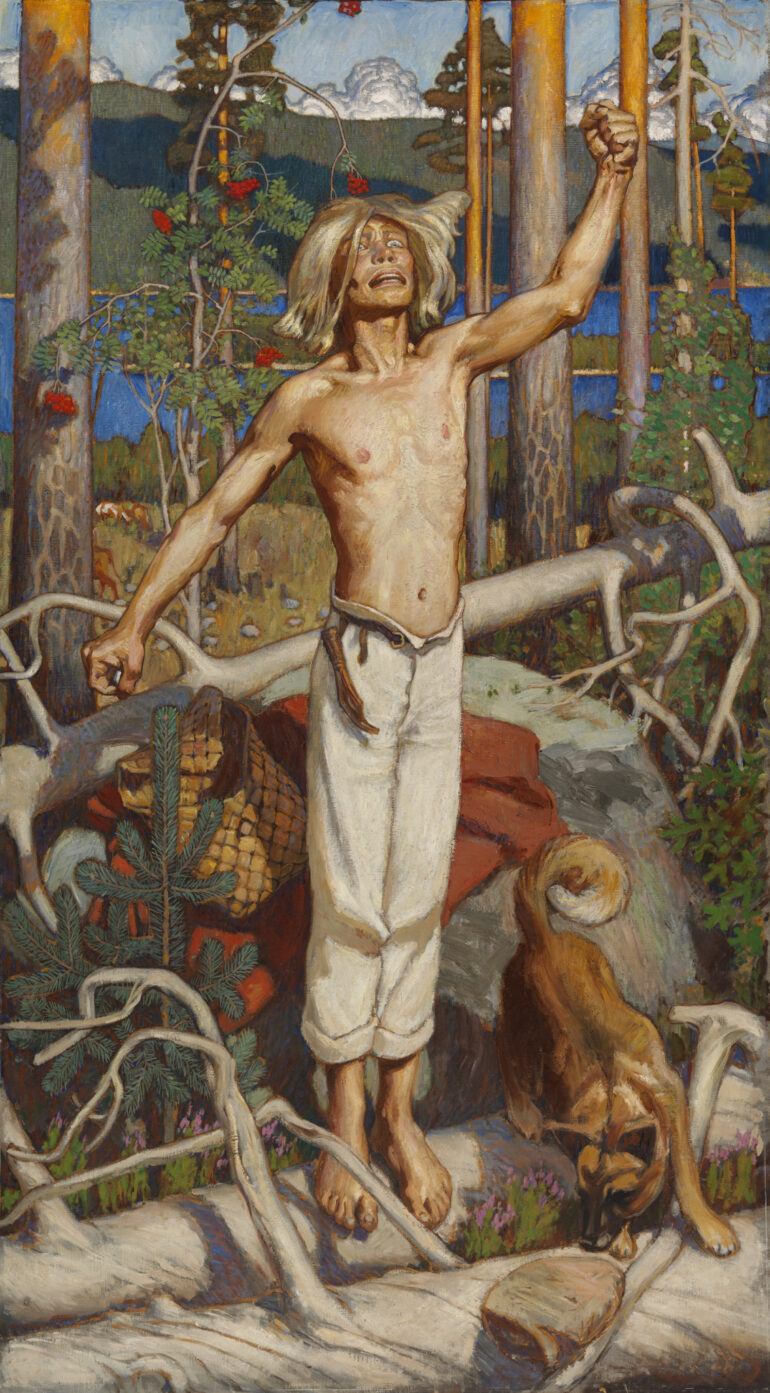
Finnish artist Akseli Gallen-Kallela interpreted Kullervo in several of his Kalevala-themed paintings. According to Jokinen, although adaptations allow for creative freedom, pushing it too far from the original would be counterproductive:
“Because Kullervo’s story has inspired people like Tolkien, Alexis Kivi and Akseli Gallen-Kallela, it would be crazy to move too far away from it, because it's been approved to work.”
Son of Revenge – The Story of Kalevala is produced for Reel Media in co-production with Finland Storm Inc, and has been supported by Nordisk Film & TV Fond. It premieres in national cinemas on January 16.
RELATED POST TO :
PRODUCTION
/
NORDIC INDUSTRY NEWS
/
FINLAND