Written by: Davide Abbatescianni
17.04.26
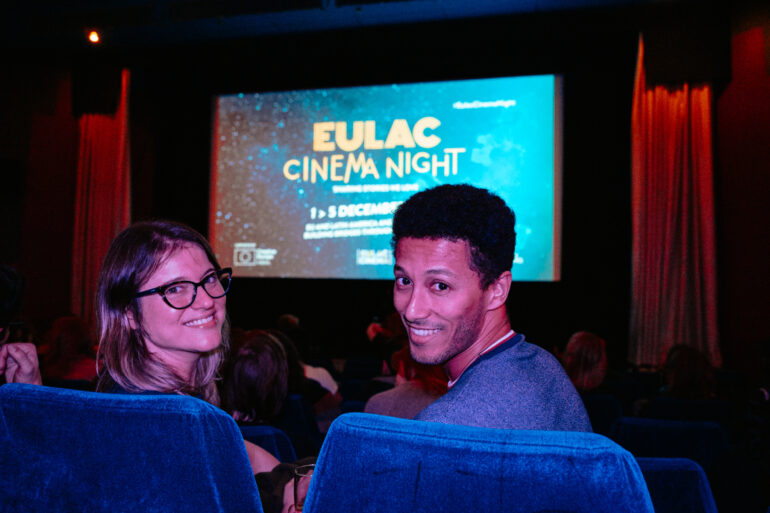
From sold-out arthouse premieres in Reykjavík to Dolby-powered launches in Bergen, Nordic exhibitors are turning screenings into high-impact audience events.
Across the Nordic region, eventised screenings have evolved into structured conversion tools rather than occasional promotional spikes. Four operational models recur: talent-led fan conversion, gamified community nights, civic/mission screenings, and tech-led premieres. Their effectiveness lies in execution: Each aligns a clear audience hook with scarcity, social proof, and a visible value exchange. In a market where audiences are accustomed to planning ahead and responding to perceived quality signals, these elements consistently drive commitment.
Denmark: bundling and gamification for fan conversion
Denmark demonstrates how paid events can achieve high conversion when structured as experiential bundles. Nordisk Film Biografer’s Checkered Ninja (Ternet Ninja) marathon on 16 August 2025 at Copenhagen’s Palads condensed three films, live talent access and communal viewing into a single ticket priced at 170 DKK. The venue itself — one of Denmark’s largest, with 17 screens and approximately 2,100 seats, including a 545-seat main auditorium — adds scale and visibility.
The exclusion of subscription passes reinforces yield control, while the extended duration (15:00–20:30) creates a “you had to be there” dynamic. Even more explicit is The Last Viking (Den sidste viking) fan gala on 1 October 2025, priced at 150 DKK and including bundled perks such as wine, snacks and prizes. The event integrates a red carpet, on-stage talent conversation, and a look-alike competition with rewards including a PlayStation 5. Gamification here is not decorative — it is central to the conversion strategy, turning attendance into participation.

Finland: controlled “free” and participation mechanics
Finland illustrates the growing importance of civic-driven event cinema. LUX Film Days 2026 in Helsinki, hosted by The Finnish Art and Culture Agency’s Kino Regina (capacity approximately 250), offered free screenings across 16–17 March 2026, with a full schedule published via Oodi Helsinki.
Access, however, was tightly controlled: Tickets had to be collected in advance from 4 March, with a strict limit of two per customer. This transforms “free” into a scarcity-driven mechanism rather than an open-access model. The programme also integrates participation, inviting audiences to rate films as part of the LUX Audience Award process. Accessibility is embedded structurally, with dedicated screenings featuring hard-of-hearing subtitles in multiple languages.
Norway: technology as an event narrative
Norway’s Bergen Kino provides a clear example of how technology can be repositioned as a marketing driver. The venue announced the installation of Dolby Vision and Dolby Atmos in its KP1 auditorium (245 seats) as a major upgrade.
This upgrade was not introduced quietly, but launched through a high-profile premiere event for Wicked: For Good last November. Given the 245-seat capacity of the KP1 premiere hall, the event appears to have extended beyond a single screening, indicating a venue-wide activation, although no official attendance figures were released. The case illustrates how technical infrastructure can be translated into audience-facing value when embedded in a strong event narrative.
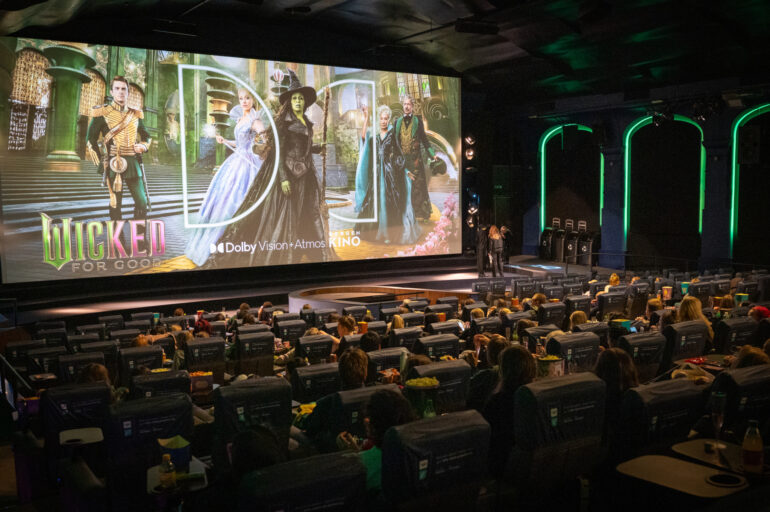
Another prominent example is the Dolby screening of Super Mario, which featured appearances by Super Mario himself, Luigi and the Princess, alongside games and other child-oriented activities.
These cases illustrate how technical infrastructure can be translated into audience-facing value when embedded in a strong event narrative.
Sweden: audience expansion through access and language
Zita Folkets Bio illustrates how event screenings can be used to broaden audience reach. During its 10–12 April 2026 LUX window, the venue presented a curated slate as free screenings, while maintaining standard ticket booking procedures.
Zita’s infrastructure — three screens with a combined capacity of roughly 210–215 seats — is detailed in its venue information. The key strategic shift lies in subtitling: All films in the programme were presented with English subtitles, explicitly targeting international audiences. This expands the potential reach without altering the core event format, demonstrating how minor programming adjustments can unlock new audience segments.
Moreover, Zita has shown a strong commitment to organising events for audiences to attend, such as cinema nights, Q&As with filmmakers, and 35mm screenings of classic films.
Iceland: premieres as cultural moments
Iceland offers a compact, but revealing case of “occasion-building”. The domestic premiere of The Love That Remains (Ástin Sem Eftir Er) at Bíó Paradís on 14 August 2025, for example, was framed through curated programming and amplified by national press. The outcome highlights a key mechanism: In smaller markets, a premiere can outperform its raw seat count when positioned as a cultural event.
A similar logic underpins the Stockfish Festival’s closing screening of Joan of Arc (Jóhanna af Örk) in March 2026. The festival itself documents the title as its closing film, premiered at Bíó Paradís before moving immediately into general screenings. The addition of a post-screening Q&A reinforces the event dimension, while the tight festival-to-theatrical transition illustrates how exposure can be converted into immediate audience access.
Key takeaways
Across all cases, the most transferable insights lie in repeatable design principles rather than specific films. Participation hooks — Q&As, voting systems, competitions— turn audiences into active contributors, while clear value exchange remains essential: Free entry needs structure and scarcity, and paid events must justify their price through added experiences.
Scarcity consistently drives engagement, whether through limited tickets, fixed timeframes, or one-off formats. At the same time, venues are increasingly marketed as part of the offer, with technology and social rituals positioned as core assets.
For exhibitors, distributors and sales agents, Nordic event screenings show that impact comes from precision rather than scale. Even small venues can generate strong visibility when leveraging social proof and clear audience incentives.
Ultimately, audiences respond to intention: When a screening is framed as a one-off occasion with defined stakes and payoff, it shifts from passive viewing to an active choice — an increasingly crucial distinction in a fragmented attention economy.
RELATED POST TO :
DISTRIBUTION
/
NORDIC INDUSTRY NEWS
/
NORDICS