Written by: Davide Abbatescianni
23.02.26
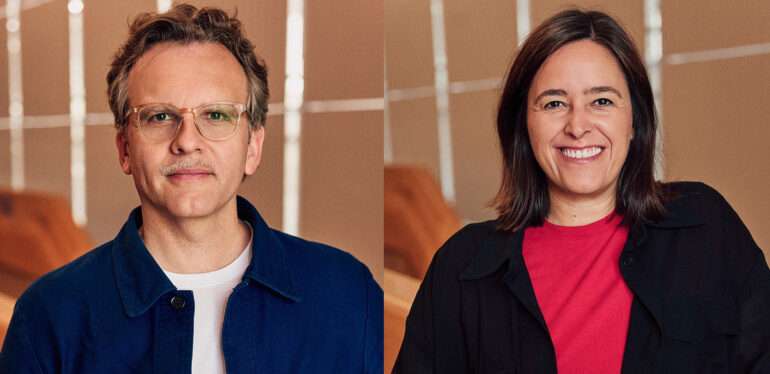
Festival heads Christoph Gröner and Julia Weigl talk about their Nordic focus and the event’s aim in times when European funds are restructured.
For its 5th edition, running 30 June–2 July in the heart of Filmfest München, the CineCoPro Conference will welcome emerging producers from Denmark, Finland, Iceland, Norway, and Sweden, connecting them with German partners in a setting that combines masterclasses, pitching, one-on-one meetings and networking – including the now-legendary Isar river raft ride.
The focus arrives at a moment when Nordic-German collaboration is both historically rooted and newly energised. “The Nordic countries are true experts in co-producing. Many films of that region are co-productions between the different Nordic countries, supported through different funding systems and institutions. This helps to look for creative partners across the sea as well. Examples like Ruben Östlund’s recent films show how established co-productions between the Nordic countries and Germany have already become,” says Christoph Gröner, who serves as the Bavarian gathering’s artistic director alongside Julia Weigl.
For Weigl, the choice also reflects a broader wave of intensified dialogue between Germany and the Nordic region. “The importance of those co-productions is the reason why we have seen a lot of focus on collaborations between our countries in the last nine months. At Filmfest Hamburg, at the Nordic Film Market in Göteborg – and with us this upcoming summer. Each focus with a different and distinct angle. We want to continue this creative friendship with a clear focus on emerging talents from The Five Nordics to spark new networks and collaborations.”
That emphasis on emerging producers is crucial. Rather than simply showcasing established players, CineCoPro 2026 will gather five producing talents from each Nordic country – around 30 producers in total – who have demonstrated a clear intention to work internationally. They will meet at least 30 German producers, creating parity in numbers and opportunity.
Gröner recalls that this dialogue has deep roots in Munich: “And by the way, we go full circle – back in 2011 it was Ruben Östlund visiting Munich and interviewing his great hero Roy Andersson for the first time as part of a great Swedish delegation.” The 2026 edition can thus be read as both continuation and renewal.
Over the years, CineCoPro has evolved from a promising industry sidebar into what the festival leadership calls a “central anchor”. Weigl explains how that transformation unfolded: “By introducing our highly endowed CineCoPro Award back in 2019, we have set our goal to put international co-productions at the heart of our festival. Adding our CineCoPro Conference in 2022 took this plan to another level. Connecting producers across borders, cultures and languages at a very early stage of their projects helps us foster new networks and talents. Our conference brings hand-picked people and projects together, inspires new ideas, challenges the status quo, and follows the journey of our alumni. And it is always very closely connected to our film programme. We want to highlight productions from our guest regions to showcase the variety of filmmaking in those respective countries.”
The conference’s blend of curation and conviviality has also become part of its identity. As Gröner puts it: “Our CineCoPro Conference has been a welcoming point for many producers – and we’re sure all the participants have not forgotten our river raft, and gladly come back to this atmospheric event that combines deep creative connection and a relaxed atmosphere.”
Behind the relaxed surface, however, lies careful calibration. The Nordic countries operate under distinct funding systems and production cultures. Gröner acknowledges the challenge: “We’ve aligned the vast array of working modes through our focus on emerging producers with a proven intention of wanting to work internationally this year. This ensures that, through all differences of institutions – from personal invitation to open call – our participants can meet on an equal footing and go home having truly made new working relationships and friendships. On the German side, an open call and personal invitations will be combined to ensure the best results with our friends at FFF Bayern, Creative Europe Desk Munich and German Films.”
For Weigl, the format’s strength lies in duration and density rather than spectacle. “They all support a 2.5-day programme in the heart of the festival week, both in terms of place and topics. It takes place in and around the festival centre, and it combines different formats. Plus, we are working on surprises and more delegates from other countries to join the forum as well.”
In a European funding landscape marked by reform and uncertainty, the directors are clear-eyed about what a festival-based co-production conference can – and cannot – do. “We can only encourage the connection between producers and funding institutions. We have seen amazing resilience and creativity on the side of German co-producers through the last two difficult years. Now, finally, we see positive developments in the German funding system that will lead to a new national funding law in the summer,” says Gröner.
Finally, Weigl situates this within a broader continental shift: “At the same time, we see that European funds will be restructured in the near future. All in all, we constantly see new funding schemes arise, and others come to an end these days. Therefore, we would say: a close framework of like-minded professionals is a strong backbone for future productions. This is what our conference and forum are all about: bringing people together, not for one panel discussion, but for several days, to form real and deep connections. CineCoPro Conference’s programme is designed to do that in the most functional and fun way possible.”
RELATED POST TO :
FESTIVALS
/
NORDIC INDUSTRY NEWS
/
NORDICS
& INTERNATIONAL