Written by: Aleksander Huser
06.02.26
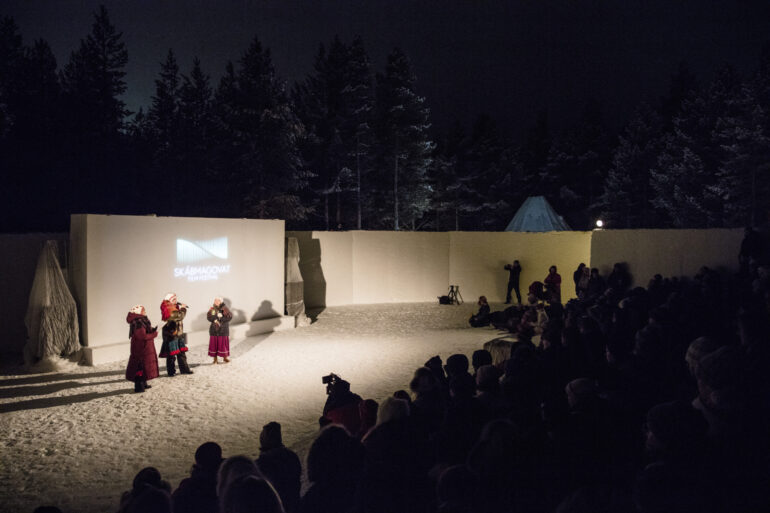
There is clearly a huge demand for Sámi and Indigenous queer content, says Skábmagovat Film Festival’s new Artistic Director Sunná Nousuniemi.
From January 22 to 25, the annual Skábmagovat Indigenous Peoples’ Film Festival took place in Inari, Sápmi (Finland), 320 kilometres north of the Arctic Circle.
The festival was arranged for the first time in 1999, and showcases Indigenous art in various forms. This year’s programme was curated by Skábmagovat’s new Artistic Director Sunná Nousuniemi, who continues the highly dedicated work of former Artistic Director Jorma Lehtola. In addition to more conventional venues such as the Sámi Museum Siida and the Sámi Cultural Centre Sajos, the festival offers screenings at an open-air theatre built entirely of snow, which can host an audience of around 200 people.
Although a lighter programme structure resulted in a slightly smaller number of ticketed screenings and audiences altogether, the 2026 edition saw an all-time high in total sales. Featuring more than 55 films and 25 premieres from around the world, six of the festival’s screenings were sold out. 19 film screenings were held in total, which is about one third fewer than in previous years, with an estimated total audience number of 2,853 at screenings and events.
As the festival itself notes, Skábmagovat seems to have established a core audience with a strong interest in Indigenous cinema and Sámi culture, and has become an important meeting place for professionals from the Indigenous film industry.
Diverse love as theme
Whereas earlier editions often shed light on a selected Indigenous area, such as New Zealand or the Arctic region, the festival has chosen a more purely thematic focus the last few years, Artistic Director Nousuniemi explains to Nordisk Film & TV Fond.
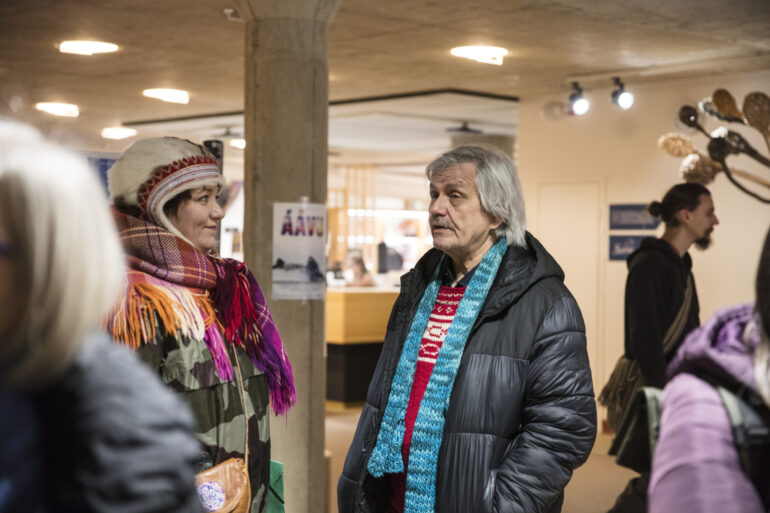
The theme of the 2026 edition was diverse love.
“The choice of diverse love as this year’s theme turned out to be popular – and something people seem to need,” Nousuniemi tells NFTVF.
The Artistic Director underlines that a central motivation for selecting the theme is the general decline in human rights in the world, including attacks on queer people’s rights.
“With this theme, we wanted to highlight queer stories, and screened several films by queer filmmakers, depicting queer experiences. We also wanted to combine this with an Indigenous perspective of love, which is not only romantic love, but can be love for our languages, family members or land.”
In addition, the theme reflects a certain change of the festival’s programme profile.
“As a consequence of the many important, yet untold stories within the Indigenous communities, we have previously been hearing that many of the films screened at the festival are quite heavy. I think our audience also felt the need for a shift in this narrative, so that it’s not only pain and loss, but also love,” Nousuniemi says.
Premieres and guests
The programme included a “watch party” of the Sámi TV drama series Heajastallan – A Sámi Wedding (Heajastallan – Bryllupsfesten), which had its international premiere at the Toronto International Film Festival. While its national premiere on Norway’s NRK was in January, the festival audience in Inari got an exclusive sneak peek of the NFTVF supported series, which will be aired on Yle in Finland next month. Among the festival guests were the series’ creator/director Åse Kathrin Vuolab and cast member Sverre Porsanger, who shared insights from their creative process with the Indigenous storytelling community.
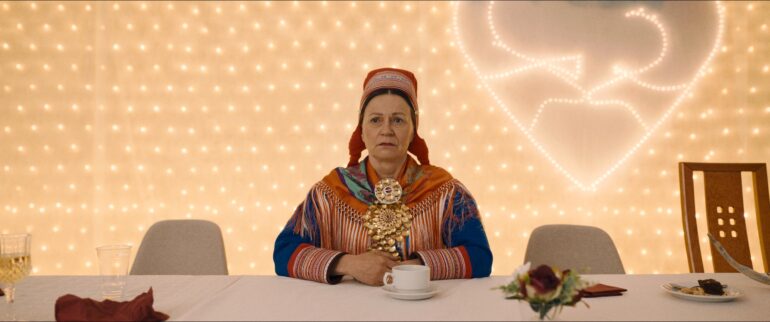
Also guesting Skábmagovat were director Ken Are Bongo and actress Sissi Jomppanen, attending the festival’s world premiere of Ciao rakas!, a film version of the mini-series with the same title.
This year’s main guest was Sinakson Trevor Solway, who is a member of the Siksika Nation in Canada. Solway attended with his new film Siksikakowan: The Blackfoot Man, a feature documentary examining masculinity among Indigenous men.
“I saw the film last summer at the imagineNATIVE Film + Media Arts Festival in Toronto, which is the world’s largest Indigenous film festival, and was deeply impressed by it. You don’t see this kind of representation of Indigenous men very often. I felt that it was very important to show the film in Sápmi, with its portrayal of different ways to be a man,” Nousuniemi tells NFTVF.
“Solway also took part in a lovely panel discussion on the theme of diverse love, facilitated by Sámi Rights advocate Petra Laiti,” they add.
Also on this year’s programme was a solidarity screening of Palestinian director Areeb Zuaiter’s documentary Yalla Parkour (a Swedish co-production), in support of Palestinian human rights.
“With this screening, we wanted to create more connection between peoples. Here in Northern Europe, Palestine can feel very far away. But we are all connected – like you also see in Yalla Parkour, with one of the characters migrating to Sweden,” Nousuniemi says.
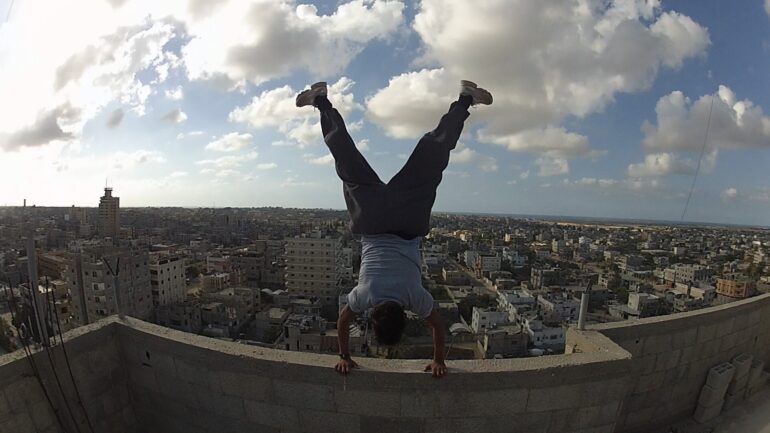
“I felt that programming Yalla Parkour was a very important part of the diverse love focus. Firstly, to be able to see Palestinian stories beyond the genocide, but also to create space for understanding how we can be in solidarity with the Palestinian people. Personally, I thought that with this narrative reframing, love could maybe show our way out of apathy when it comes to being vocal about the genocide.”
For the first time, the Skábmagovat festival screened a selection of archival, queer themed Sámi shorts, co-curated with the Swedish Archive for Queer Moving Images (SAQMI).
“It was very nice to see that this was one of our most popular screenings. There is clearly a huge demand for queer content, and Sámi and Indigenous queer content in particular,” Nousuniemi points out.
Although the festival programme was curated for the first time by Nousuniemi, previous Artistic Director Jorma Lehtola was still involved in this year’s edition, curating a sold-out screening of archival films from Inari throughout the decades, in honour of the municipality’s upcoming 150th anniversary.
Next year’s Skábmagovat Film Festival will be held on January 28–31, 2027. Save the dates.
RELATED POST TO :
FESTIVALS
/
NORDIC INDUSTRY NEWS
/
NORDICS
& INTERNATIONAL