Written by: Per Laursen
29.10.26
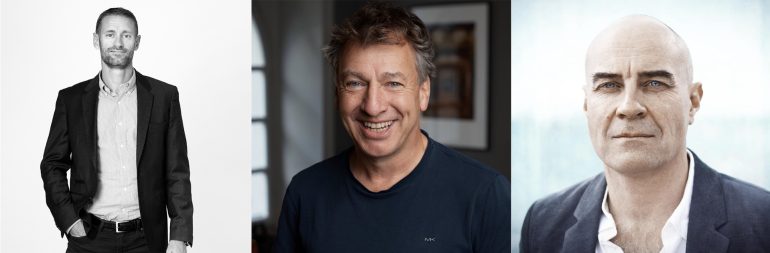
Across Europe, governments are reshaping streaming investment rules, while producers push for a greater share of the rights and value created. France and Germany offer contrasting models as the Nordics consider their different options.
Across Europe, countries are experimenting with ways of making streamers contribute more to local film and TV production. The Nordic question is whether such obligations should also strengthen independent producers’ long-term ownership of the IP they create.
France and Germany provide two different reference points, while Nordic stakeholders disagree over whether the region should develop a common approach.
“It’s a relevant discussion. France and Germany are interesting cases because they, in different ways, are trying to combine investment requirements for local production with consideration for the independent production sector and producers’ rights positions,” Rasmus Venø Andersen, head of projects and analysis at the Danish Producers’ Association, told Nordisk Film & TV Fond.
In the Nordic region, Denmark was the first to introduce a cultural contribution. Norway has adopted an investment obligation for streaming services, while Finland has taken a political decision to introduce a payment obligation, which is still under legislative preparation. In Sweden, a streaming levy was proposed in the government’s film inquiry, but the government has chosen not to pursue it.
The debate is increasingly focused not simply on whether streaming services invest in European content, but on how much they should be required to invest, and which rights independent producers should retain.
“Investment obligations” require streaming services to reinvest a proportion of their local revenues — or a fixed amount — into domestic film and television production, creating a more predictable source of financing for national content.
The Nordic region has a strong production ecosystem, but individual countries have adopted different approaches to rights ownership and regulation.
Sweden has been cautious about introducing statutory requirements. The focus has been on making the market attractive to international investment rather than regulating it.
“It’s a strange premise that the creators and producers do not own their rights. That would be unthinkable in literature and music. We need to establish a mechanism to regulate this for TV and film drama in the Nordic region,” Fredrik af Malmborg, advisor, investor and founder of Eccho Rights, told Nordisk Film & TV Fond.
Malmborg believes the global streamers’ so-called “cost-plus” model is a legacy of the American studio system. There is a reason, he points out, why Hollywood creators have gone on strike periodically: They have been put under increasing pressure by corporate giants, the studios.
“Conditions can be favourable if you are a major star, but for everyone working further down the chain, the terms have steadily deteriorated,” he said.
Malmborg argues that the Nordic countries need a framework in which producers retain ownership of the rights and then share the value with the creators.
“We need to create rules and a model where the producer owns the rights and then distributes the value with the creators. To me, there is no other logical way forward,” he said, comparing it to publishing: “Imagine if a publisher told an author: ‘You get a salary while you write, and then 10–20% on top of your salary as a margin’ to write a book that the publisher owns forever. It simply wouldn’t work.”
Ilkka Matila, CEO and producer at Oy Saranne AB and a doctoral researcher at Aalto University in Finland, believes that the Nordic countries should adopt investment obligations which could be inspired by the German model.
“With rights retention built in from the start, it is the right benchmark for small language markets: a moderate rate, sub-quotas for independent producers, an emphasis on local language, and rights that revert to the producer depending on their financing share.”
According to Matila, the French levels of 20–25% are not realistic here, and would invite platforms to withdraw.
“The Nordic film industries should act united to lobby for the obligation. Unfortunately, the Swedish industry has been left behind.”
Matila notes that Finland’s domestic streaming service Elisa Viihde has been decisive in developing Finnish serial drama and taking it abroad.
“A Finnish obligation must recognise and credit this kind of existing local investment. Its real purpose is to bring the international platforms to the same level of commitment.”
Finland’s anticipated investment obligation on international streaming/VOD services is expected to create an estimated €8–10 million a year in new money from 2028 at the earliest.
“However, this should be additional, as the Finnish Film Foundation’s support has been cut by nearly a third. In my opinion, an obligation that only replaces lost public funding will not create a more sustainable future for the Finnish film industry,” Matila added.
The issue of “rights retention” addresses content ownership, allowing producers to keep selected rights, such as international distribution, remake rights or future exploitation opportunities, instead of transferring perpetual global ownership to the streamer.
Investment obligations may increase the volume of production. But rights retention determines whether that additional production also creates lasting value for independent producers, Matila argues.
“A cost-plus commission gives a one-off margin. Rights that return to the producer create catalogue value, secondary sales, format and remake income, and the equity needed to finance the next project. This supports a production company’s financial sustainability. Rights rules should be graded as in the German model, not absolute: The more a producer finances, the more rights it keeps.”
Malmborg argues that the Nordic countries should adopt a similar model to France, where streaming platforms are required to invest in local production, while independent producers retain rights to the resulting content.
“France has had this principle in place for some time, and EU regulations also make it possible to introduce it in the Nordic countries. We should definitely introduce the same principle across the Nordics,” Malmborg said.
He suggested that 20–30% of streamers’ revenues should be invested in Nordic production, with the rights reverting to the producer after 18 months.
“That gives us an asset that investors can finance, while successful creators have margins they can reinvest in new projects. It is the same principle that creators in music, art and literature take for granted.”
It is pertinent to look at what the Nordic countries can learn from France and Germany — particularly the relationship between investment requirements, independent production and rights. That is the key discussion, according to Andersen. However, the Nordic countries should not adopt a single French, German or European model.
“The models differ, and the Nordic countries have also chosen different approaches. There are different models and different stages in the decision-making process,” Andersen said, adding:
“Requiring streamers to contribute to local production does not in itself ensure that producers retain the rights. Financing and rights retention are closely connected, but they need to be addressed separately.”
Matila believes that the German and French obligation models are both very positive systems for their respective markets. Meanwhile every Nordic country is developing its own strategy.
“I don’t think that creates the best situation for independent producers and the local film industries. Let’s be realistic. The Nordic countries, like all other small, open European economies, don’t have the same muscle to deal with international streamers as the French and the Germans do. The Nordics should act united; then we would have that muscle,” he said.
Earlier this year, Netflix’s EMEA content chief Larry Tanz confirmed that the streamer plans to increase its investment in European content to record levels over the next three years, with spending rising annually from 2026.
Speaking at Enders TMT Leaders Live in London, Tanz also warned that poorly targeted regulation could weaken rather than strengthen Europe’s creative industries.
He argued that policymakers should look beyond simplistic divisions between streamers and broadcasters or large and small companies when addressing the sector’s challenges.
CLICK HERE for fresh article on the strategic recommendations (that include a Nordic collaboration on levies) that were presented to Nordic Ministers of Culture October 28 by a high-level working group appointed by Nordisk Film & TV Fond and financed by The Nordic Council of Ministers.
RELATED POST TO :
BUSINESS & SALES
/
NORDIC INDUSTRY NEWS
/
NORDICS