Join the Fund's newsletter!

Get the latest film & TV news from the Nordics, interviews and industry reports. You will also recieve information about our events, funded projects and new initiatives.

Do you accept that NFTVF may process your information and contact you by e-mail? You can change your mind at any time by clicking unsubscribe in the footer of any email you receive or by contacting us. For more information please visit our privacy statement.

We will treat your information with respect.

We use Mailchimp as our marketing platform. By clicking below to subscribe, you acknowledge that your information will be transferred to Mailchimp for processing. Learn more about Mailchimp's privacy practices here.

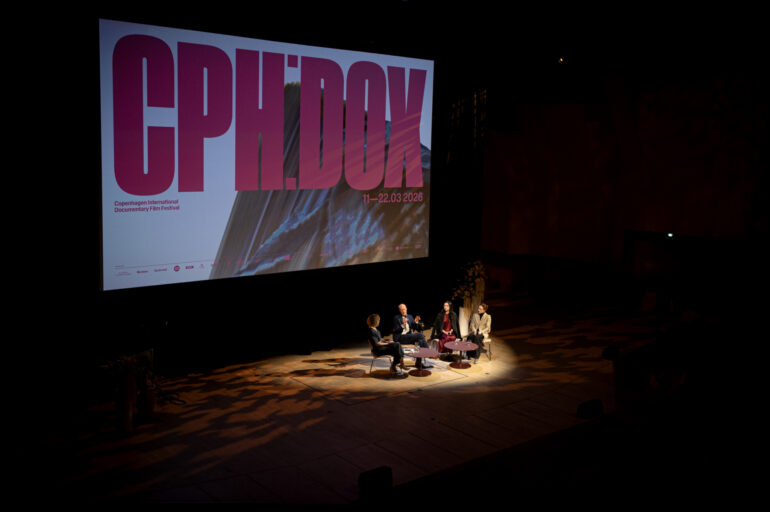
CPH:DOX 2026 mixes celebration, anxiety and an enduring faith in documentary

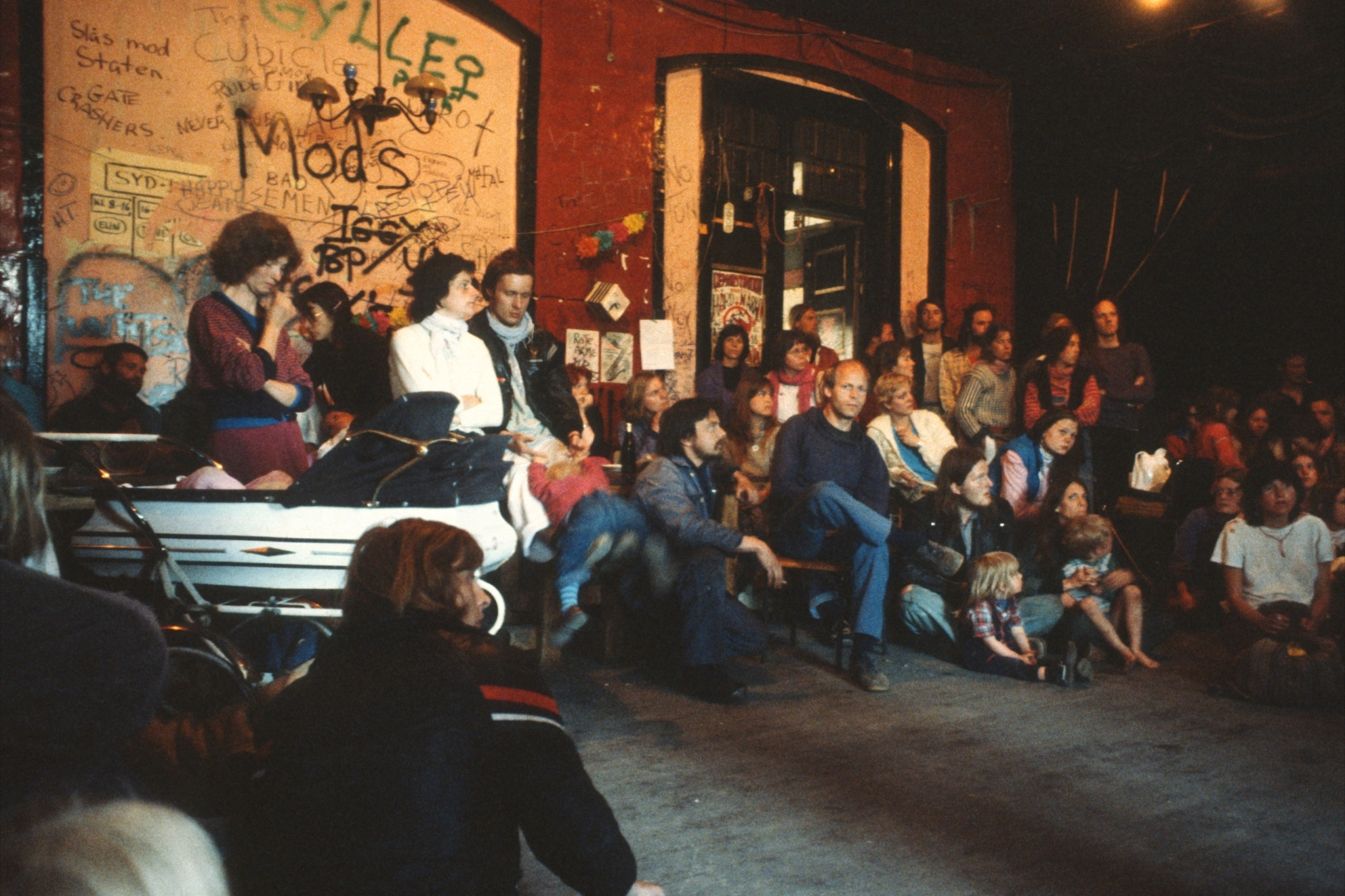
CPH:DOX 2026 / Photo: Ida Guldbæk Arentsen
×
NEWS

CPH:DOX 2026 mixes celebration, anxiety and an enduring faith in documentary

CPH:DOX 2026 / Photo: Ida Guldbæk Arentsen

As AI, shrinking broadcaster budgets and a fractured information landscape reshape documentary, CPH:DOX offered a sharp temperature check for the sector — with journalism emerging as both warning and ally.

CPH:DOX once again proved why it remains one of Europe’s key documentary meeting points: a place where major films are crowned, urgent industry questions are aired, and producers, funders and broadcasters try to read the mood of a sector caught between creative vitality and financial strain.

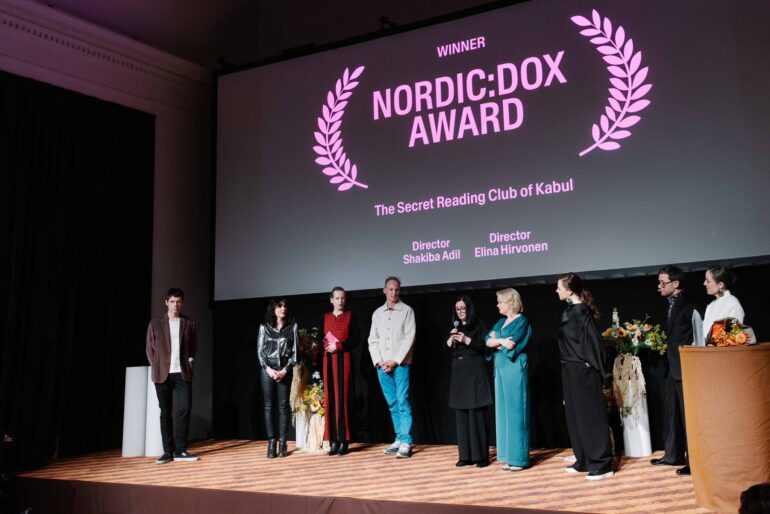
On the festival side, the top Dox:Award went to Dongnan Chen’s Whispers in May, a coming-of-age road movie set in China’s Liangshan Mountains, while Nolwenn Hervé’s The Cord (Le cordon) received a Special Mention. Other winners confirmed the breadth of the line-up: Nathan Grossman’s Amazomania took the FIPRESCI Prize, Emma Wall and Betsy Hershey’s climate-activist portrait Just Look Up won the F:Act Award, Irene Bartolomé’s Beirut-set Dream of Another Summer scooped the Next:Wave Award, and Shakiba Adil and Elina Hirvonen’s The Secret Reading Club of Kabul claimed the Nordic:Dox Award. Maryam Ebrahimi’s The Phantom Pain of Rojava won the Human:Rights Award, while Rico Wong’s Compact Disc was awarded New:Vision.

The industry prizes, meanwhile, spread attention across both established and emerging voices. Shourideh C. Molavi and Shrouq Alaila’s Gaza-set Everything Is Red and Grey was the standout, winning both the Al Jazeera Documentary Channel Co-production Award and an Arte Award. Kathryn Ferguson’s Matrescence, Asmae El Moudir’s Don’t Let the Sun Go Up On Me, Véréna Paravel’s Cosmofonia, Halyna Lavrinets’s My School Is Seized and Łukasz Kowalski’s My Father the Iceman were among the other notable titles to leave CPH:INDUSTRY with momentum.

×
NEWS

CPH:DOX 2026 mixes celebration, anxiety and an enduring faith in documentary

The Secret Reading Club of Kabul / Photo: CPH:DOX, Kathrine Thude

Recurring conversations, new projects on offer

Beyond the prizes, this year’s temperature check was shaped by two recurring topics: artificial intelligence and the weakening of the wider information ecosystem. Rather than treating AI as a fashionable buzzword, CPH:SUMMIT and CPH:CONFERENCE framed it as a structural challenge to truth, trust, visibility and democratic culture. Arte France president Bruno Patino’s keynote was among the most resonant interventions, warning that the industry has moved from an “attention economy” into a “relationship economy”, where discoverability, mediation and access are increasingly controlled elsewhere. At the same time, several conversations turned towards journalism as documentary’s closest relative in crisis, and possibly its most useful source of lessons in resilience.

Fresh off his Oscar win for Mr. Nobody Against Putin, David Borenstein also used the CPH:DOX week to signal his next move, reuniting with Danish producer Helle Faber on Living in Our Heads. Still under wraps, the new feature is said to build on the collaborative spirit and unexpected film language that shaped his breakthrough documentary. The project adds further prestige to a market already buoyed by strong Nordic visibility.

Industry whisperers

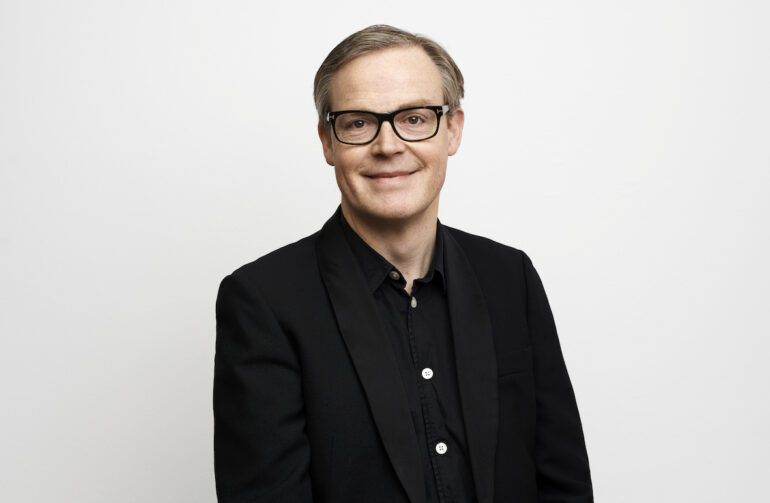
Meanwhile, walking through the CPH:DOX Forum corridors, Ove Rishøj Jensen, seasoned producer and Documentary Advisor at Nordisk Film & TV Fond, captured the contradiction at the heart of this year’s edition.

Rishøj Jensen was equally clear-eyed about what he saw in the market. While CPH:DOX was, on the surface, “a great celebration of the documentary format in all its ways and shapes”, he noted that “underneath this celebration, is a layer of concern”. Many of his conversations with filmmakers revolved around “the shrinking investment in creative documentaries from broadcasters and the declining landscape of film funding”.

Importantly, he pushed back against any neat reading of current trends. “Most common trend is, that there is no common trend,” he said of the CPH:FORUM selection, arguing that diversity of form, voice and topic remains one of documentary’s great strengths. He was also cautious about talk of radically new financing models: despite years of upheaval, “many financing plans look very similar to the financing plans we have had for decades”, even as opportunities within that model continue to shrink. For Rishøj Jensen, the bigger point is political as much as industrial: documentaries still depend overwhelmingly on public support because they are “essential for our democratic systems”. His summary of the week was perhaps the sharpest diagnosis of all: “A challenged community with a lot of resistance and empowerment to still tell strong and important stories.”

×
NEWS

CPH:DOX 2026 mixes celebration, anxiety and an enduring faith in documentary

Ove Rishøj Jensen / Photo: Private

That mix of optimism and caution was echoed, in more practical terms, by Norwegian producer Silje Viki, who came to Copenhagen to watch the pitches, meet existing partners and seek new ones. For Viki, CPH:DOX works precisely because it combines formal structures with informal access: “There are many spaces for both formal and informal meetings.” She also noted the “very high overall level of the Forum projects”, and pointed to a possibly higher number of American projects present in the line-up.

Viki also offered a useful Nordic perspective at a moment when the region is again enjoying high international visibility. Referring to recent Nordic Oscar wins for both Mr Nobody Against Putin and Sentimental Value (Affeksjonsverdi), she said that these successes are the result of “good support schemes that were established a long time ago”. Her warning was implicit, but unmistakable: weaken those structures now, and the damage will only become visible later.

Lithuanian producer Migla Butkute brought a slightly different perspective, attending as part of a national delegation, and using the market to test the early potential of a project in development. Her main goal was to gauge whether it might appeal to “producers, sales companies and fund representatives”, while also looking for possible co-production partners. If Buktute was more reserved on broader trends, her verdict on the event itself was unequivocal: CPH:DOX is clearly “one of the biggest and best organised markets” she has been to to date.

That may be the most practical conclusion from this year’s edition. CPH:DOX 2026 did not hide the pressure points bearing down on documentary. But it also showed a sector still rich in talent, solidarity and urgency — and still determined to make itself heard.

RELATED POSTS